 Fairhaven Siding
 Building on the Edge of Chuckanut Bay
Homes tucked into the hillsides above Chuckanut Bay sit in one of the more demanding microclimates in Whatcom County. The terrain that makes this stretch of coastline beautiful — forested slopes, sandstone bluffs, and water views over the Salish Sea — is the same terrain that punishes exterior building materials. Salt-laden air drifts up from the bay, driving rain comes in sideways off the water during fall and winter storms, and the tree canopy that shades so many of these lots also keeps north- and west-facing walls damp for months at a time. If you own a home in Chuckanut, or you're looking at property here, your siding, roof, windows, and decking need to be chosen with this specific combination of exposures in mind, not a generic Pacific Northwest spec.
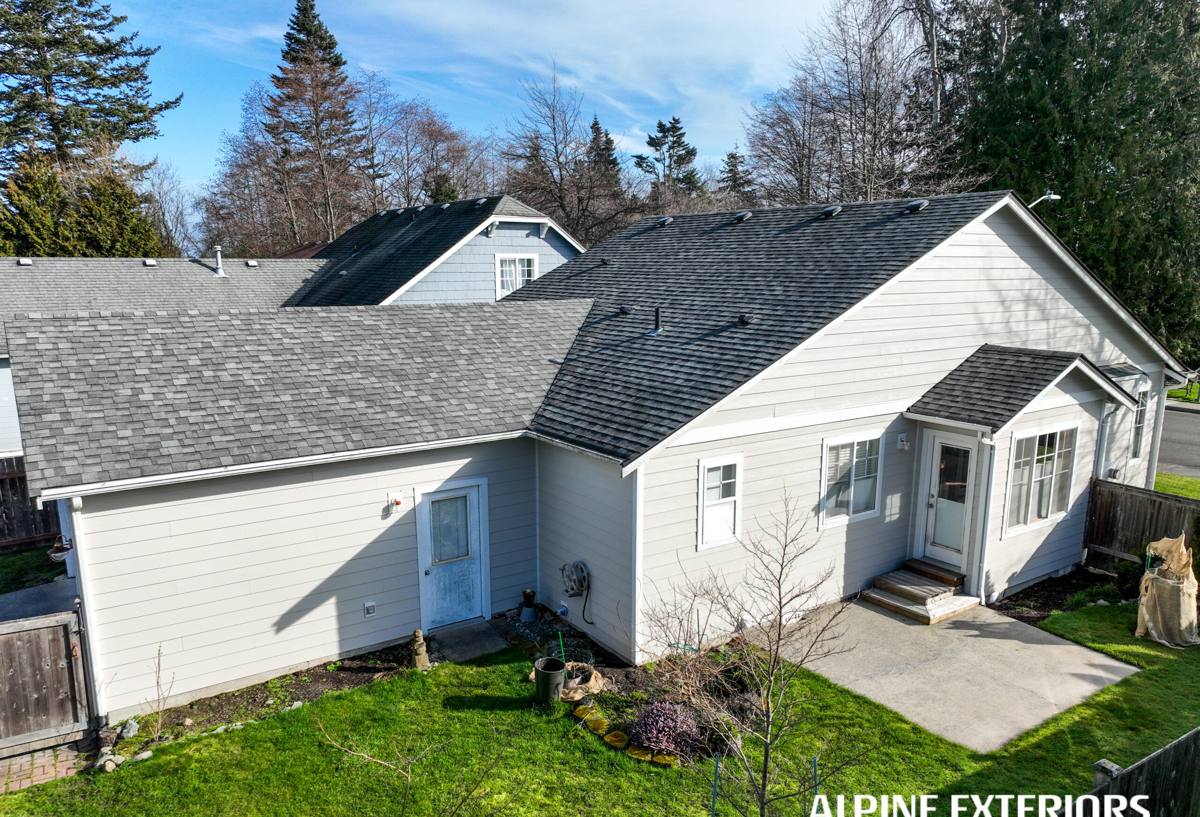
What Salt Air, Rain, and a Long Moss Season Actually Do
Each of these three stressors works on a house differently, and understanding the mechanism matters when you're deciding what to install.
Salt Air
Airborne salt from Chuckanut Bay and the broader Salish Sea settles on exterior surfaces and accelerates corrosion of fasteners, flashing, and any exposed metal trim. On siding itself, salt residue combined with moisture creates a film that holds dirt and moisture against the surface longer than it would on a home further inland, which speeds up paint failure and surface breakdown on materials that aren't engineered for coastal exposure.
Driving Rain
Storms moving in off the water don't just fall straight down — wind pushes rain horizontally into wall assemblies, seams, and butt joints. Any siding product with weak joint design, absorbent edges, or a finish that isn't fully sealed on all six sides is going to take on moisture at exactly those vulnerable points, whether that's a lap seam or a corner trim intersection.
Moss and Shade
Chuckanut's wooded lots mean many homes get filtered or indirect light for much of the year. Shaded, damp wall surfaces are where moss, algae, and mildew take hold first — and once organic growth establishes itself on a porous or absorbent surface, it holds moisture against the substrate around the clock, not just during rain events. A long moss season isn't cosmetic; it's a moisture-management problem that runs from fall through spring.
Why James Hardie Fiber Cement Is What We Install
We install James Hardie fiber cement siding exclusively — not vinyl, not LP SmartSide, not Cemplank or Allura, not primed spruce or cedar. That's a deliberate standard, not a limitation on what we're able to offer. Fiber cement is cement, sand, and cellulose fibers, which means it doesn't absorb water the way wood-based or wood-fiber products do, and it doesn't expand and contract with humidity swings the way vinyl does. In a climate where a wall can be damp for days at a stretch under tree cover, that matters more than in a drier inland location.
Hardie's HZ5 product line is engineered specifically for climates with freeze-thaw cycling and sustained moisture exposure, which describes Whatcom County's coastal zone well. The ColorPlus factory finish is baked on in a controlled environment rather than field-applied, which means better adhesion and more consistent UV and moisture resistance than a job-site paint coat — a real advantage where salt film and shade both work against painted surfaces. Hardie also backs its siding with a strong transferable warranty, which matters to any future buyer of a Chuckanut property, since exterior condition is one of the first things a coastal-area home inspection flags.
Why We Don't Install Vinyl, LP SmartSide, or Wood Here
Each of these products has real strengths, and we're not going to pretend otherwise. But when we weigh them against what this specific terrain does to a house over 10, 20, and 30 years, the trade-offs stop making sense for us to stand behind.
| Material | What it does well | Why it struggles in Chuckanut conditions |
|---|---|---|
| Vinyl siding | Low upfront cost, no painting required | Expands and contracts with temperature swings, can warp or crack in wind-driven storms, and seams can allow moisture behind the panel where it's slow to dry under tree cover |
| LP SmartSide | Engineered wood strand product, easier to install than cement board | Wood-based core is more moisture-sensitive at cut edges and joints; sustained damp shade is exactly the condition engineered wood products are most vulnerable to |
| Primed spruce / cedar | Traditional look, natural material | Requires ongoing repainting and caulking; untreated or under-maintained wood is highly susceptible to moss, rot, and insect damage in a long-moss-season climate |
| James Hardie fiber cement | Non-combustible, factory-baked finish, engineered for coastal/wet climates | Higher material and labor cost, requires correct fastening and flashing detail to perform as designed |
The honest trade-off with Hardie is cost and installation sensitivity — it has to be installed correctly to deliver on its warranty and lifespan, and it costs more upfront than vinyl. We think that trade-off is worth it on a home that's going to face salt air and shaded dampness for decades.
Beyond Siding: Roofing, Windows, and Decks in the Same Climate
Siding doesn't work in isolation — the same conditions that stress your walls stress every other exterior system on a Chuckanut home.
Roofing
Moss growth on roofing is often the first visible sign of the same shade-and-moisture pattern that affects siding. Roof valleys, flashing, and moss-prone north slopes need attention on the same cycle as your walls, since moss holding moisture against shingles shortens roof life the same way it does siding.
Windows
Window flashing and sealant are a home's most common water-entry points during driving rain. Properly integrated window flashing that ties into the siding's water-resistive barrier is as important as the siding material itself — a good siding job with poor window integration still leaks.
Decks
Decks facing the bay take direct wind-driven rain and salt exposure with no wall assembly to buffer them. Decking material, fastener choice, and drainage beneath the deck all need to account for standing moisture in a way that inland decks don't.
What Correct Installation Involves on This Kind of Site
Fiber cement performs the way it's engineered to only when it's installed to manufacturer spec. On a shaded, coastal-influenced property, a few details matter more than usual:
- Proper fastener spacing and type — coastal-rated fasteners resist the corrosion salt air accelerates
- Correct clearance between siding and grade, decks, and roof lines so water sheds away rather than wicking up
- Fully sealed and primed cut edges, since any exposed raw edge is where moisture intrusion starts
- Flashing integration at every window, door, and penetration, tied into the drainage plane behind the siding
- Adequate rain-screen or drainage gap where shade and moisture load call for it
Skipping any of these steps doesn't show up as a problem in year one — it shows up in year five or ten, usually as a warranty claim that gets denied because the installation didn't match spec. That's a big part of why we control installation quality closely rather than treating siding as a commodity install.
A Simple Maintenance Rhythm for Chuckanut Homes
Even the right material benefits from a basic seasonal check, especially under tree cover:
- Walk the perimeter each fall before the rainy season and clear debris, needles, and leaves from anywhere they collect against walls or decking
- Check north- and west-facing wall sections for early moss or algae film and address it before it spreads
- Inspect caulking around windows and trim annually — sealant is the first thing to fail, well before the siding itself
- Keep gutters clear so overflow doesn't run down wall surfaces during heavy storms
- Trim back vegetation that keeps a wall section shaded and damp longer than necessary
Why a Local Crew Matters in a Neighborhood Like This
A crew that works across Whatcom County's coastal zone regularly sees how salt air, driving rain, and shade actually play out on real houses — which wall faces fail first, which flashing details get skipped on production-grade jobs, and which products hold up versus which ones don't. That kind of pattern recognition doesn't come from a spec sheet. It comes from being the crew that gets called back to fix someone else's siding job five years in, and learning from what went wrong. For a property in Chuckanut specifically, that local experience is the difference between a siding job that looks fine at handoff and one that's still performing after two decades of bay-side weather.
If you're planning a siding, roofing, window, or deck project on a Chuckanut property, we're happy to walk the site, look at your specific sun and wind exposure, and put together a free, no-pressure estimate — no obligation, just a straight assessment of what your home actually needs.