 Fairhaven Siding
 Bellingham Siding, Built for Where You Actually Live
Bellingham sits in a spot that's beautiful and hard on a house at the same time. You've got Bellingham Bay pushing salt-laden air inland, weather systems rolling off the Strait of Georgia that dump long stretches of driving rain, and enough tree cover and shade in older neighborhoods to keep north-facing walls damp for weeks at a stretch. None of that is unusual for Whatcom County. But it does mean the exterior of your home is working harder than it would almost anywhere else in the state, and the siding you choose either holds up to that or starts showing it within a few seasons.
We're a local exterior crew based out of the Fairhaven area, and we work throughout Bellingham and the surrounding county. This page walks through what the climate actually does to different siding materials, what we install and why, and what to look for if you're trying to figure out whether your current siding still has years left in it or is quietly losing the fight.
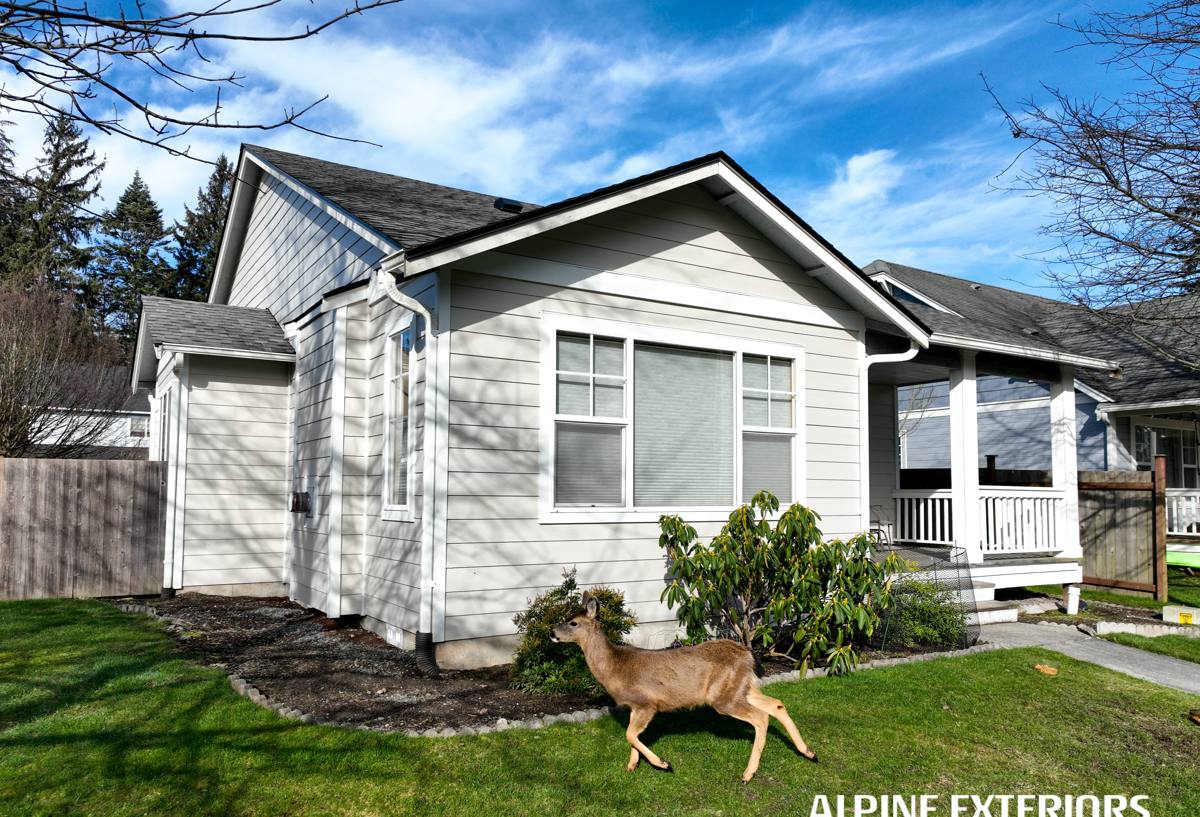
What Bellingham's Climate Does to Exterior Siding
Salt Air and Coastal Exposure
Homes closer to the water — including a lot of Fairhaven and the neighborhoods that look out over Bellingham Bay — deal with airborne salt that settles on exterior surfaces and accelerates corrosion of fasteners, staples, and unprotected trim. It also breaks down cheaper paint films faster than inland exposure would. Siding material and fastener choice both matter more here than they would fifty miles east.
Driving Rain and Moisture Cycles
Bellingham doesn't just get rain, it gets sustained, wind-driven rain that pushes water sideways into wall assemblies rather than letting it run straight down. Siding that isn't installed with proper flashing, house wrap, and drainage gaps can trap that moisture behind the cladding, where it does damage you can't see until it's already serious — rot in sheathing, mold, and swollen trim.
Moss, Shade, and the Slow Green Creep
Whatcom County's wet season runs long, and a lot of lots here have mature tree cover that keeps siding shaded and damp well after a storm has passed. That combination is exactly what moss and algae need to take hold. On porous or textured materials, that green film isn't just cosmetic — it holds moisture against the surface and keeps the substrate wet longer than it should be.
Why Siding Material Matters More Here Than Most Places
In a drier climate, the gap in performance between siding materials is mostly about looks and upfront cost. In Bellingham, that gap shows up as rot, swelling, and repaint cycles within a handful of years if the wrong product goes up, or gets installed without the right detailing. Here's a general comparison of how common siding materials tend to hold up under this specific climate profile:
| Material | Moisture/Rot Risk | Moss & Algae Growth | Salt Air Durability | Typical Maintenance |
|---|---|---|---|---|
| Vinyl | Low material risk, but seams and gaps can trap moisture behind the panel | Grows on the surface, especially in shaded areas | Can become brittle and fade faster near the coast | Periodic washing; panels can crack in cold snaps |
| Primed Wood / Cedar | High if paint film fails or end grain is exposed | Susceptible, especially in shaded, damp spots | Salt accelerates paint breakdown | Frequent repainting and caulking |
| LP SmartSide (engineered wood) | Moderate — edges and cut ends need diligent sealing | Can develop growth if coating wears thin | Coating performance varies with exposure | Regular inspection of seams and edges |
| James Hardie Fiber Cement | Low — non-combustible cement composite, engineered for moisture cycling | Factory finish resists staining better than porous substrates | Holds up well with correct fastening and detailing | Occasional rinse; ColorPlus finish reduces repaint need |
These are general tendencies, not guarantees — installation quality changes the outcome for every material on this list. But the underlying physics of each product (how it absorbs or sheds water, how it handles repeated wet-dry cycling, how its finish holds up to UV and salt) don't change from house to house.
Why We Install Only James Hardie Fiber Cement
We made a decision a while back to standardize on James Hardie and stop installing vinyl, LP SmartSide, primed spruce, and cedar. That's not a knock on every homeowner who has one of those products on their house today — plenty of it is holding up fine, especially where it's been well maintained. It's a statement about what we're willing to warranty our labor on, given what we see happening to exteriors in this specific climate.
ColorPlus Factory Finish
Hardie's ColorPlus finish is baked on at the factory under controlled conditions, which gives it better UV and moisture resistance than a field-applied paint job, and it comes with its own finish warranty. In a climate where repainting is a real recurring cost, that matters.
HZ5 Engineering for This Region
Hardie engineers its HZ product lines for specific climate zones, and the HZ5 line is built for the kind of freeze-thaw and moisture cycling the Pacific Northwest sees. It's not a generic product dropped into every region — the formulation accounts for what a wall assembly actually goes through here.
Non-Combustible and Dimensionally Stable
Fiber cement doesn't expand and contract with moisture the way wood-based products can, and it's non-combustible, which some homeowners factor into insurance conversations. It holds paint and caulk lines better over time because the substrate underneath isn't moving as much.
Our Installation Process
Material choice only gets you halfway there — installation is where most siding failures actually originate, regardless of brand. Our process on a typical Bellingham job looks like this:
- Inspection of the existing wall assembly, including sheathing condition, once old siding is removed
- Repair of any rot or water damage found underneath before anything new goes up
- Installation of a weather-resistive barrier with proper lapping for wind-driven rain
- Rainscreen or drainage gap detailing where appropriate, so moisture that does get behind the cladding can escape
- Hardie panel and trim installation per manufacturer fastening and clearance specs
- Flashing at every window, door, and roof intersection — the points where most leaks actually start
Skipping steps two, three, or six is how a good product ends up performing badly. We don't shortcut those, because in this climate they're the difference between siding that lasts and siding that fails from the inside out.
Beyond Siding: Roofing, Windows, and Decks
Siding doesn't work in isolation — it's one piece of the building envelope. We also handle roofing, window replacement, and deck construction, because a lot of the same climate pressures that wear down siding also wear down these other systems. A roof with failing flashing will feed water down behind good siding. Old windows with worn seals let moisture into the same wall cavities we're trying to keep dry. And decks in this climate face their own moss, rot, and moisture challenges. Looking at the exterior as one connected system, rather than a pile of separate projects, tends to catch problems before they compound.
Signs Your Current Siding Is Losing the Battle
A lot of siding problems in this region develop slowly enough that homeowners don't notice until they're significant. Worth doing a walk-around and checking for:
- Soft or spongy spots when you press on the siding, especially near the bottom courses
- Paint that's peeling, bubbling, or chalking heavily
- Visible gaps, warping, or buckling at seams and panel joints
- Persistent moss or dark staining that comes back shortly after cleaning
- Swelling or delamination at cut edges and corners
- Rust streaking from fasteners or trim
- Interior signs like musty smells or discoloration on walls that share an exterior wall
Any one of these on its own isn't necessarily an emergency. Several together, especially on the same wall, usually means water has been getting behind the siding for a while.
Why a Local Crew Makes a Difference
Bellingham isn't one uniform climate — a lot depends on how close a property sits to the water, how much tree cover shades it, and which direction the prevailing weather hits the house from. A crew that works this specific area regularly gets a feel for which walls tend to take the worst of the driving rain, where moss shows up first, and how local permitting and inspection processes actually run. That's not something you get from a national franchise cycling crews through on a schedule. It's built up from doing the work here, on houses like yours, season after season.
Maintenance That Actually Extends Siding Life
Even the best-installed siding benefits from basic upkeep. A yearly rinse to knock down moss and pollen buildup, prompt caulk touch-ups where gaps open at trim, and keeping gutters clear so water isn't sheeting down the wall all go a long way. Trimming back vegetation that keeps a wall shaded and damp also helps slow moss regrowth. None of this is expensive or time-consuming, but it's the kind of thing that's easy to let slide until a small issue becomes a bigger one.
Get a Straightforward Look at Your Options
If you're noticing any of the warning signs above, or you're just planning ahead for a siding, roofing, window, or deck project, we're happy to come take a look and give you an honest read on where things stand. There's no pressure and no obligation — just a straightforward estimate based on what we actually see on your house. Fill out the form below to get started.