 Fairhaven Siding
 A Different Kind of Microclimate: Sudden Valley on Lake Whatcom
Sudden Valley sits in a pocket of Whatcom County that behaves a little differently than the open exposures closer to Bellingham Bay. The neighborhood's wooded lots and proximity to Lake Whatcom create a lot of shade, a lot of standing humidity, and long stretches where exterior surfaces simply don't get a chance to dry out between weather systems. Add in the tree cover that makes the community attractive in the first place, and you get an environment that is genuinely tougher on exterior building materials than it looks from the curb on a sunny day.
Homes here range from older cabin-style builds to newer construction, but the exterior challenges are consistent across both: shaded north and west walls that stay damp for days, gutters and trim that collect organic debris from overhanging trees, and siding that's constantly fighting a losing battle against moss, algae, and moisture intrusion if it isn't the right material installed the right way.
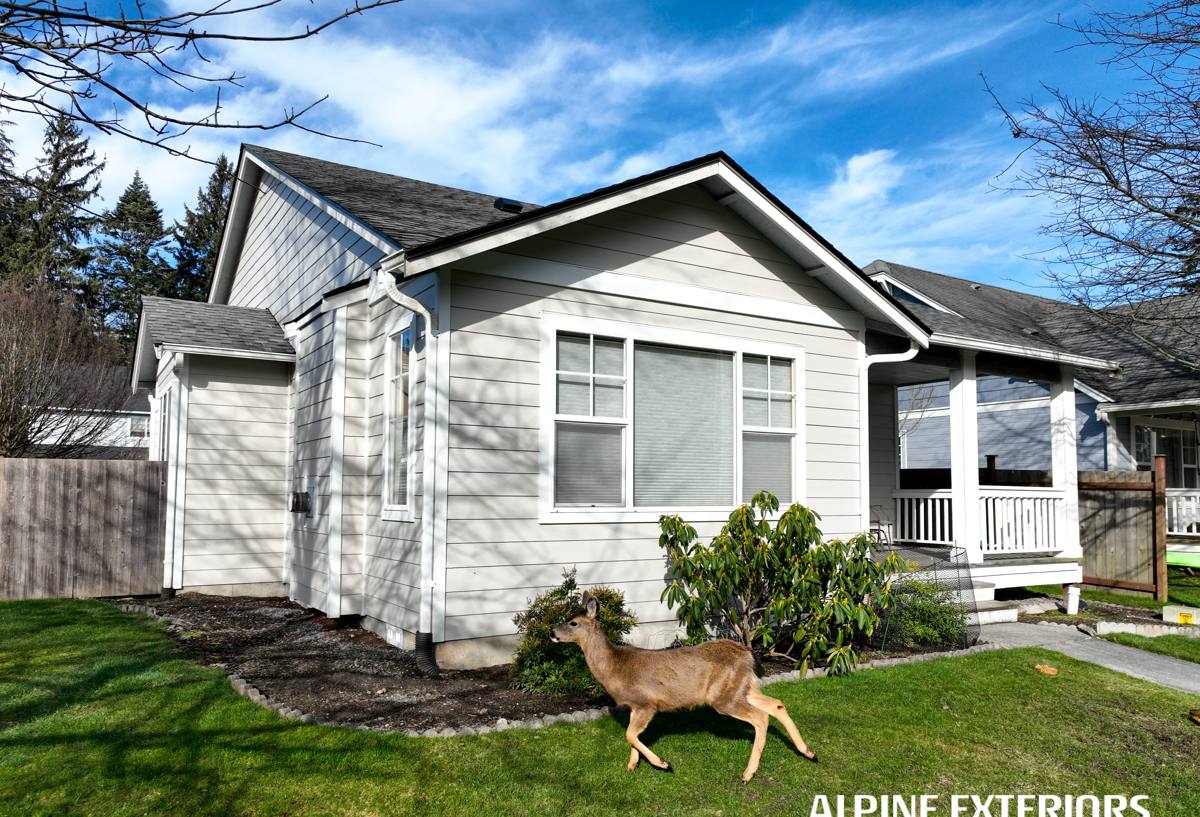
What Whatcom County Weather Actually Does to Siding
Whatcom County's marine climate means rain is a near-constant presence for much of the year, and the region's proximity to the Salish Sea adds a layer of salt-tinged, moisture-laden air that reaches even inland communities on windier days. In Sudden Valley specifically, the bigger daily stressor is the tree canopy and lake-adjacent humidity: shaded siding stays wet longer, and wet siding is where moss, mildew, and wood rot get their foothold.
The Moss Problem
Moss doesn't just look bad. On wood-based siding products, moss and algae hold moisture directly against the substrate, which accelerates swelling, delamination, and paint failure. Once moss has established itself in seams and laps, it's difficult to fully remove without damaging the surface underneath, and it comes back faster than most homeowners expect in a shaded, damp lot like the ones common around Sudden Valley.
The Freeze-Thaw and Rain-Cycle Problem
Whatcom County doesn't get brutal winters, but it does get repeated cycles of saturation, mild freezes, and thaw through the fall and winter months. Any siding material that absorbs water — even a little — goes through repeated expansion and contraction. Over years, that cycle is what causes warping, cracked caulk lines, and failed paint on materials that weren't engineered specifically for this kind of climate.
Why James Hardie Fiber Cement Is Built for This Environment
Fairhaven Siding Contractor installs James Hardie fiber cement exclusively, and in a neighborhood like Sudden Valley that decision isn't theoretical — it's a direct response to what we see happening to other siding materials on shaded, moisture-heavy lots throughout the county.
- Non-combustible composition: Hardie's fiber cement won't feed a fire the way wood-based or engineered wood products can, which matters as much for insurance considerations as for safety.
- Engineered moisture resistance: Fiber cement doesn't absorb and swell the way wood, wood composite, or wood-fiber siding products do, which directly addresses the damp, shaded conditions common around the lake.
- HZ5 and HZ10 product lines: Hardie engineers specific product formulations for different climate zones, including options built for wetter, harsher exposures — relevant for the shadier, more humid pockets of Sudden Valley.
- ColorPlus factory finish: A baked-on finish that resists fading and holds up to repeated wet-dry cycling far better than field-applied paint, which matters when a home is going to spend a lot of its life in shade and moisture.
- Long, transferable warranty: Hardie backs its products with a substantial limited warranty that can transfer to a new owner, which is a real factor if a Sudden Valley home ever changes hands.
We don't install vinyl, LP SmartSide, Cemplank, Allura, primed spruce, or cedar. Each of those products has legitimate uses elsewhere, but none of them hold up as consistently in this specific combination of shade, humidity, and moss pressure as Hardie's fiber cement does, and we'd rather stand behind one system we trust completely than offer several we have reservations about.
How Material Choice Plays Out Over Time
| Factor | Vinyl Siding | Wood/Engineered Wood | James Hardie Fiber Cement |
|---|---|---|---|
| Moisture absorption | Low, but seams can trap water behind panels | Higher — prone to swelling in shaded, damp areas | Engineered to resist moisture intrusion |
| Moss/algae resistance | Surface growth is common in shade | Growth accelerates deterioration | Resistant surface, easier to keep clean |
| Fire resistance | Can soften or deform under heat | Combustible | Non-combustible |
| Finish longevity | Can fade or become brittle over time | Requires repainting/staining on a cycle | Factory ColorPlus finish holds color longer |
| Typical lifespan when installed to spec | 20-30 years | Varies widely with maintenance | Decades, with strong warranty backing |
These are general tendencies, not guarantees for every product on the market — installation quality, ventilation, and maintenance all affect real-world results. But the pattern holds consistently enough in a climate like ours that it shaped our entire business around one material.
Siding Installation Done Right for a Lot Like This
Material choice only solves half the problem. The other half is installation practice suited to a shaded, moisture-prone lot, which is where a lot of siding jobs — regardless of material — go wrong.
What We Pay Attention To
- Proper rain-screen or drainage-plane detailing behind the siding so any moisture that does get past the surface has somewhere to go
- Correct flashing at windows, doors, and roof-to-wall intersections, which are the most common failure points on shaded homes
- Fastener spacing and placement to Hardie's published installation specs, since improper fastening is one of the most common causes of early siding failure
- Proper clearance between siding and grade, decks, and roof lines to avoid wicking moisture directly into the bottom courses
- Caulking and sealant choices that hold up under repeated wet-dry cycling rather than cracking after a season or two
Hardie's product warranty is tied to installation done to their specification, so cutting corners on any of the above doesn't just risk a callback — it can put the manufacturer's warranty coverage at risk too.
Beyond Siding: Roofing, Windows, and Decks Facing the Same Conditions
The same shade, moisture, and moss pressure that affects siding around Sudden Valley affects the rest of a home's exterior too, and we handle all of it as one connected system rather than treating each component in isolation.
Roofing
Roof surfaces under heavy tree cover deal with moss growth, needle and debris buildup, and prolonged dampness in valleys and north-facing slopes. A roof that isn't maintained or installed with adequate ventilation and moss-resistant details will shorten its own lifespan and can contribute to moisture problems in the siding and trim below it.
Windows
Window flashing and sealing are one of the most common sources of hidden water intrusion behind siding. When we replace siding on a Sudden Valley home, we look closely at window integration, since a leak at the window opening can undermine even a well-installed siding job.
Decks
Decks in shaded, damp lots see the same moss and moisture pressure as siding, plus the added stress of ground-level humidity. Deck-to-house connections are also a common point where water gets driven into wall assemblies if flashing wasn't done correctly, which is another reason to have the same crew thinking about siding, decks, and water management together.
Why a Local Crew Matters Here
A crew that works throughout Whatcom County knows the difference between a straightforward install on an open, sunny lot and a shaded, tree-heavy property like the kind common in Sudden Valley. That means adjusting drying-time expectations, planning around wet-season scheduling, and knowing which details actually matter for a lot that stays damp longer than most.
It also means being available for warranty follow-up, seasonal questions, or a second look at a trim detail without a homeowner having to track down an out-of-town crew that's moved on to the next region.
What to Look for When Hiring a Contractor for a Home Like Yours
- Ask whether the crew is factory-trained or certified specifically on the siding product they're proposing
- Confirm in writing which flashing, drainage, and fastening details they follow, not just which brand of siding they sell
- Ask how they handle shaded, high-moisture areas of the home differently from sun-exposed walls
- Get a clear explanation of warranty coverage — both the manufacturer's product warranty and the contractor's workmanship warranty
- Ask for a written scope of work that covers trim, flashing, and water management, not just panel installation
What the Process Typically Looks Like
Every home is different, but most Sudden Valley projects follow a similar path: an on-site assessment of the current siding condition and any moisture or moss damage, a detailed proposal covering material, color, and installation scope, scheduling that accounts for the wetter months when drying time matters more, and a final walkthrough once the work is complete. We're upfront about timeline and weather-related scheduling adjustments rather than promising dates we can't guarantee in a climate this unpredictable.
If your home is showing moss buildup, soft spots, peeling paint, or siding that never seems to fully dry out, it's worth having someone take a look before those issues turn into structural repairs. We offer free, no-pressure estimates for siding, roofing, window, and deck work throughout Sudden Valley and the surrounding Whatcom County area — reach out through the form below to get one scheduled.