 Fairhaven Siding
 The Problem Isn't Always What You See
By the time siding damage shows up on the surface — a bubble in the paint, a soft spot near a window, a stain creeping up from the bottom edge — the real problem has usually been going on for a while. Siding's main job isn't to look good. It's to keep water out of the wall assembly behind it: the sheathing, the framing, the insulation. When that system fails, it rarely fails all at once. It fails slowly, quietly, behind a wall that still looks fine from the driveway.
That's the piece most homeowners in Fairhaven don't get warned about. A siding product can look perfectly intact for years while water is already working on the wood underneath it. Understanding how that happens — and why some materials resist it far better than others — is the difference between a maintenance item and a full wall rebuild.
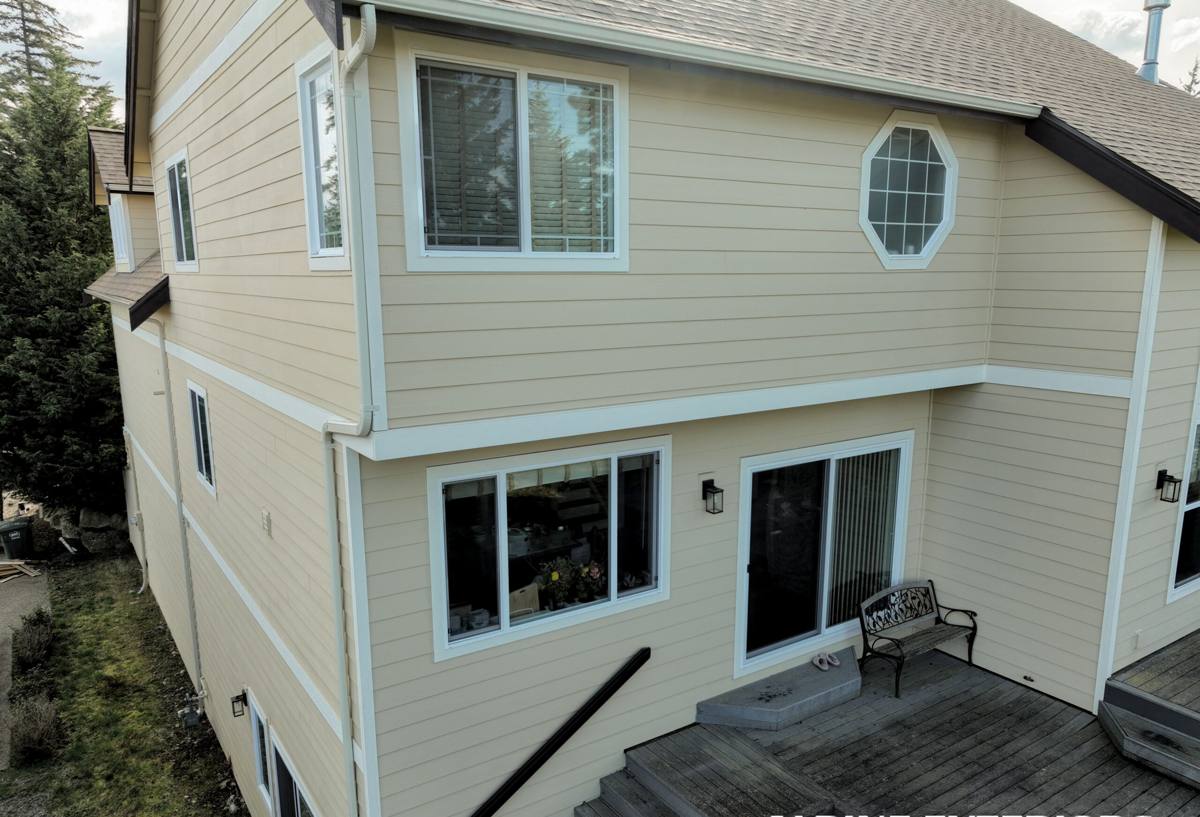
How Moisture Gets Behind Siding in the First Place
Siding doesn't need a hole in it to let water in. Most moisture intrusion happens at the small, unglamorous details that are easy to get wrong during installation and easy to ignore during maintenance.
Failure Points at Penetrations
Every window, door, hose bib, light fixture, and vent is a place where the siding has to be cut and sealed around something else. Each of those cuts needs proper flashing and, in many cases, sealant that's rated for the exposure. Skip the flashing, use the wrong sealant, or let old caulk crack and shrink without replacing it, and you've created a direct path for water to travel behind the siding rather than off of it.
Failure Points at the Ground Line
Siding installed too close to grade, decks, or roof lines wicks up moisture constantly — either from splash-back off the ground or from standing water where two surfaces meet. This is one of the most common failure points we see, and it's almost always an installation or design issue rather than a defect in the siding material itself.
What Happens Once Water Gets In
Once moisture is behind the siding, the clock starts. Sheathing and framing are wood products, and wood that stays wet doesn't dry out on its own if it's sealed behind cladding with no way to escape. Over time this leads to:
- Soft, spongy sheathing that no longer holds a nail or screw properly
- Wood rot in the studs and framing members behind the wall
- Mold and mildew growth inside the wall cavity, which can affect indoor air quality
- Paint and finish failure on the siding itself, as trapped moisture pushes outward
- Insulation that loses its effectiveness once it gets wet and stays wet
None of this is visible from the outside until it's advanced. That's why so many siding "surprises" turn out to be years in the making by the time a homeowner calls a contractor.
Why Some Siding Materials Handle Moisture Better Than Others
Not all siding responds to moisture exposure the same way. Some materials are dimensionally stable and largely indifferent to damp conditions. Others absorb water, swell, or break down chemically when they stay wet for extended periods. This matters more in a marine climate than it does almost anywhere else in the country.
| Material | How it responds to moisture | Maintenance burden |
|---|---|---|
| Primed spruce / wood lap | Absorbs water readily; prone to swelling, cupping, and rot if the finish fails | High — repainting and caulk touch-ups every few years |
| Vinyl siding | Doesn't absorb water itself, but doesn't stop water either — moisture passes behind it easily at seams and penetrations | Low surface maintenance, but hides problems behind it |
| Engineered wood (LP SmartSide and similar) | Treated to resist moisture better than raw wood, but still wood-based — edge swelling and delamination are known failure modes if water reaches cut edges or seams | Moderate — edge sealing and caulk maintenance matter a lot |
| Fiber cement (James Hardie) | Cement-based composition doesn't rot, swell, or support mold growth even with repeated wetting | Low — periodic caulk and paint checks, no rot risk in the material itself |
This is the core reason our company standardized on James Hardie fiber cement and stopped installing wood-based and vinyl products. It isn't that those products can't be installed correctly — it's that their long-term performance depends heavily on maintenance staying perfect for decades in a climate that doesn't make that easy.
Fairhaven's Climate Makes This Worse
Fairhaven sits right on Bellingham Bay, and that location cuts both ways. It's part of what makes the neighborhood beautiful, and it's also what makes siding here work harder than siding almost anywhere inland. Salt-laden air off the water accelerates the breakdown of fasteners, caulk, and finishes faster than a dry climate would. Whatcom County's driving winter rains — often wind-driven, not just falling straight down — push water sideways into joints and laps that a calmer climate wouldn't stress nearly as hard. And the long, damp moss season that runs through much of the fall and winter keeps north-facing and shaded wall sections wet for extended stretches, which is exactly the condition that lets rot and mold take hold.
None of this means siding is doomed here. It means the margin for error is smaller. A detail that might hold up for twenty years in a dry inland climate can fail in half that time a few blocks from the water.
The Installation Factor: Even Good Material Fails With Bad Install
It's worth being honest about something: no siding material, including the one we install, is moisture-proof if it goes on wrong. A rainscreen gap that lets water drain and the wall breathe, correctly lapped and taped weather-resistive barrier, properly flashed windows and penetrations, and fasteners driven to the manufacturer's spec all matter as much as the product choice itself. We've seen premium siding fail early because of a rushed install, and we've seen basic materials outlast their expected life because someone took the flashing details seriously.
That's part of why product choice and installation standards go together for us. We don't just pick a material we trust — we install it to the manufacturer's published specifications every time, because a warranty is only as good as the install underneath it.
Warning Signs Worth Checking For
You don't need to be a contractor to catch moisture problems early. A walk around the exterior once or twice a year, especially after Whatcom County's wet season, can catch issues while they're still cheap to fix.
- Paint that's bubbling, peeling, or alligatoring in patches rather than evenly across a wall
- Soft or spongy siding when you press on it, especially near the bottom courses
- Dark streaking, staining, or persistent moss growth concentrated in one area rather than spread evenly
- Visible gaps or cracked caulk around windows, doors, and other penetrations
- A musty smell inside near an exterior wall, which can indicate trapped moisture behind the siding
- Siding boards that have visibly swollen, warped, or separated at the seams
Any one of these on its own might be minor. Several of them together, or any of them combined with an interior smell or stain, is worth having looked at before it spreads.
What We Install Instead — and Why
Given everything above, we made a deliberate decision to install James Hardie fiber cement siding exclusively. It's non-combustible, it doesn't rot or support mold growth the way wood-based products can, and its ColorPlus factory finish holds up to sun and salt air without the repainting cycle that wood and some engineered products require. Hardie's HZ product lines are engineered for specific climate zones, which matters in a region that swings between dry summers and a genuinely wet, moss-heavy winter. Combined with a transferable warranty, it's the product we're comfortable standing behind on a home that's going to face decades of Bellingham Bay weather.
We're not going to tell you every other product on the market is bad — plenty of homes are sided in wood, vinyl, or engineered wood products and do fine with diligent upkeep. What we will say is that after years of doing this work in this climate, Hardie is the material we trust enough to install on our own standards, and it's what we recommend when a homeowner asks us what to put on their house.
If you're noticing any of the warning signs above, or you just want an honest look at how your current siding is holding up, we're happy to come take a look. There's no pressure and no obligation — just a straight answer about what's going on behind the wall and what your options are. Fill out the form below to schedule a free estimate.