 Fairhaven Siding
 A Standard, Not a Sales Pitch
Homeowners sometimes ask why we don't carry a full lineup of siding brands the way a big-box remodeler might. The honest answer is that we made a decision years ago to install James Hardie fiber cement siding exclusively, and we haven't second-guessed it. That's not a marketing gimmick — it's a standard we hold because Whatcom County's marine climate is genuinely hard on exterior building materials, and we got tired of watching other products struggle with conditions that Hardie handles well when installed correctly.
This page explains the reasoning in plain terms: what Fairhaven's weather actually does to siding over a couple of decades, what fiber cement offers that other materials don't, and specifically why James Hardie is the fiber cement we choose to put our name behind.
What Fairhaven's Climate Does to Siding
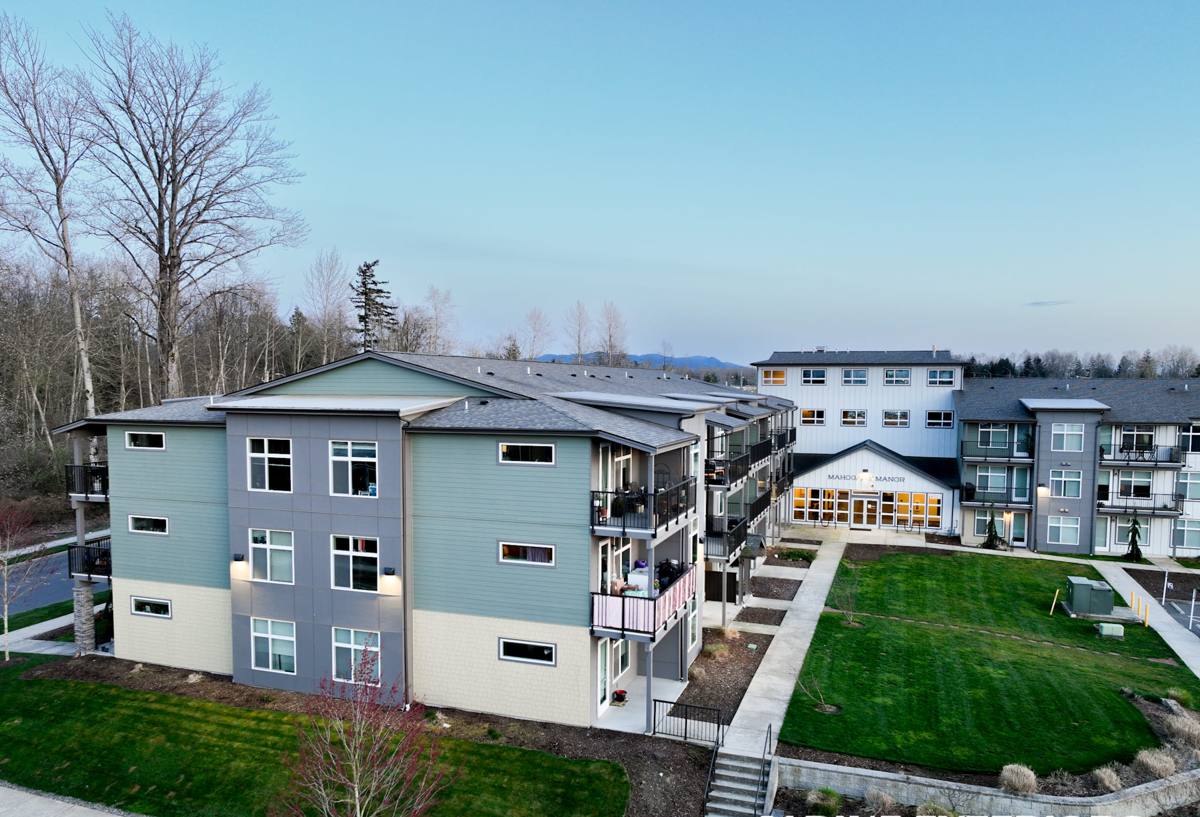
Fairhaven sits right on Bellingham Bay, which means every exterior surface on a home here deals with a combination most inland Washington towns don't see nearly as intensely: salt-laden air off the water, driving wind-driven rain for months at a time, and a long, damp shoulder season where moss, algae, and mildew get a real foothold on anything that stays wet.
- Salt air accelerates corrosion of fasteners, trim hardware, and any coating that isn't formulated to resist it.
- Driving rain doesn't just fall straight down here — wind pushes it sideways into wall assemblies, which punishes any siding product with weak seams, poor water-shedding detail, or a tendency to absorb moisture at the edges.
- Moss and algae season in Whatcom County can run from early fall through late spring. Anything porous or slow to dry stays damp longer, which is exactly what organic growth needs.
Every siding decision on a Fairhaven home should start with those three facts, not with a color swatch.
The Case for Fiber Cement, Generally
Before getting into brand specifics, it's worth explaining why fiber cement as a category is where we landed, rather than vinyl or wood.
Fiber cement is a blend of cement, sand, and cellulose fiber, cured into rigid boards and panels. Compared to vinyl, it doesn't soften, warp, or crack in temperature swings, and it's non-combustible rather than melting under radiant heat. Compared to wood — cedar or primed spruce — it doesn't rot, doesn't feed insects, and doesn't need to be repainted every few years to stay watertight. Those are real, measurable differences in a climate like ours, not marketing language.
That said, "fiber cement" isn't one product. Several manufacturers make it, and the differences between them show up over the 20-30 year ownership window, not on day one.
Why James Hardie Specifically
We get asked why we don't also install Cemplank or Allura, which are also fiber cement products. The short version: James Hardie was the company that engineered fiber cement specifically for regional climate zones, backs it with a plank warranty structure we're comfortable standing behind, and has a factory finish system (ColorPlus) that has a long track record in wet coastal climates like ours. We'd rather install one product extremely well, with crews who know its installation requirements cold, than juggle multiple systems and installation specs across jobs.
This isn't a claim that competing fiber cement products are defective — they're legitimate building materials. It's a statement about our own standard: after years of installation experience in this specific climate, Hardie is the system we trust enough to warranty our workmanship on top of.
The HZ5 Climate Engineering
James Hardie makes different formulations of its siding for different climate zones across the country — HZ5 and HZ10 are engineered for regions with more moisture exposure and freeze-thaw cycling, which describes Whatcom County well. The HZ5 formulation is what we specify for Fairhaven installations. It's built to resist moisture-related damage better than a generic, one-size-fits-all fiber cement product, which matters a great deal when driving rain off the bay is a routine event rather than an occasional storm.
ColorPlus Factory Finish
One of the biggest practical differences between Hardie and job-site-painted siding is the ColorPlus finish. Instead of being painted after installation, the color is baked on at the factory in a controlled process, which produces a more even, more durable finish than most field-applied paint jobs can match. In a salt-air environment, where coatings take a beating, that factory-cured finish resists fading and chipping longer than typical site-applied paint — and touch-up product is formulated to match, so repairs don't turn into a full repaint.
Warranty Structure
James Hardie backs its siding with a limited warranty that is transferable to a subsequent homeowner, which matters in a market like Fairhaven where homes change hands and buyers ask pointed questions about exterior condition. ColorPlus finishes carry their own separate finish warranty covering fading and peeling. We won't quote exact terms here since warranty language changes and is best read directly from Hardie's current documentation, but the structure itself — product coverage plus finish coverage, transferable to future owners — is part of why we standardized on this system rather than a product with a thinner warranty or one tied to the original purchaser only.
What We Chose Not to Install, and Why
We don't install vinyl siding, LP SmartSide, primed spruce, or cedar siding on Fairhaven homes. Each of those is a legitimate product with a place in the industry — we simply don't think they hold up to this specific climate as well as Hardie does over a multi-decade ownership window.
| Material | What It Gets Right | The Trade-Off in Our Climate |
|---|---|---|
| Vinyl | Low upfront cost, low maintenance day-to-day | Can warp or become brittle with temperature swings; seams and lap joints give wind-driven rain more paths inward; not fire-rated |
| LP SmartSide (engineered wood) | Lighter weight, easier installation, reasonable cost | Wood-based core is more moisture-sensitive at cut edges and fastener points; requires diligent caulking and paint maintenance to keep water out |
| Cedar / Primed Spruce | Natural look, renewable material | Needs regular refinishing to stay watertight; more attractive to moisture, rot, and insects in a persistently damp climate |
| James Hardie Fiber Cement (HZ5) | Non-combustible, climate-engineered formulation, factory-cured finish, strong transferable warranty | Higher upfront material and labor cost; installation is less forgiving of shortcuts |
What Correct Installation Actually Involves
Fiber cement's real-world performance depends heavily on installation quality — this is true of any Hardie product, and it's the other half of why we only install one system. A crew that knows Hardie's spec sheet cold will get decades out of it; a crew cutting corners can undermine even the best material. In a climate that pushes rain sideways into wall assemblies, the details below aren't optional extras — they're what keeps water out of the wall.
- Proper weather-resistive barrier and flashing behind every seam, window, and door opening
- Correct starter strip installation at the base of the wall to set the first course level and kick water outward
- Minimum clearance from grade, decks, and roof lines so siding never sits in standing water or snow
- Fasteners driven to Hardie's specified depth and spacing — not overdriven, not underdriven
- Butt joints and seams properly caulked or flashed per Hardie's installation manual, not just butted together
- Panels and planks stored and cut per manufacturer guidance to protect factory-cured edges
- Adequate gap and sealant at trim transitions to allow for material movement without cracking the finish
Any of these done wrong can shorten the life of even the best siding material on the market. We treat the installation spec as non-negotiable, not a set of suggestions.
Cost Factors to Expect
Costs for a Hardie install vary by home size, siding profile (lap, shingle, or panel), trim complexity, and whether existing siding needs to be removed versus installed over sheathing. Rather than quote a number that won't reflect your specific home, here's what typically moves the price:
| Factor | Why It Matters |
|---|---|
| Home size and wall complexity | More corners, dormers, and trim detail mean more labor per square foot |
| Tear-off vs. install-over | Removing old siding and inspecting/repairing sheathing underneath adds cost but is often the right call on older homes |
| Siding profile chosen | Lap siding, shingle-style panels, and board-and-batten each have different material and labor costs |
| Trim and accessory scope | Corner boards, window trim, and fascia detail in ColorPlus-matched materials add to the finished look and the price |
Making the Decision for Your Home
If you're planning a siding replacement in Fairhaven or elsewhere in Whatcom County, the material decision matters more here than in a drier, inland climate. We'd rather walk your property, look at your home's specific exposure to wind and rain off the bay, and talk through what a Hardie installation would actually look like for your house than give you a generic pitch.
If you'd like a free, no-pressure estimate, we're happy to take a look at your home and walk you through exactly what we'd recommend and why.