 Fairhaven Siding
 Exterior Work on Lummi Island: A Different Set of Conditions
Lummi Island sits out in the marine air of Whatcom County, close enough to the Salish Sea that salt spray, wind-driven rain, and heavy shade are just part of owning a home there. It's a smaller, more exposed environment than a lot of inland neighborhoods around Fairhaven and Bellingham, and homes on the island tend to show the effects of that exposure faster if the exterior wasn't built for it. We work throughout Whatcom County, and Lummi Island is one of the areas where the difference between a siding system chosen for looks and one chosen for the actual climate shows up clearly within a few years.
Getting to and from the island means factoring in the county ferry, which is a normal part of scheduling exterior work out there — it's not a barrier, just a logistics detail a crew needs to plan around so a project isn't held up waiting on materials or equipment. A contractor who's done work on the island before knows to stage materials and plan trips accordingly, rather than treating it like any mainland job.
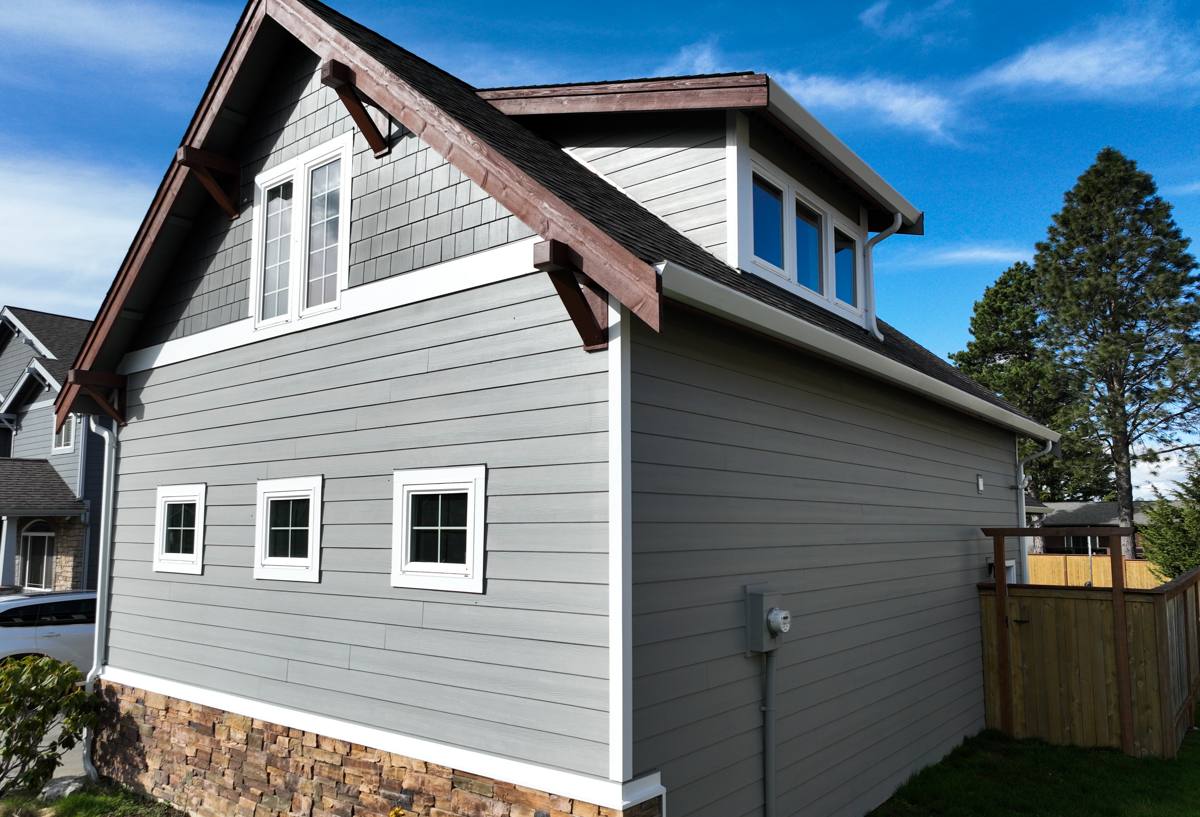
What Island Homes Are Actually Up Against
Salt Air and Corrosion
Airborne salt doesn't just affect boats and docks. It settles on siding, trim, fasteners, and flashing, and over time it accelerates corrosion on anything that isn't rated for a marine environment. Cheap fasteners rust and streak the siding around them. Untreated or poorly coated trim pieces degrade faster than they would a few miles inland. This is one of the first things we check on an island home — not just what the siding is made of, but what's holding it on.
Driving Rain
Exposed island lots catch wind-driven rain that gets pushed sideways into walls, not just straight down onto roofs. That kind of rain finds every gap in flashing, every poorly lapped seam, and every place where caulk was used to patch a detail that should have been built to shed water on its own. Siding and trim on Lummi Island need to be installed with that reality in mind, not with techniques that only work in calmer, more sheltered conditions.
Moss and Shade
Between tree cover and the long damp stretch of a Pacific Northwest fall through spring, a lot of island homes deal with a genuinely long moss and algae season. North-facing walls and shaded siding under overhangs are the areas that stay damp longest, and that's where moss, mildew, and algae staining take hold first. Materials that hold moisture, or that need frequent recoating to resist growth, end up needing more attention out here than they would in a drier climate.
Why the Siding Material You Choose Matters More Here
Inland, a mediocre siding choice might get away with looking fine for a decade before problems show up. On an exposed island lot, the same material is dealing with more moisture cycles, more salt exposure, and more shaded, slow-drying wall area. That accelerates whatever weaknesses the material already has — swelling, delamination, coating failure, fastener corrosion, or moss buildup. The table below is a general comparison of how common siding materials tend to hold up under these specific conditions.
| Material | Moisture / Rain Exposure | Moss & Algae Resistance | Typical Maintenance |
|---|---|---|---|
| Vinyl siding | Can warp or gap over time; seams are a weak point in driving rain | Traps moisture behind panels in shaded areas | Low upfront, but limited repair options once damaged |
| Primed wood / cedar | Absorbs moisture; needs an intact paint film to perform | Prone to moss and mildew in shaded, damp spots | Frequent recoating and caulk maintenance |
| LP SmartSide (engineered wood) | Wood-based core is moisture-sensitive at cut edges and damage points | Can support growth if coating is compromised | Ongoing edge sealing and coating upkeep |
| James Hardie fiber cement | Engineered for wet, coastal climates; dimensionally stable when wet | Doesn't feed moss or rot the way wood-based products can | Occasional washing; factory finish reduces repainting needs |
This isn't a knock on every one of these products in every setting — it's specifically about what tends to hold up on an exposed, damp, shaded island lot over the long run.
Why We Only Install James Hardie Fiber Cement
We made the decision to install James Hardie exclusively, and we don't install vinyl, LP SmartSide, Cemplank, Allura, primed spruce, or bare cedar. That's not a marketing position — it's a standard we hold to because of what we've seen hold up in Pacific Northwest coastal conditions and what hasn't.
James Hardie fiber cement is non-combustible, which matters for insurance and fire-safety considerations regardless of climate. More relevant to Lummi Island specifically, Hardie's HZ5 product line is engineered for the kind of wet, marine-influenced climate zone that covers western Washington, including the islands. The ColorPlus factory finish is baked on under controlled conditions, which gives it more consistent, longer-lasting coverage than field-applied paint on wood-based siding — that matters directly for a material that's going to face salt air and long damp stretches without constant attention. Hardie also backs its products with a strong transferable warranty, which carries real weight on a coastal property where owners want assurance the exterior will perform for the long haul, not just look good on installation day.
We're not going to tell a homeowner that vinyl or engineered wood siding is garbage — plenty of installations perform fine in the right setting. But on an exposed Lummi Island lot dealing with salt air, driving rain, and a long moss season, we've standardized on the one product system built specifically for that kind of exposure, and installed correctly.
What Correct Installation Looks Like Out Here
Fiber cement siding is only as good as the installation behind it, and that's especially true in a marine environment where water management details carry more weight than they would somewhere drier.
- Proper flashing above windows, doors, and any horizontal trim so water is directed out and away from the wall, not sideways into it
- Correct fastener spacing and type — corrosion-resistant fasteners rated for the exposure, set to Hardie's specification rather than "close enough"
- Adequate rain-screen gap or drainage plane behind the siding so any moisture that does get behind the panel can drain and dry rather than sit against the sheathing
- Caulk used only where it belongs — as a supplement to good flashing and lapping, not as a substitute for it
- Proper clearance between the bottom of the siding and grade, decks, or roofing to avoid constant wicking of moisture into the material
None of this is unique to Lummi Island, but the consequences of skipping it show up faster out here because the wall is dealing with more water and salt exposure to begin with.
Beyond Siding: Roofing, Windows, and Decks
Roofing
A roof on an exposed island lot deals with the same driving rain and salt air as the siding below it. Flashing at valleys, chimneys, and penetrations needs the same level of attention as wall flashing — that's where roof leaks actually start, far more often than in the field of the roofing material itself.
Windows
Old or poorly flashed windows are a common source of water intrusion on older island homes, and they're also one of the bigger contributors to heat loss and condensation in a damp climate. When we're already opening up a wall for siding work, it's often the right time to address window flashing and performance at the same time, rather than as a separate project later.
Decks
Decks on Lummi Island take a beating from the same rain and shade that affects siding, plus standing moisture on horizontal surfaces, which is a harder condition than a vertical wall ever faces. Ledger board flashing and proper drainage away from the house are the details that matter most for keeping a deck attached to a home from becoming a moisture problem for the siding right above it.
Maintenance for Lummi Island Homes
Even the right materials benefit from some basic seasonal attention on an island property. Here's what we generally recommend homeowners keep an eye on:
- Rinse siding periodically, especially on shaded or north-facing walls, to keep moss and algae from establishing
- Keep gutters clear so water isn't overflowing directly onto siding or trim below
- Trim back vegetation and tree cover that keeps walls damp and shaded for extended periods
- Check caulking and sealant at trim joints and window edges annually, since coastal UV and salt exposure can break these down faster than inland
- Have flashing and fastener condition checked periodically, particularly on the sides of the home most exposed to wind-driven rain
Why a Local, Experienced Crew Makes a Difference
Working on Lummi Island isn't the same as working a standard mainland lot in Whatcom County. Ferry scheduling affects how a project gets planned and staged. Exposure to salt air and wind changes which installation details matter most. And the long damp season means moisture management can't be an afterthought — it has to be built into the plan from the start. A crew that's done this work around Fairhaven and the surrounding islands understands those realities going in, rather than treating every job the same regardless of where it sits.
If you're weighing a siding, roofing, window, or deck project on Lummi Island, we're happy to walk the property, talk through what your home is actually facing, and put together a straightforward, no-pressure estimate.