 Fairhaven Siding
 Marietta Sits Right Where the Weather Gets Serious
Marietta is one of those Whatcom County neighborhoods where you feel the water before you see it. Sitting along Bellingham Bay just north of Fairhaven, homes here take a steadier dose of salt-laden air, wind off the water, and the long, gray stretch of Pacific Northwest rain than houses even a few miles inland. If you've lived in Marietta for a while, you already know this. What you may not know is how much that specific mix of conditions should shape the exterior products you put on your house.
We work throughout Fairhaven and the surrounding Bellingham Bay communities, and Marietta comes up often precisely because of its exposure. This page is meant to walk through what we actually see on homes in this area, how our siding, roofing, window, and deck work is built around those conditions, and why we've standardized on one siding product instead of offering the usual menu of options.
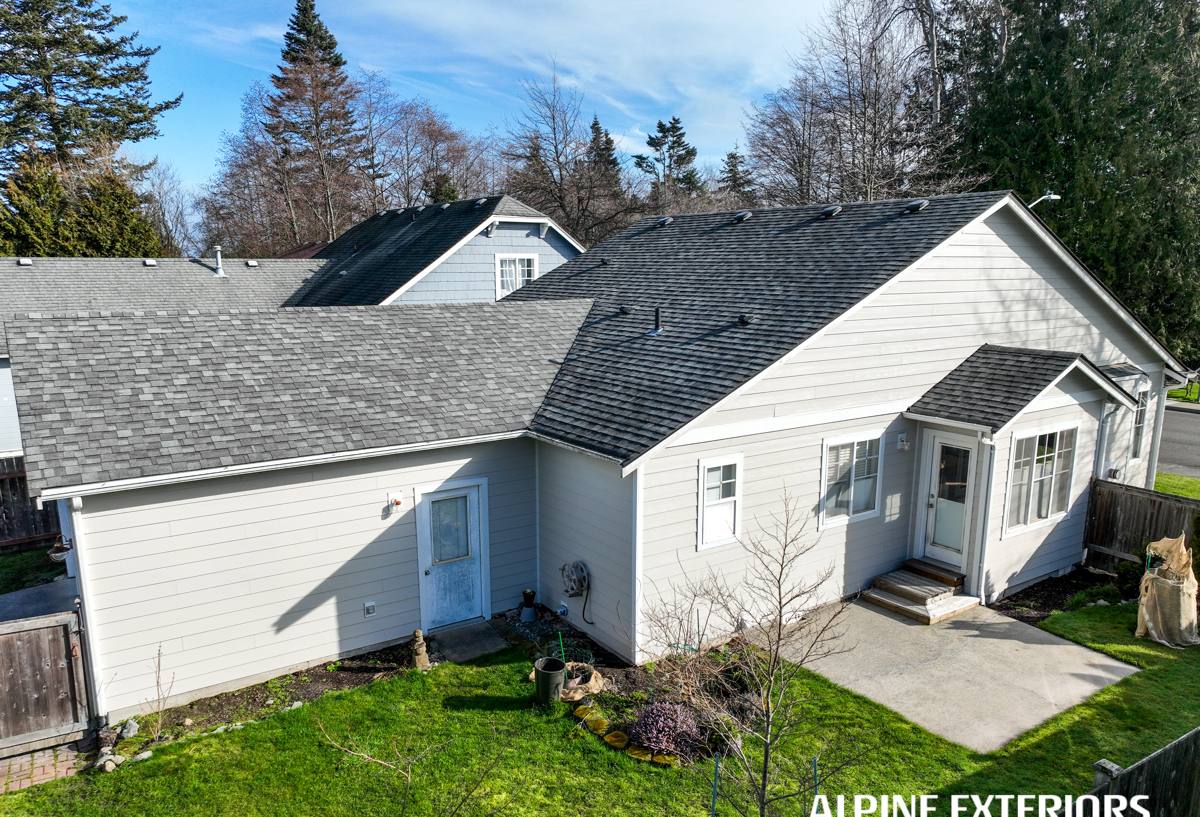
What the Climate Actually Does to a Marietta Home
Three things drive almost every exterior problem we find on homes in this part of Whatcom County: salt air, driving rain, and a moss season that can run most of the year.
Salt Air
Proximity to Bellingham Bay means a fine mist of salt-bearing air moves through the neighborhood regularly, especially with onshore wind. Salt is corrosive to exposed metal fasteners and trim, and it accelerates the breakdown of finishes that aren't formulated to handle it. Over years, this shows up as premature fading, chalking paint, and rust streaking at fastener heads and flashing seams.
Driving Rain
Whatcom County doesn't just get a lot of rain — it gets a lot of wind-driven rain, which behaves very differently than a straight-down shower. Wind-driven rain gets pushed sideways and upward under laps, around trim, and into any gap that a calm-weather installation might get away with. Siding, flashing, and window details that aren't built and installed for driving rain will eventually let moisture behind the cladding, and once it's behind the cladding, it's working on your sheathing and framing where you can't see it.
Moss Season
Shaded, damp, and mild — that's most of the year here — which is exactly what moss and algae need to establish themselves on roofs, north-facing siding, decks, and anywhere airflow and sun exposure are limited. Moss holds moisture against the surface it's growing on, which is a problem for organic materials like untreated wood and some engineered wood products in particular.
How These Conditions Play Out Differently by Material
Not every siding product handles this combination of salt, rain, and moss the same way. This is the core reason our company made the decision, years ago, to install only James Hardie fiber cement siding and to stop offering vinyl, LP SmartSide, cedar, or other engineered wood products — not because those products are worthless everywhere, but because of how they perform specifically in an environment like Marietta's.
| Material | How it handles salt air | How it handles driving rain / moisture | How it handles moss and organic growth |
|---|---|---|---|
| Vinyl siding | Doesn't corrode, but color fades and the material can become brittle with sun and salt exposure over time | Panels can allow water intrusion at seams and penetrations; relies heavily on the water-resistive barrier behind it | Smooth surface resists growth somewhat, but grime and algae still build in shaded areas |
| LP SmartSide / engineered wood | Factory finish holds up reasonably well, but any breach exposes wood-based substrate | Engineered wood strand product; edge and cut-end sealing is critical or moisture wicks into the panel | Vulnerable if moisture and organic growth reach the wood substrate through an unsealed edge or fastener |
| Cedar / primed spruce | Natural wood; salt air accelerates finish breakdown and graying | Absorbs and releases moisture with weather cycles; needs consistent refinishing to stay protected | Organic material — one of the more moss- and rot-susceptible claddings without diligent upkeep |
| James Hardie fiber cement | Non-combustible cement composite; ColorPlus factory finish is engineered to resist fading and salt exposure | Dense, dimensionally stable material; HZ product lines are engineered for regional moisture exposure | Inorganic substrate doesn't feed moss or rot the way wood-based products can |
None of this means the other products are junk everywhere they're used — plenty of them perform fine in drier, less exposed climates. It means that for a neighborhood sitting this close to salt water with this much annual rainfall, we think the trade-offs stop making sense, and we'd rather put one product on your house that we trust completely than several we'd have to caveat.
Why We Standardized on James Hardie
James Hardie fiber cement is a cement-based composite, not a wood product, which is the fundamental reason it behaves differently in this climate. It won't rot, it doesn't feed moss the way organic materials can, and it's non-combustible, which matters given the wildfire smoke and dry-season fire risk that's become a more regular part of Pacific Northwest summers even in wetter counties like this one.
The ColorPlus factory finish is baked on in a controlled environment rather than field-applied, which gives it more consistent coverage and better resistance to fading and chalking than a job-site paint job — a real advantage against Marietta's salt air. Hardie also builds specific product lines, referred to as HZ5 and similar engineered variants, matched to different climate zones; the versions specified for this region account for the moisture exposure that's typical here rather than treating every install like it's in a dry inland climate.
Finally, Hardie backs its siding with a strong, transferable non-prorated warranty on the material itself, separate from our own labor warranty. That matters to us because it means the manufacturer stands behind the product's long-term performance, not just its appearance on install day.
It's Not Just Siding — The Whole Exterior Envelope Has to Work Together
Siding doesn't work in isolation. On a home exposed to driving rain and salt air, siding, roofing, windows, and any exterior decking all interact, and a weak point in one system undermines the others.
Roofing
Roof drainage, flashing at valleys and penetrations, and proper ventilation all affect how much moisture ends up working its way down toward your siding and trim. A roof that's shedding water correctly takes real pressure off everything below it.
Windows
Window flashing and integration with the siding plane is one of the most common failure points we find on homes near the water — not because the window itself failed, but because the flashing detail around it wasn't built to handle wind-driven rain. Getting this right at replacement time is at least as important as the window product itself.
Decks
Decks on homes like these take direct weather exposure with no roof overhang to shield them, plus moss and algae growth on shaded surfaces. Ledger board flashing where a deck attaches to the house is a critical, easy-to-get-wrong detail that determines whether water tracks into your wall assembly.
Because we handle siding, roofing, windows, and decks, we look at these systems as one envelope rather than four separate trades that each blame the others when something leaks.
What an Exterior Project Looks Like for a Marietta Home
Every home is different, but the general sequence for a siding project in this area typically follows a consistent process:
- An on-site inspection that looks past the visible siding to check trim, flashing, window integration, and any signs of existing moisture intrusion
- A discussion of what's actually needed — full replacement, targeted repair, or a combination with roofing, window, or deck work if those systems are also due
- Removal of the old cladding with a check of the sheathing and water-resistive barrier underneath before anything new goes up
- Installation of James Hardie siding to manufacturer spec, including proper fastening, clearances, caulking, and flashing details built for wind-driven rain
- A final walkthrough so you understand what was done and what, if anything, needs periodic attention going forward
The inspection step matters more here than in drier climates. Catching a moisture problem behind old siding before it spreads is far cheaper than discovering it years later as rot in the framing.
Keeping a Marietta Exterior in Good Shape Between Projects
Good material and correct installation do most of the work, but a little seasonal attention goes a long way in this climate. A basic maintenance checklist for homeowners in this area:
- Rinse siding and decking surfaces periodically to keep salt residue and grime from building up, especially on sides of the house facing the water or prevailing wind
- Keep gutters and downspouts clear so rainwater is directed away from the foundation and siding base instead of overflowing against the wall
- Check and re-caulk joints around windows, doors, and trim every couple of years, since caulking is a wear item regardless of how good the siding itself is
- Treat visible moss on roofing, decking, or shaded siding promptly rather than letting it establish and hold moisture against the surface
- Trim back vegetation that keeps a wall or deck shaded and damp longer than necessary after rain
- Watch for any soft spots, discoloration, or bubbling paint near ground level or around window trim — early signs of moisture getting behind the cladding
Why It Helps to Hire a Local Crew
A crew that works Fairhaven and the Bellingham Bay neighborhoods regularly has already seen how this specific stretch of coastline behaves — where wind tends to drive rain hardest, which sides of a house take the worst salt exposure, and how long moss season really runs here compared to a generic Pacific Northwest estimate. That local pattern recognition shows up in small decisions during a project: where extra flashing attention is worth it, which details tend to fail first on homes like yours, and what's realistic to expect between maintenance cycles.
It also means accountability doesn't disappear once the trucks leave. A local company answers to its own neighborhood reputation, works within Whatcom County permitting and code requirements as a matter of routine, and is easy to reach if a question comes up two years down the road.
Get a Straightforward Look at Your Home
If you're weighing a siding replacement, dealing with an aging roof, or thinking about how your windows or deck are holding up against Marietta's weather, we're glad to come take a look. There's no pressure and no sales script — just an honest assessment of what your home actually needs and what it would take to do it right. Use the form below to request a free estimate.