 Fairhaven Siding
 What Primed Wood Siding Actually Is
Primed wood siding — often sold as primed spruce, sometimes as pine or fir — is solid wood milled into lap boards or panels and coated at the factory with a base primer coat before it ever reaches a job site. It's been a staple of West Coast construction for decades because it's inexpensive per square foot, easy for framing crews to cut and nail, and it gives a house that traditional, natural-grain look a lot of buyers associate with a "real" wood home. On paper, it looks like a reasonable, budget-friendly option.
The catch is in that word "primed." Primer is not a finish. It's a base layer that exists to help paint adhere — it is not designed to shed water, resist UV breakdown, or hold up to years of weather on its own. Everything that actually protects the wood underneath has to be added, and then reapplied, by the homeowner, for the entire life of the siding. That single fact drives almost everything else in this article.
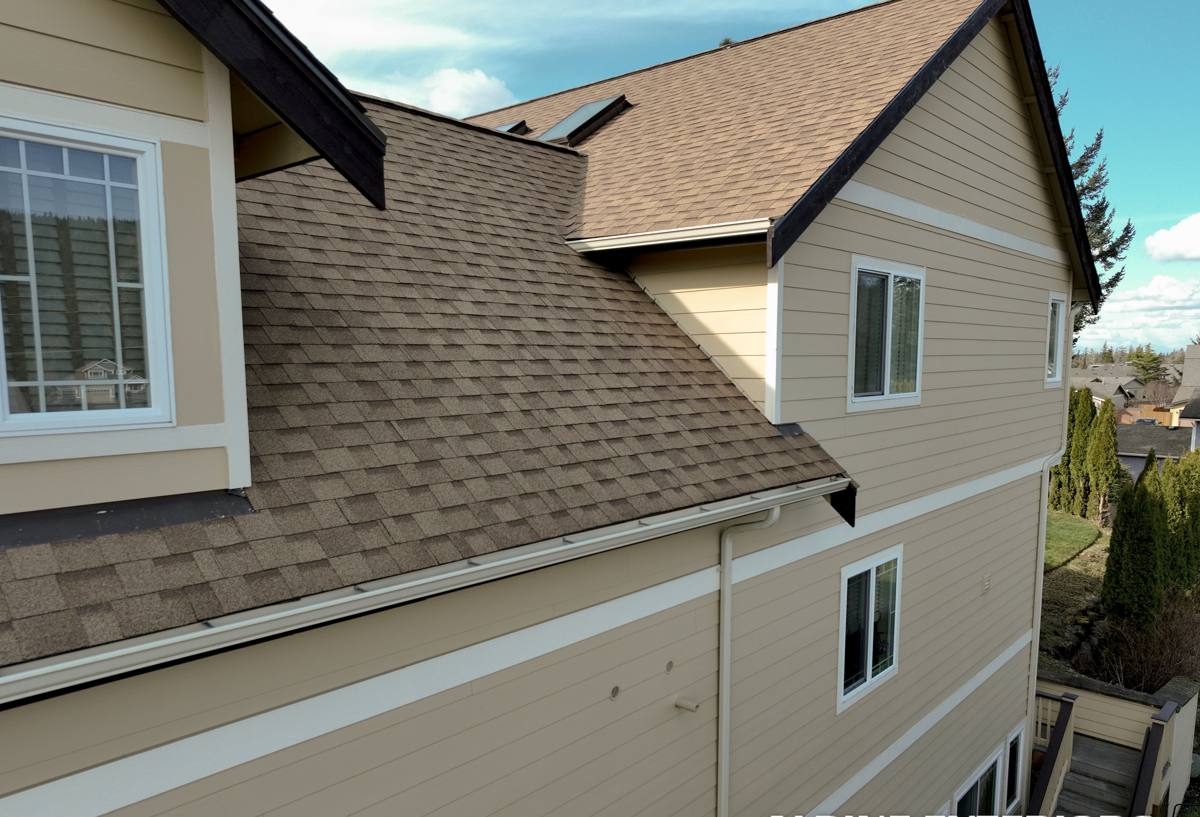
The Core Problem: Paint Is Doing All the Work
Wood siding's durability isn't really a property of the wood — it's a property of the paint film sitting on top of it. As long as that film is intact, unbroken, and fully sealed at every joint, edge, and fastener, the wood underneath stays dry and stable. The moment that film cracks, chips, or lets go at a butt joint or nail head, water gets a direct path into bare wood fibers. Wood is hygroscopic — it absorbs and releases moisture with the seasons — and that constant swelling and shrinking is exactly what breaks paint bonds over time, which lets in more water, which breaks down more paint. It's a cycle, not a one-time repair.
This is why wood siding is often described as "low material cost, high lifetime cost." The board itself is cheap. Keeping it watertight for 20-30 years is where the real expense shows up, and it shows up on a recurring schedule whether or not the homeowner has budgeted for it.
Why Whatcom County's Climate Is a Tougher Test Than Most
Every wood siding installation depends on local weather to determine how long that paint film survives, and Fairhaven's location gives wood siding a harder time than a lot of the country ever sees.
Salt Air Along Bellingham Bay
Homes near the water in Fairhaven and along Bellingham Bay sit in a salt-laden marine air that accelerates the breakdown of paint films and metal fasteners alike. Salt is hygroscopic itself — it pulls moisture out of the air and holds it against exposed surfaces, keeping wood and hardware damp longer between rain events than the same materials would stay in a drier inland climate.
Driving Rain and Wind-Driven Wetting
Whatcom County doesn't just get a lot of rain — a good share of it arrives sideways, driven by wind off the Sound and the Strait of Georgia. Driving rain pushes water into laps, seams, and fastener penetrations that would stay dry in a straight-down rain, which is exactly where wood siding's paint film is thinnest and most vulnerable to begin with.
A Long Moss and Algae Season
Fairhaven's mild, wet stretches from fall through spring create ideal conditions for moss, algae, and mildew growth on north- and shade-facing walls. On wood siding, that growth doesn't just sit on the surface — it holds moisture against the board and its paint film for extended periods, which is one of the more common early failure points we see on wood-clad homes in this area.
What Ownership Actually Looks Like Over Time
None of the issues above are hypothetical worst cases — they're the normal maintenance cycle that comes with the product. Here's what that cycle typically requires from a homeowner who wants primed wood siding to last:
- Full repaint (not touch-up) roughly every 5-8 years, sooner on south- and west-facing walls or near the water
- Annual inspection of caulk joints at butt seams, corners, and trim, with recaulking as needed
- Prompt repainting of any chip, crack, or bare spot before it can absorb water
- Periodic soft-washing to remove moss and algae without damaging the paint film
- Watching for and replacing any board that develops rot, cupping, or delamination before it spreads to neighboring boards
- Keeping gutters, downspouts, and grade drainage in good working order, since splash-back and overflow are common causes of localized wood rot
That's a real, recurring line item in a homeowner's budget and calendar — not a one-time upgrade. Skip a repaint cycle or two, and the deferred cost isn't just "paint it now instead of later." It's often board replacement, because by the time peeling paint is visible, moisture has usually already been working on the wood underneath for a while.
Where Primed Wood Siding Fails First
In our experience walking Fairhaven and Whatcom County homes for estimates, failure on wood siding isn't random — it shows up in the same handful of spots almost every time:
| Location | Why It Fails There |
|---|---|
| Butt joints between boards | End grain absorbs water far faster than the face of the board; caulk here breaks down first |
| Bottom courses near grade | Splash-back from rain and irrigation keeps these boards wet longer than the rest of the wall |
| Nail heads and fastener lines | Paint film is thinnest over fastener heads, and rust bleed can follow once it breaks |
| North and shaded elevations | Slower drying time plus moss and algae growth holds moisture against the board |
| Window and door trim transitions | Caulk joints at dissimilar materials move differently and open up over time |
The Warranty Gap
Wood siding manufacturers typically warranty the board itself against manufacturing defects, not against rot, paint failure, or moisture damage once it's installed and exposed to weather. In practice, that means the homeowner carries essentially all of the real-world risk — the risk that actually shows up in a marine climate like this one — while the paperwork protects against problems that rarely happen. It's a structurally different warranty position than what's available on some other siding categories, and it's one of the practical reasons we stopped installing primed wood on homes in this area.
What We Install Instead
We install James Hardie fiber cement siding exclusively, and the reasoning is the mirror image of everything above. Fiber cement is manufactured from cement, sand, and cellulose fiber — it doesn't have wood's hygroscopic swelling and shrinking, it's non-combustible, and it isn't a food source for moss, algae, or insects the way wood is. Hardie's HZ5 product line is specifically engineered for climates with heavy moisture exposure, which describes Fairhaven's conditions well.
Just as important, Hardie's ColorPlus factory finish is baked on during manufacturing under controlled conditions, not brushed on in the field the way primer-and-paint systems are. That finish is backed by its own dedicated warranty covering fading and peeling, separate from the substrate warranty on the board itself — a warranty structure built around the finish actually holding up outdoors, not just the board being defect-free. For homeowners who want the maintenance conversation to shrink from "repaint every several years" to "occasional wash," that's the practical difference.
Questions Worth Asking Before You Choose Wood Siding
If a contractor is offering primed wood siding and you're weighing it against fiber cement, these are worth asking directly:
- What repaint interval are you assuming, and is that based on this specific site's sun and water exposure?
- Does the quote include a maintenance schedule, or just the initial installation?
- What does the manufacturer's warranty actually cover — the board, or also paint failure and rot?
- How is butt-joint and end-grain sealing being handled during installation?
- What's the plan for moss and algae control on shaded walls?
If those answers are vague, that's usually a sign the long-term cost of the wood siding hasn't been fully priced into the conversation.
Our Honest Bottom Line
Primed wood siding isn't a bad product in the abstract — it's a real, traditional building material with a genuine look that some homeowners specifically want. Our issue isn't with wood siding as a category; it's with putting a paint-dependent, moisture-sensitive product on homes in a place where salt air, driving rain, and a long moss season all work against exactly the weak points wood siding has. We'd rather stand behind one product system we can install and warranty with confidence than sell something we know will need a maintenance conversation we can't fully control after we leave the job site.
If you're weighing wood siding against the alternatives for a home in Fairhaven or elsewhere in Whatcom County, we're glad to walk your specific house with you and talk through what each option would actually mean for your maintenance schedule and budget. Reach out for a free, no-pressure estimate — there's a form right below this page.