 Fairhaven Siding
 Downtown Bellingham sits close enough to Bellingham Bay and the Fairhaven waterfront that homes here deal with a specific mix of weather: salt-laced air off the water, driving rain that comes in sideways off Puget Sound storms, and a moss season that can run from October clear through April. Add in the mature tree cover common to older Whatcom County neighborhoods, and you've got siding conditions that punish anything not built for sustained damp exposure. We've worked on homes throughout this corridor and see the same patterns over and over — it's why we standardized on one siding product instead of offering a menu of them.
What Downtown Bellingham Homes Are Up Against
This isn't a dry-climate market. Whatcom County gets a long, wet shoulder season on both ends of winter, and Downtown Bellingham's proximity to the water means humidity lingers even on days without active rain. That combination creates three recurring problems for exterior siding:
- Moisture cycling — siding gets wet, partially dries, gets wet again, day after day for months at a time.
- Moss and algae growth — shaded north- and west-facing walls, especially under tree canopy, stay damp long enough for organic growth to take hold on porous or textured surfaces.
- Salt exposure — homes closer to the bay pick up airborne salt that accelerates corrosion on fasteners, trim, and any siding material sensitive to mineral intrusion.
None of this is unique to any one house — it's the baseline for this part of Bellingham. The difference between a wall that ages well and one that doesn't usually comes down to the material and the installation, not the weather.
Why Older Downtown Homes Are Especially Sensitive
A lot of the housing stock in and around Downtown Bellingham predates modern moisture-management standards. Older wall assemblies often have limited drainage planes, and by the time a homeowner is looking at new siding, there's a good chance the existing sheathing or trim has already absorbed some moisture damage. Any siding replacement here should start with an honest look at what's underneath, not just what goes on top.
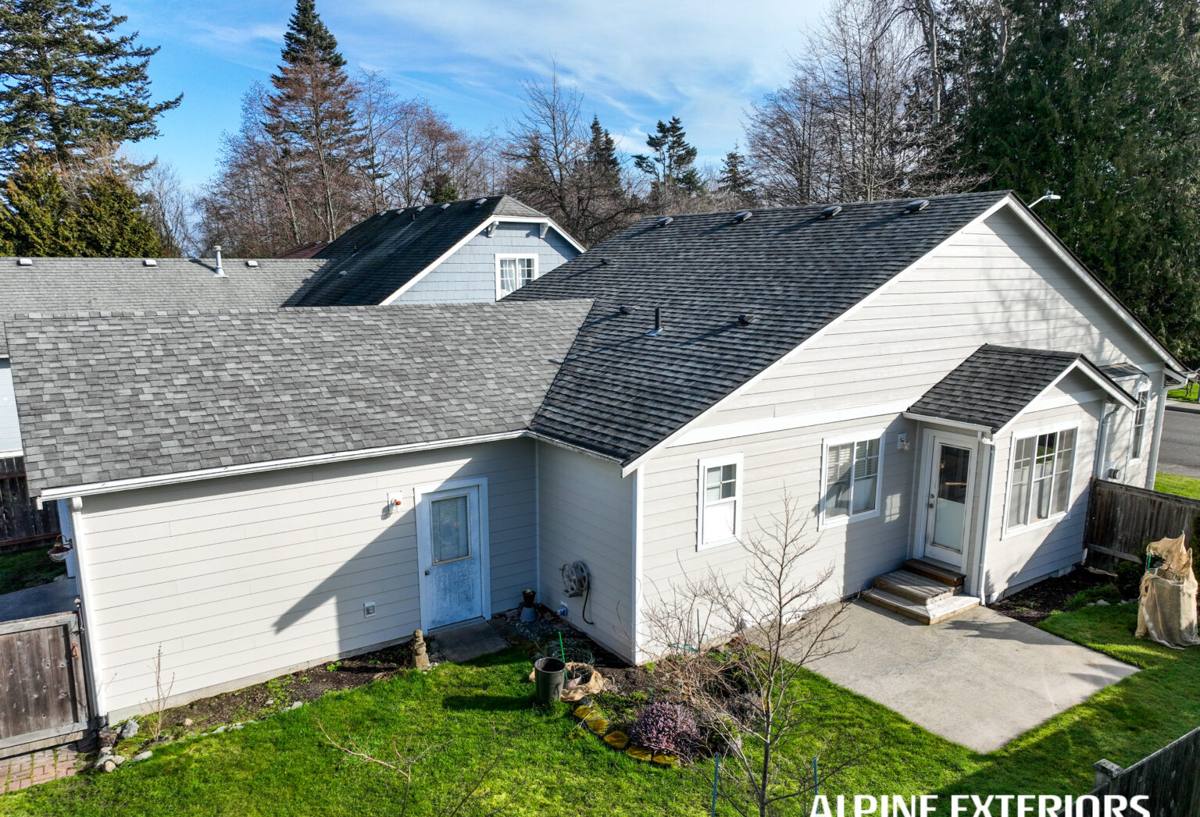
Why We Only Install James Hardie Fiber Cement
We get asked fairly often why we don't offer vinyl, LP SmartSide, cedar, or other fiber cement brands like Cemplank or Allura. The honest answer is that we made a call, based on years of installs in this climate, that James Hardie fiber cement gives homeowners the best combination of moisture resistance, fire resistance, and long-term finish stability — and we didn't want to be in the position of installing something we couldn't stand behind fully in this weather.
- Non-combustible core — fiber cement doesn't feed a fire the way wood-based products can, which matters given wildfire smoke seasons are becoming a regular part of Pacific Northwest summers even here.
- Engineered for moisture — Hardie's HZ5 product line is formulated for the specific wet-climate demands of the Pacific Northwest, not a generic national spec.
- Factory-applied ColorPlus finish — baked-on color that resists the fading and peeling that field-applied paint struggles with under constant damp-dry cycling.
- Warranty backing — a transferable manufacturer warranty that adds real value if the home sells down the road, which matters in a market like Downtown Bellingham where turnover happens.
We're not going to tell you vinyl or engineered wood siding are junk — plenty of products perform fine when installed correctly in the right climate. But we've seen enough vinyl bowing and fading, and enough engineered wood siding taking on moisture at cut edges and fastener points in this specific climate, that we stopped offering them. Fiber cement doesn't rot, doesn't feed moss the way some textured wood-look products can, and holds its shape through the freeze-thaw and wet-dry swings that are normal here.
How Moss and Algae Actually Affect Siding Choice
Moss doesn't grow on siding out of nowhere — it needs a surface that holds moisture and organic debris long enough to take root. Smooth, factory-finished fiber cement sheds water better than rough-sawn wood textures and doesn't have the porous surface that lets spores establish easily. That doesn't mean Hardie siding is immune to any growth — nothing fully is under a shaded, damp tree canopy — but it's far easier to keep clean, and periodic gentle washing (never pressure-washing directly into seams) keeps it looking right without damaging the finish.
Practical Moss Management for This Area
- Trim back overhanging branches where possible to let walls get more sun and airflow.
- Keep gutters clear so overflow doesn't run down and saturate siding at the top courses.
- Rinse north- and west-facing walls once or twice a year with a garden hose and soft brush rather than letting buildup sit all winter.
- Avoid caulking over ventilation gaps at the bottom of the siding — trapped moisture behind the panel causes more damage than moss on the surface ever will.
What a Local Install Looks Like
Fiber cement performs the way it's supposed to only when it's installed to spec — that's not marketing, it's the reality of a rigid product that needs correct fastening, clearances, and flashing to do its job. In a neighborhood like Downtown Bellingham, with a mix of home ages and wall conditions, a proper install typically includes:
- Removing old siding and inspecting the sheathing and framing underneath for hidden rot or moisture damage before anything new goes up.
- Installing or confirming a proper weather-resistant barrier and drainage plane behind the new siding.
- Maintaining correct clearance between siding and grade, decks, and roof lines so water has somewhere to go besides into the wall.
- Fastening according to Hardie's published specs — proper nail spacing, depth, and placement affect both warranty coverage and long-term performance.
- Flashing and sealing penetrations (vents, hose bibs, light fixtures) correctly the first time, since these are the most common points of water intrusion on any home.
Skipping any of these steps is how a good product ends up performing poorly. A rushed or inexperienced install is usually the real cause when fiber cement siding disappoints a homeowner.
Comparing Siding Options for This Climate
| Factor | James Hardie Fiber Cement | Vinyl | Engineered Wood (LP SmartSide-type) |
|---|---|---|---|
| Moisture resistance | Excellent — cement-based, doesn't absorb water like wood | Good on the surface, but can trap moisture behind panels if installed poorly | Moderate — vulnerable at cut edges and fastener points |
| Fire resistance | Non-combustible | Melts and can contribute to fire spread | Wood-based, combustible |
| Finish durability | Factory ColorPlus finish, resists fading/peeling | Color molded in but can fade and become brittle over time | Field or factory-primed, needs repainting maintenance |
| Susceptibility to moss/algae | Low — smooth, non-porous surface | Low, but can look chalky/dirty over time | Higher on textured surfaces |
| Typical lifespan when installed to spec | Multiple decades | 20-30 years, variable | Variable, sensitive to moisture management |
Roofing, Windows, and Decks in the Same Climate
Siding is rarely the only exterior component under stress in this part of Whatcom County. We also handle roofing, windows, and decks, and the same weather logic applies across all of them:
- Roofing — moss growth on roofs feeds moisture problems that eventually show up as siding and fascia damage; roof and gutter condition should be checked whenever siding work is being planned.
- Windows — window flashing integration is one of the most common failure points during any siding job; doing siding and window work together (or at least coordinating them) reduces the chance of a leak path being created.
- Decks — deck ledger boards attach directly to the house wall and are a frequent source of hidden moisture intrusion behind siding if not flashed correctly.
Because we handle all four trades, we can look at a Downtown Bellingham home as one connected system rather than treating siding as an isolated cosmetic project.
What to Check Before Hiring Anyone for Siding Work
- Washington contractor license and active bonding/insurance, verifiable through the state's license lookup.
- Manufacturer certification or documented training specific to the fiber cement product being installed.
- A written scope that specifies fastening schedule, clearances, and flashing details — not just "install new siding."
- Willingness to inspect and address sheathing condition before covering it back up.
- Clear communication about warranty terms — both the manufacturer's material warranty and the contractor's workmanship warranty.
Cost Factors to Expect
Siding costs in this area depend on more variables than square footage alone. Homeowners in Downtown Bellingham should expect estimates to account for:
| Factor | Why It Matters Here |
|---|---|
| Existing sheathing condition | Older homes near the bay sometimes have hidden moisture damage that needs repair before new siding goes on |
| Home height and access | Multi-story homes and tight lot lines common downtown affect scaffolding and staging needs |
| Trim and detail complexity | Older architectural detailing takes more labor to match and flash correctly |
| Window and door count | Every penetration needs flashing, which adds time regardless of overall square footage |
| Product line selected | Hardie's plank, shingle, and panel lines vary in material and labor cost |
If you're weighing siding, roofing, window, or deck work for a home in Downtown Bellingham, we're happy to take a look and walk through what we're seeing on your specific house. There's no pressure and no cost to get an honest assessment and a straightforward estimate.