 Fairhaven Siding
 Siding Replacement for Downtown Bellingham Homes
Downtown Bellingham sits close to Bellingham Bay, on hilly terrain that funnels wind and rain differently block to block, and it's home to a real mix of housing stock — older homes from the early-to-mid 1900s alongside newer infill construction. That combination means siding here takes on more punishment than siding twenty miles inland, and it needs to be replaced by someone who understands the specific conditions of this part of Whatcom County, not just siding in general. This page covers what siding replacement actually involves for a downtown Bellingham home, what the local climate demands from the materials and the installation, and why we install only James Hardie fiber cement on every job we do here.
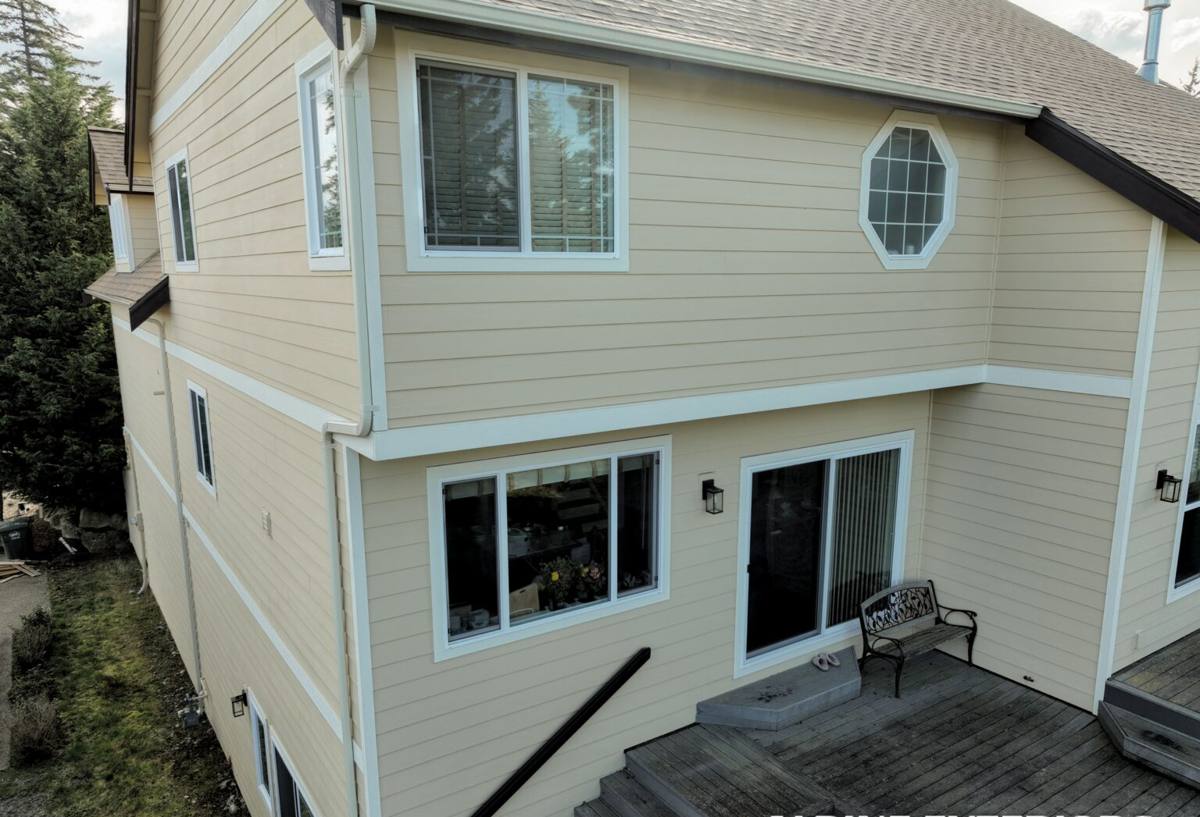
What Downtown Bellingham's Climate Does to Siding
Three things drive siding failure in this neighborhood faster than almost anywhere else in Whatcom County: salt-laden air off the bay, wind-driven rain that hits siding sideways instead of straight down, and a moss and mildew season that can run eight months or longer. None of these are dramatic on their own, but stacked together year after year, they're hard on siding that wasn't built or installed to handle them.
Salt Air and Proximity to Bellingham Bay
Homes within a mile or two of Bellingham Bay deal with a low but constant dose of salt in the air. Salt accelerates corrosion on exposed fasteners, degrades cheap caulking faster, and can dull or streak paint finishes over time — especially on the side of the house that faces the water or catches the prevailing wind off it. It's not corrosive enough to eat through materials quickly, but it's a steady, cumulative stress that shows up as premature fading, chalking, and fastener rust on siding that wasn't specified for a coastal-adjacent environment.
Driving Rain and Wind-Driven Moisture
Bellingham's rain rarely falls straight down. Wind off the bay and the terrain around downtown push rain sideways into wall assemblies, which puts real pressure on seams, laps, and every penetration in the siding — window and door trim, hose bibs, light fixtures, vents. A siding system that only performs well in calm, vertical rain struggles here. What matters more than the siding panel itself is what's behind it and how the water that inevitably gets past the surface is managed and drained back out.
Moss, Mildew, and the Long Wet Season
Whatcom County's wet season stretches from fall through spring, and shaded or north-facing walls in a tree-lined downtown lot can stay damp for days at a time. That's ideal growing conditions for moss, algae, and mildew on siding surfaces, particularly on materials that hold moisture in their substrate or have factory finishes that don't resist organic growth well. Over years, that constant damp exposure is one of the biggest drivers of siding rot and premature repainting in this part of the state.
Signs Your Siding Needs Replacing, Not Just Patching
A lot of downtown Bellingham homes we look at have siding that's been patched, caulked, and repainted multiple times. Patching has its place, but past a certain point it's throwing money at a problem that keeps coming back. Here's what tells us a home is past the patching stage:
- Soft or spongy spots when you press on the siding, especially near the bottom courses or under windows
- Visible gaps, cupping, or buckling in panels or lap boards
- Paint that won't hold — bubbling, peeling, or needing a full repaint every two to three years
- Persistent moss or dark staining that returns within a season of cleaning
- Soft trim boards or discoloration around window and door casings
- Rising energy bills with no other clear explanation, which can point to a compromised weather barrier
- Visible rot, delamination, or fastener bleed-through on older wood or engineered wood siding
Why James Hardie Fiber Cement Fits This Climate
We install James Hardie fiber cement siding exclusively, and downtown Bellingham's conditions are a big part of why. Fiber cement doesn't absorb and swell with moisture the way wood-based products can, and it's not a food source for the mildew and algae that thrive in this area's shaded, damp microclimates. Hardie's HZ5 product line is engineered specifically for regions with significant moisture exposure and freeze-thaw cycling, which fits Whatcom County's climate profile well. The ColorPlus factory finish is baked on under controlled conditions rather than field-applied, which gives it better resistance to fading and chalking from UV and salt air than a standard job-site paint job — and it comes with a finish warranty that doesn't depend on getting the weather right on painting day.
We get asked from time to time about vinyl, LP SmartSide, or other engineered wood products. Those materials aren't bad by definition — they're just not what we'll put our name on. Vinyl can warp and become brittle in the temperature swings and wind exposure common near the bay, and its seams and J-channels give wind-driven rain more opportunities to work moisture behind the cladding. Engineered wood products depend heavily on maintaining an intact factory seal at every cut and fastener; if that seal is compromised in a climate this consistently wet, moisture intrusion and swelling become a real long-term risk. Fiber cement sidesteps both of those failure modes, which is why it's the only product we install.
What a Correct Siding Replacement Involves
The siding panel itself is maybe half the job. The other half — the part you can't see once it's finished — is what actually determines whether the siding lasts 10 years or 40. On a proper replacement, that means:
- Full removal of old siding down to the sheathing, so we can inspect for hidden rot or moisture damage before it's covered up again
- A code-compliant weather-resistant barrier (WRB) installed with correct overlaps and sealed seams
- Rain screen or drainage gap detailing on walls where it's warranted, giving any moisture that gets behind the siding a path to drain and dry out
- Properly flashed and sealed penetrations at every window, door, vent, and fixture
- Correct fastener type, spacing, and depth per James Hardie's published installation specifications — this is where a lot of subpar jobs go wrong
- Manufacturer-specified clearances at grade, roof lines, and decks, so siding isn't sitting in standing water or trapped moisture
James Hardie's product warranty is tied to installation according to their written specifications. A crew that shortcuts fastener spacing or skips proper flashing detail can void that warranty even if the siding itself is the right product — which is exactly why the installer matters as much as the material.
Cost Factors for Downtown Bellingham Siding Replacement
Every home is different, but the same handful of factors drive most of the cost variation we see on downtown Bellingham projects. We'll always give you an itemized, honest number after walking your specific home — this table is meant to help you understand what moves the price, not to substitute for that estimate.
| Factor | Why It Affects Cost |
|---|---|
| Extent of hidden damage | Rot or moisture damage found once old siding is removed adds sheathing or framing repair before new siding can go on |
| Home height and access | Multi-story homes and steep or tight downtown lots often require more scaffolding or staging time |
| Existing siding type | Some materials (like older wood lap or certain composites) take longer to safely strip and dispose of than others |
| Trim and detail complexity | Bay windows, dormers, and detailed trim work add labor beyond flat wall areas |
| Product line and profile | James Hardie offers multiple plank widths, textures, and the HZ5 vs. standard HZ10 zone specification, which affects material cost |
| Color and finish selection | Standard ColorPlus colors versus custom or premium finishes carry different price points |
Our Process, From Estimate to Finished Job
We keep the process straightforward and communicate at every step, because siding replacement is disruptive enough without surprises. Typically it looks like:
- An on-site walkthrough of your home, including a look at trim, flashing, and any areas we suspect may have hidden moisture issues
- A written, itemized estimate covering material, labor, and any anticipated repair contingencies
- Scheduling that accounts for Whatcom County's wet season, since siding work goes faster and holds up better when installed in reasonable weather windows
- Full tear-off, sheathing inspection, and repair of anything found before new material goes up
- Installation of the weather barrier, flashing, and James Hardie siding to manufacturer specification
- A final walkthrough with you before we consider the job done
Why Hiring a Crew That Already Works Downtown Bellingham Matters
Siding installation isn't uniform across a region — what works on a sheltered inland lot doesn't necessarily hold up a few miles away on a bay-facing wall exposed to driving rain and salt air. A crew that regularly works in and around downtown Bellingham has already seen how the terrain and weather here treat different walls of a house differently, knows which older homes in this area are more likely to have hidden moisture issues behind original siding, and plans flashing and drainage detail accordingly instead of applying a one-size-fits-all approach. That local pattern recognition is the difference between a siding job that looks good on installation day and one that's still performing correctly a decade later.
If your downtown Bellingham home's siding is showing its age, we're happy to take a look and give you a straightforward, no-pressure estimate — no obligation, just an honest read on what your home actually needs. Use the form below to get started.