 Fairhaven Siding
 Siding Built for Happy Valley's Marine Climate
Happy Valley sits close enough to the water and tree cover around Fairhaven that its homes deal with a specific combination of stresses most inland siding never has to handle: salt-laden air drifting off the Salish Sea, wind-driven rain that hits walls sideways instead of falling straight down, and deep shade pockets that keep siding damp long after a storm has passed. None of that is unusual for Whatcom County, but it adds up faster in neighborhoods like this one, where mature trees and marine air work together to keep exterior walls wetter, longer, than a simple rainfall total would suggest.
Siding installation here isn't just about covering the house. It's about choosing a material and a installation method that can shed wind-driven water, resist the slow corrosive effect of salt air, and stand up to moss and mildew without constant intervention. Get any one of those wrong and the siding looks fine for a year or two before the problems show up.
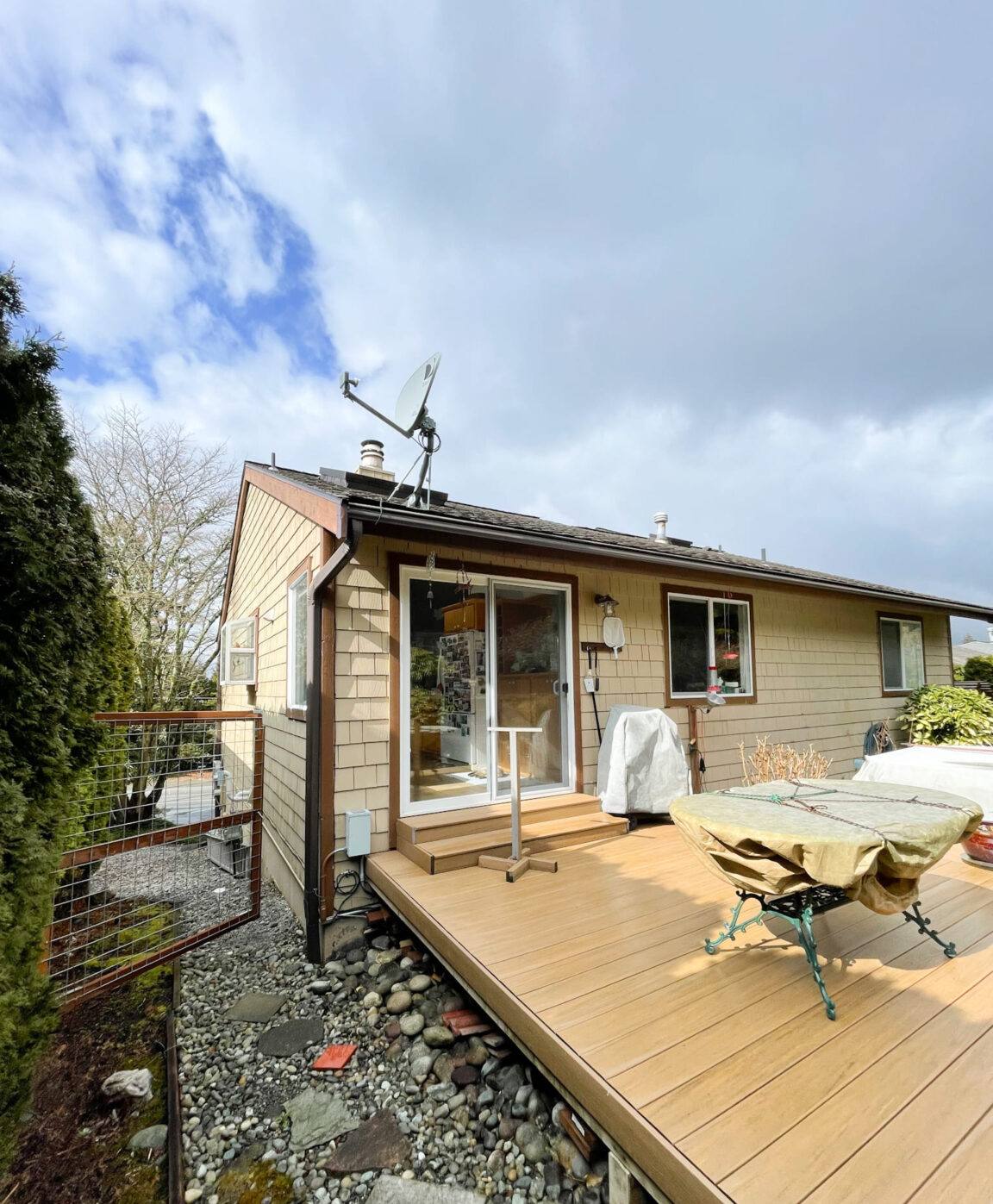
What Salt Air, Rain, and Moss Actually Do to Siding
Each of these factors attacks siding differently, and understanding the mechanism is what separates a correct installation from one that just looks correct on install day.
Salt Air
Airborne salt accelerates corrosion on any exposed metal — nail heads, flashing, trim fasteners. Once corrosion starts at a fastener, it can create a path for water to travel behind the siding, well before any visible staining shows up on the surface.
Driving Rain
Storms coming off the water rarely fall straight down. Wind pushes rain sideways and upward under laps and around trim, which means siding here needs a real drainage plane behind it — not just a water-resistant barrier stapled flat against the sheathing, but a system that lets any water that gets past the siding find its way back out.
Moss and Mildew
Shade and persistent moisture are a growth medium for moss, algae, and mildew. On untreated or poorly sealed materials, that growth holds moisture against the surface and can work its way into seams, fastener holes, and cut edges over time. It's less a cosmetic issue than an early warning sign of a surface that's staying wet too long.
What a Correct Installation Actually Involves
The siding material matters, but so does everything behind it. A quality product installed poorly will fail in this climate faster than a lesser product installed correctly. Here's what we consider non-negotiable on every job.
Water Management Behind the Siding
A properly lapped water-resistive barrier, correctly integrated flashing at every window, door, and penetration, and a rainscreen gap that lets the wall assembly drain and dry. In a neighborhood that sees this much wind-driven moisture, skipping the rainscreen is one of the most common shortcuts we see on older installs — and one of the most expensive to fix later.
Fastening
Corrosion-resistant fasteners, driven at the correct depth and spacing per the manufacturer's specification. Overdriven or underdriven nails are a leading cause of premature siding failure, and it's a detail that's invisible once the job is "done" unless you know what to check for.
Trim, Corners, and Penetrations
Every outside corner, window return, and utility penetration is a place water wants to get behind the siding. Correct caulking, back-flashing, and gapping at these points is what keeps a wall dry through years of driving rain, not just the first season.
Cut Edges
Fiber cement that's field-cut needs its exposed edges primed or sealed before installation. An unsealed cut edge left exposed to constant marine moisture is where premature swelling and paint failure typically start.
Why We Install Only James Hardie Fiber Cement
We don't install vinyl, LP SmartSide, primed spruce, cedar, or other fiber cement brands. That's a deliberate standard, not a matter of availability. James Hardie is the product we're willing to put our name behind for homes in this climate, for a few concrete reasons:
- Non-combustible — fiber cement doesn't contribute fuel to a fire the way wood-based products can.
- ColorPlus factory finish — a baked-on finish applied under controlled conditions, which holds up better against UV and moisture than field-applied paint on many alternative products.
- Climate-engineered HZ product lines — Hardie manufactures specific formulations for different moisture zones, and the Pacific Northwest's HZ5 products are built for exactly the wet, mild conditions Whatcom County sees year-round.
- A strong, transferable warranty — backed by a large, established manufacturer, and structured to follow the home if it's sold.
- Proven long-term performance — when installed to spec, fiber cement in this climate has a long track record of holding its finish and resisting moisture-driven damage better than wood composites or vinyl.
We won't pretend other products don't have their own strengths — they do, and homeowners should understand those trade-offs before deciding. But for the specific combination of salt air, driving rain, and moss exposure that Happy Valley deals with, Hardie's engineered fiber cement is the product we trust to perform for decades, not just look good at closing.
Our Process for Happy Valley Projects
- On-site assessment. We walk the exterior, check existing siding and trim condition, and look for signs of moisture intrusion, especially around windows, corners, and shaded wall sections.
- Tear-off and sheathing inspection. Removing the old siding lets us check the sheathing underneath for rot or damage before anything new goes on — a step that can't be skipped in a wet climate.
- Water-resistive barrier and rainscreen installation. This is the layer that does the real work of keeping the wall assembly dry over time.
- Flashing at every penetration. Windows, doors, hose bibs, vents — each gets properly integrated flashing before siding closes around it.
- James Hardie siding installation to manufacturer fastening and spacing specifications, with sealed cut edges throughout.
- Trim, caulking, and touch-up. Final detail work at corners, joints, and any factory finish that needs field touch-up.
- Final walkthrough so you know exactly what was done and what to expect from the finish over time.
Cost Factors for Happy Valley Siding Projects
Every home is different, and we won't quote a number without seeing the house, but these are the main variables that move a project's cost up or down.
| Factor | Why It Matters |
|---|---|
| Home size and wall complexity | More square footage and more corners, gables, and trim details mean more labor and material. |
| Existing siding removal | Tear-off of old wood, vinyl, or damaged siding adds labor before installation can start. |
| Sheathing or framing repair | Moisture damage found during tear-off has to be repaired before new siding goes on — this is common enough in older homes near the water that it's worth budgeting a contingency for. |
| Stories and access | Multi-story walls, tight side yards, or limited equipment access affect scaffolding and labor time. |
| Trim and detail package | Trim style, corner treatments, and accent details change both material and labor cost. |
| Siding profile and color | Lap width, shingle-style panels, and specific ColorPlus finishes vary in material cost. |
Why Hiring a Crew That Already Works This Neighborhood Matters
Siding installation isn't one-size-fits-all across Whatcom County. A crew that's worked in and around Fairhaven and Happy Valley already understands where wind-driven rain tends to hit hardest, which wall orientations stay shaded and damp longest, and what condition to expect when they pull old siding off a home of a given age near the water. That local pattern recognition shows up in small decisions — where to add extra flashing attention, which details to double-check — that a crew unfamiliar with the area might not think to prioritize.
It also means straightforward answers when you're evaluating contractors. A crew with local experience can talk specifically about how the marine climate affects installation choices, not just recite general siding facts.
Maintenance Checklist for Homeowners
A correct installation dramatically reduces maintenance, but no siding is entirely maintenance-free in this climate. A short annual routine keeps things in good shape:
- Rinse siding annually to remove salt residue and organic buildup, especially on shaded walls.
- Trim back tree branches and shrubs that keep siding sections shaded and damp.
- Check caulking at trim joints, windows, and corners for cracking or gaps once a year.
- Look for moss or algae growth starting at seams or fastener heads — early growth is easier to address than established growth.
- Keep gutters and downspouts clear so roof runoff isn't washing directly down wall sections.
- Have any impact damage or cracked panels repaired promptly rather than left exposed to moisture.
Get a Straight Answer for Your Home
If you're weighing a siding project in Happy Valley, we're glad to take a look and give you an honest read on what your home needs — no pressure, no inflated scope. Request a free estimate below and we'll walk the exterior with you before recommending anything.