 Fairhaven Siding
 Deck Repair Built for Silver Beach's Marine Climate
Silver Beach sits close enough to Bellingham Bay that salt-laden air is part of daily life for every deck in the neighborhood. That air carries moisture and mineral salts that settle into wood grain, work into fastener heads, and slowly break down finishes that would last much longer a few miles inland. Add Whatcom County's long stretch of driving rain each fall and winter, plus a moss season that can run from October well into spring, and you have a climate that is genuinely hard on exterior wood structures. A deck in Silver Beach does not fail because it was built badly. It fails because three separate stresses — salt exposure, sustained moisture, and shaded, slow-drying surfaces — all hit the same structure at once, year after year.
We repair decks in this neighborhood on a regular basis, and the damage pattern is consistent enough that we can usually tell what we are dealing with before we even open a toolbox. Ledger boards pull away from the house where flashing was skipped or has failed. Joists rot from the top down where standing water sits under decking boards that were installed too tight. Fasteners bleed rust streaks once a coating breaks down from years of damp salt air. None of this is unusual for the area — it is simply what this climate does to a deck over time, and it is exactly what a proper repair needs to address.
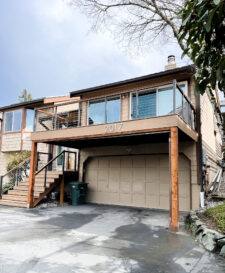
Signs Your Deck Needs Repair, Not a Full Rebuild
Most decks we look at in Silver Beach do not need to be torn out and replaced. They need targeted repair of the specific components that took the brunt of the weather, while the sound structural members are left alone. Knowing which is which takes some poking around, not just a visual walk-through. Here is what we check before recommending anything:
- Soft or spongy spots underfoot, especially near the house or along the outer rim joist
- Boards that have cupped, split, or pulled away from their fasteners
- Rust streaking or corroded, loose fasteners at joints and connections
- Gaps or daylight visible where the ledger board meets the house siding
- Green or black film that stays damp for days after rain, especially on north-facing or shaded sections
- Railings or posts that flex or wiggle when pushed
- Visible gaps or sagging where support posts meet footings
- A persistent musty smell coming from underneath the deck
Any one of these on its own is usually a straightforward repair. Several of them together, especially around the ledger board or main support posts, is a sign we need to open things up and look at the framing before quoting anything.
What a Correct Deck Repair Actually Involves
Structural Checks Come First
Before any board gets replaced, we check the framing that carries the load: ledger board attachment and flashing, joists, beams, posts, and footings. A deck can look fine on the surface and still have a weak connection at the house, which is one of the more serious issues we find in older Fairhaven homes. We use a screwdriver or awl to probe wood at connection points, since surface paint or stain can hide rot underneath.
Fastener and Hardware Selection Matters More Here Than Inland
Standard galvanized fasteners have a shorter service life this close to salt water. We use hardware rated for coastal and treated-lumber exposure — typically hot-dip galvanized or stainless steel connectors and fasteners — so a repair does not need to be redone in a few years because the hardware corroded before the wood did.
Flashing and Water Management
A large share of deck failures we see trace back to water getting somewhere it should not: behind a ledger board, under a post base, or trapped between boards that sit too tight together. Correct repair work restores proper flashing at the house connection, drainage gaps between boards, and slope away from the structure so water sheds instead of sitting.
Matching Repairs to the Existing Deck
Where boards or framing members need replacement, we match species and dimension to the surrounding structure so the repair performs consistently rather than creating a weak point where old and new material meet.
Repair or Replace? What We Actually Weigh
Homeowners often assume visible damage means the whole deck is done. That is rarely true. The table below covers the factors we weigh on every Silver Beach repair call.
| Factor | Leans Toward Repair | Leans Toward Replacement |
|---|---|---|
| Framing condition | Ledger, joists, and posts are solid when probed | Rot found at multiple structural connections |
| Age of structure | Under 15-20 years, built to a reasonable standard | Original construction quality is questionable or very old |
| Extent of damage | Isolated to a few boards or one section | Widespread across most of the deck surface |
| Fastener corrosion | Localized rust on visible hardware | Corrosion found throughout structural connections |
| Footings and posts | Stable, plumb, properly bearing | Settled, undersized, or improperly set footings |
| Budget goals | Extend usable life at lower cost | Want a size, layout, or material change anyway |
In most Silver Beach repair calls, the framing is sound and the damage is concentrated in decking boards, railings, or fastener corrosion — all very repairable. Full replacement usually only makes sense when the ledger connection or multiple footings are compromised, or when a homeowner wants to change the deck's footprint or material anyway.
Our Process, Start to Finish
- On-site inspection. We walk the deck, probe suspect areas, and check the ledger, framing, and footings before forming an opinion.
- Written scope and estimate. You get a clear breakdown of what needs repair, what materials and hardware we plan to use, and why.
- Demo of failed material only. We remove damaged boards, framing, or hardware without disturbing sound structure.
- Structural correction. Any framing, flashing, or connection issues are addressed before new decking goes down — this is the step that actually prevents repeat failures.
- Rebuild with matched, climate-appropriate materials. New boards and hardware are installed to shed water and hold up to salt-air exposure.
- Final walk-through. We check the repair with you before calling the job done.
Decking Material Considerations for This Climate
When boards need full replacement rather than spot repair, material choice matters more here than it would in a drier inland climate. Pressure-treated lumber is affordable and repairable in sections, but it needs regular sealing to perform well against sustained rain and salt air — skipping that maintenance is the single most common reason we get called back to the same deck a few years later. Composite and PVC decking cost more up front and need no sealing, but they are less forgiving of installation mistakes: gapping, ventilation, and fastening all have to be done to the manufacturer's spec or the warranty and performance both suffer. Cedar is naturally rot-resistant and a good aesthetic fit for the area, but it is softer and more prone to surface wear underfoot. We will walk you through the honest maintenance trade-offs for your specific deck rather than push one material as a default — the right call depends on your budget, how much upkeep you want to do, and what the existing structure can support.
Moss, Mildew, and the Long Wet Season
Whatcom County's wet season is long, and shaded or north-facing sections of a Silver Beach deck can stay damp for days after a storm even when the rest of the yard has dried out. That constant dampness is what feeds moss and mildew growth, and it is also what accelerates wood decay in spots that never get a chance to dry between rains. Repair work in these areas needs to account for airflow and drainage, not just replace the damaged board and move on — otherwise the same spot fails again on the same timeline. Where a deck's layout or nearby landscaping traps moisture against the structure, we will flag it and talk through practical options, whether that is a drainage adjustment, board spacing, or simply a maintenance routine that keeps growth in check before it becomes a slip hazard or a wood-rot problem.
Maintenance That Actually Extends a Repair's Lifespan
A repair is only as good as the upkeep that follows it. For Silver Beach's climate specifically, we recommend:
- Rinsing salt residue and debris off the deck surface periodically, especially after storms
- Resealing wood decking on a schedule appropriate to sun and rain exposure, not just "every few years" by default
- Clearing moss and organic buildup from shaded boards before it stains or holds moisture against the wood
- Checking fasteners and hardware annually for early rust or loosening
- Keeping gutters and downspouts clear so runoff is not dumping directly onto or under the deck
- Trimming back vegetation that keeps sections of the deck shaded and slow to dry
Permits and Local Considerations
Depending on the scope of work, deck repairs in Whatcom County can fall under different permitting rules than a full rebuild — generally, straightforward like-for-like repair has fewer requirements than structural changes, height increases, or footprint expansion. Requirements can also vary depending on whether a property falls under city or county jurisdiction, and waterfront-adjacent properties sometimes carry additional considerations. We do not guess on this — for any repair that touches structural framing, we confirm what is actually required for your specific property before work begins, so there are no surprises later.
Why a Crew That Already Works Silver Beach Matters
A contractor who works this neighborhood regularly already knows what tends to fail first on decks built near the water, which hardware actually holds up to the salt air, and how the local rain and moss patterns behave through the year. That familiarity shows up in smaller, practical ways too — knowing which streets have tighter access for equipment, understanding typical lot layouts and grade in the area, and having a realistic sense of how weather windows here affect scheduling and drying time between steps. It also means we are not learning on your project. We have already seen how a deck in this specific climate ages, and we build the repair to match that reality rather than a generic playbook.
If you have a deck in Silver Beach that is showing rot, corroded hardware, soft spots, or persistent moss, we are happy to take a look and give you an honest read on what it actually needs. Reach out for a free, no-pressure estimate using the form below — we will walk the deck with you, explain what we find, and lay out your options plainly before any work is scheduled.