 Fairhaven Siding
 Ferndale's Exterior Climate: What Homes Are Really Up Against
Ferndale sits close enough to the Salish Sea and the Nooksack River delta that homes here deal with a specific combination of weather stress that inland Washington towns rarely see. Salt-laden air moves in off the water, driving rain arrives sideways more often than straight down, and the long, wet stretch from fall through spring gives moss, algae, and mildew months at a time to get established on anything that stays damp. None of this is dramatic on any single day. It's cumulative. A siding material that looks fine in July can be hiding moisture damage that only shows up after two or three more winters.
We work throughout Whatcom County out of Fairhaven, and the pattern we see on Ferndale homes is consistent: north- and west-facing walls take the brunt of wind-driven rain, roof lines with heavy tree cover develop moss and organic buildup faster than open exposures, and any siding seam, fastener, or trim joint that wasn't detailed correctly becomes the entry point for slow rot. The house doesn't fail all at once. It fails at the weak points first.
Why Material Choice Matters More Here Than in Drier Climates
In a low-humidity climate, the difference between siding products is mostly cosmetic and budgetary. In a marine climate like Ferndale's, the difference is structural. Wood-based products absorb moisture at cut edges and fastener penetrations, and once water gets behind or into the panel, drying time is slow because the air itself is often near saturation for weeks at a stretch. Vinyl doesn't rot, but it flexes with temperature swings, can crack in cold snaps, and does nothing to resist the algae and moss growth that thrives in constant shade and dampness. Metal siding handles moisture well but transmits temperature extremes and shows dents.
This is the environment fiber cement was engineered for. It doesn't absorb water into a wood substrate, it doesn't support mold growth the way organic materials can, and it holds paint and factory finish far longer under UV and salt exposure than wood-based composites.
A Straightforward Comparison
| Material | Moisture Behavior in Marine Climate | Moss/Algae Resistance | Typical Maintenance |
|---|---|---|---|
| James Hardie fiber cement | Non-combustible, engineered to resist moisture-related damage; HZ5 line built for this region | Factory ColorPlus finish resists staining better than raw wood | Occasional gentle wash; repaint not required for 15+ years with ColorPlus |
| Cedar / primed spruce | Absorbs water at end grain and fasteners; slow to dry in prolonged damp | Prone to moss/algae without frequent treatment | Repainting or restaining every 3-7 years, more in shaded areas |
| Vinyl | Doesn't rot, but can warp or crack with temperature swings | Moss and mildew still adhere to the surface | Periodic washing; panels can't be spot-repainted |
| LP SmartSide / engineered wood | Better than raw wood but still wood-fiber based; vulnerable at cut edges if not sealed correctly | Moderate; depends on coating maintenance | Ongoing edge/seam inspection and touch-up |
Why We Install Only James Hardie Fiber Cement Siding
We don't offer vinyl, LP SmartSide, Cemplank, Allura, or raw cedar and spruce siding — not because those products don't have a place in the market, but because after years of exterior work in this specific climate, we standardized on one system we can stand behind fully: James Hardie fiber cement, installed to Hardie's own specifications.
A few reasons that matter specifically for Ferndale and the surrounding Whatcom County coastline:
- Fiber cement is non-combustible, which matters as wildfire smoke seasons have become more common even in western Washington.
- Hardie's HZ5 product line is engineered for climates with freeze-thaw cycling and sustained moisture exposure — closer to what this region sees than the general-climate versions of the same product.
- The ColorPlus factory finish is baked on under controlled conditions, which holds color and resists fading and chalking far longer than field-applied paint on wood or engineered wood siding.
- Hardie backs the product with a substantial, transferable warranty — useful if you sell the home, which matters in a market where exterior condition affects resale value.
- One material system means one set of installation details to get right, rather than juggling different manufacturers' specs across a project.
We're upfront that Hardie siding costs more upfront than vinyl and is comparable to or somewhat more than engineered wood, depending on the project. We think the trade-off is worth explaining honestly rather than glossing over — which is the point of pages like this one.
Roofing, Windows, and Decks: The Rest of the Building Envelope
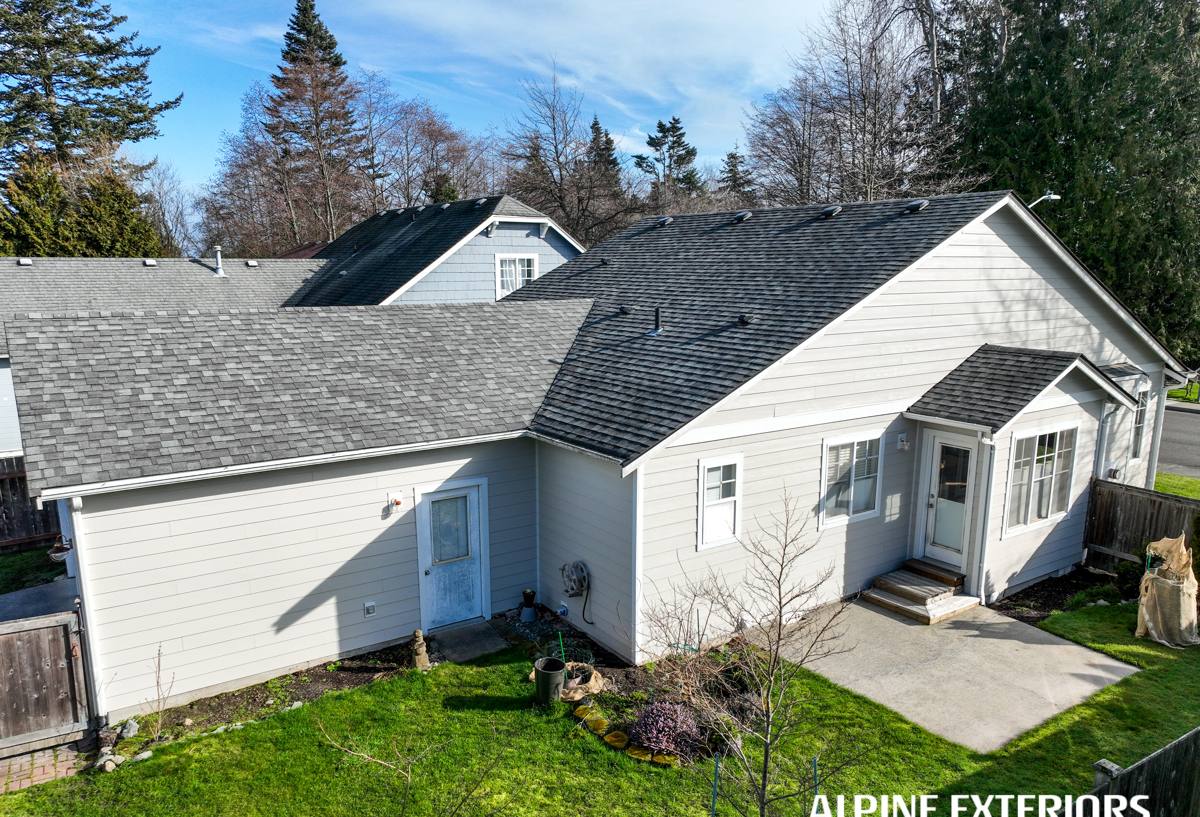
Siding doesn't work in isolation. On a coastal Whatcom County home, roofing, window flashing, and siding all have to work together to keep water moving away from the structure instead of into it. We handle all four trades — siding, roofing, windows, and decks — because a siding job that ignores a failing roof edge or a poorly flashed window is just delaying the next repair.
Roofing
Ferndale's tree cover and damp winters mean moss and organic debris build up on roofs faster than in drier parts of the state. Left unaddressed, moss holds moisture against shingles and shortens roof life. We assess roof condition as part of any full exterior estimate, since a roof nearing the end of its service life should factor into the timing of a siding project.
Windows
Window flashing details are one of the most common failure points we find when we open up old siding. A window that was never properly flashed can leak for years without an obvious interior sign, while quietly rotting the framing around it. Any siding replacement is a natural point to correct window flashing that wasn't done right the first time.
Decks
Exterior decks in this climate face the same driving rain and prolonged dampness as siding, plus direct foot traffic and standing water risk. We build and repair decks with the same standard we apply to siding: materials and details chosen for how this specific climate behaves, not just what looks good on install day.
What a Local Crew Means in Practice
"Local" isn't just a marketing word here. A crew that works Whatcom County regularly knows which walls in Ferndale take the worst wind-driven rain, which neighborhoods have heavier moss pressure from tree cover, and which older housing stock in the area tends to have flashing or trim details that need extra attention during a tear-off. That knowledge shows up in small decisions — how a corner is flashed, where extra drainage detail gets added, how house wrap is lapped — that don't show up on a spec sheet but matter enormously to how the wall performs five and ten years out.
Working out of Fairhaven also means we're not driving a crew in from out of the area for a single job and disappearing afterward. If a question comes up two years after installation, we're still local and reachable.
Signs a Ferndale Home May Need New Siding
Because siding failure in this climate tends to be gradual, it's worth knowing what to look for before small issues become expensive ones:
- Soft or spongy spots when you press on wood or engineered wood siding, especially near the bottom edges or around windows
- Persistent moss or dark staining that returns quickly after cleaning, particularly on north- or west-facing walls
- Peeling, bubbling, or chalking paint that keeps recurring despite repainting
- Visible gaps, warping, or cupping in siding boards or panels
- Increased drafts or noticeably higher heating costs, which can point to compromised siding and underlying insulation
- Cracked or missing caulking at seams, corners, and window trim
Any one of these on its own might be minor. Several together, especially on a home more than 15-20 years old with its original siding, usually means it's worth a professional look before the next wet season.
How the Replacement Process Works
A full siding replacement generally follows the same sequence regardless of the specific home:
- On-site assessment of existing siding, trim, window flashing, and any visible moisture damage
- Removal of old siding and inspection of the sheathing and house wrap underneath
- Repair of any rot or damage found once the wall is opened up — this is common and expected on older homes
- Installation of house wrap or weather-resistive barrier and correct window/door flashing
- Installation of James Hardie siding and trim per manufacturer specification, including proper fastening, clearances, and caulking
- Final inspection and cleanup
The step homeowners often underestimate is what happens once old siding comes off. Whatcom County's damp climate means hidden moisture damage is more common here than in drier regions, and a legitimate estimate should account for the possibility of sheathing repair rather than assuming a clean, problem-free wall underneath.
Living With Fiber Cement Siding: Maintenance in a Marine Climate
One of the practical advantages of Hardie siding in a climate like Ferndale's is how little upkeep it demands compared to wood-based alternatives. It doesn't need repainting on the schedule that raw wood or primed spruce does, and the factory finish resists the kind of staining that shaded, damp walls are prone to. That said, "low maintenance" doesn't mean "no maintenance." An occasional gentle wash to clear off moss spores and organic buildup, especially on shaded walls, keeps the finish looking its best and prevents buildup from working into caulked joints over time. Keeping gutters clear and vegetation trimmed back from siding also goes a long way in a region where things grow year-round.
Get a Straightforward Estimate
If you're weighing your options for siding, roofing, windows, or a deck on a Ferndale home, we're happy to take a look and walk you through what we see — no pressure, no inflated scare tactics about your current siding. Use the form below to request a free estimate and we'll schedule a time to assess your home's exterior in person.