 Fairhaven Siding
 Happy Valley: A Neighborhood That Wears Its Weather
Happy Valley sits close enough to the water and the wooded slopes around Fairhaven that its homes take on a specific kind of weather stress — one that's different from what you'd see inland in Whatcom County. Between the salt-carrying air off Bellingham Bay, the steady parade of driving rain off the Pacific, and tree cover that keeps things shaded and damp for much of the year, the siding on a Happy Valley home is working harder than most homeowners realize. This page is about what that means for your exterior, and how we approach siding, roofing, windows, and decks for houses in this specific pocket of Fairhaven.
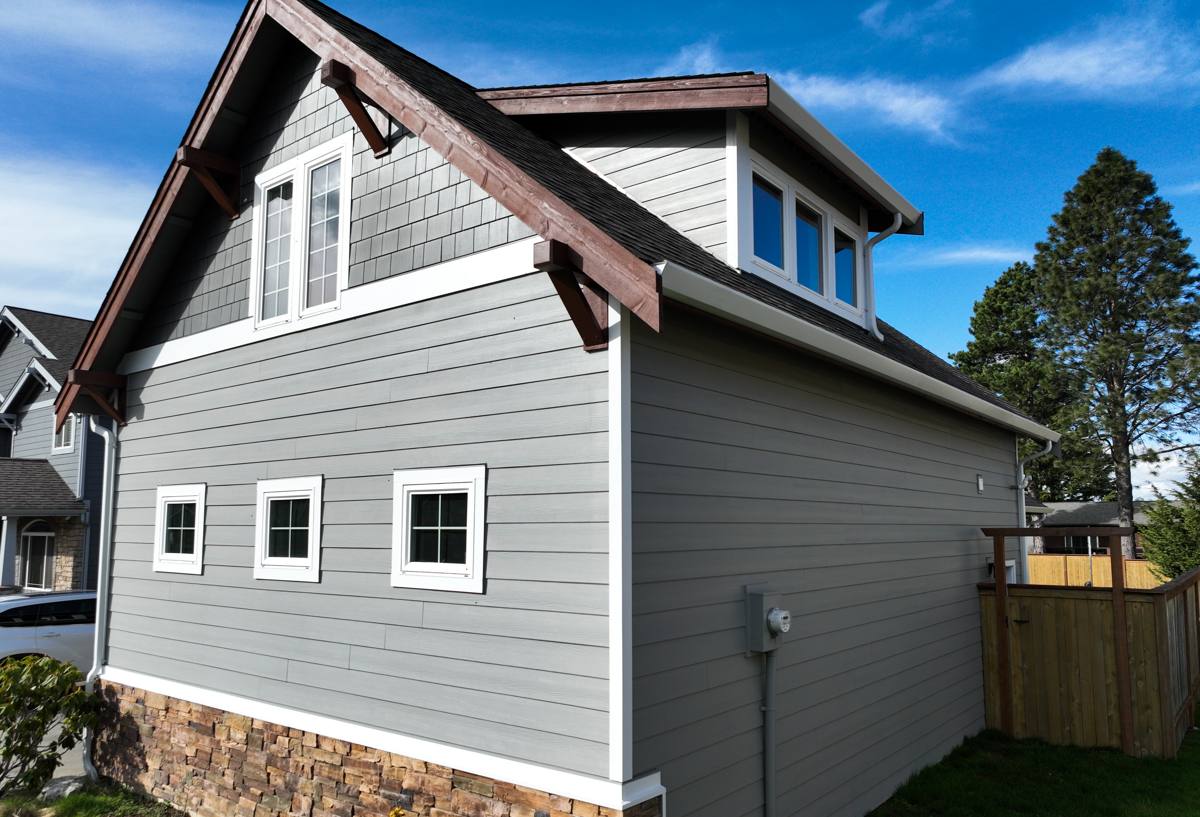
What Local Homes Are Actually Up Against
Salt Air and Slow Corrosion
Proximity to the bay means airborne salt settles on exterior surfaces year-round, not just during storms. Salt is hygroscopic — it pulls moisture out of the air and holds it against whatever surface it lands on. Over years, that constant low-grade dampness accelerates paint failure, corrodes fasteners, and gives mold and mildew a head start on any siding material that isn't built to resist it.
Driving Rain, Not Just Rain
Whatcom County gets plenty of rainfall, but the geography around Fairhaven and the bay adds wind-driven rain to the mix — moisture pushed sideways into siding, trim, and window flashing rather than falling straight down. That matters more than total rainfall totals suggest, because driving rain finds every gap, seam, and poorly lapped joint that vertical rain would never reach.
A Long Moss and Mildew Season
Between tree cover, shade, and the region's mild, wet winters, Happy Valley doesn't get much of a true dry season. Moss, algae, and mildew get a long runway to establish themselves on north-facing walls, under eaves, and anywhere airflow is limited. On the wrong siding material, that growth isn't just cosmetic — it holds moisture against the surface and can accelerate rot or coating breakdown underneath.
Why Hiring a Local Crew Actually Matters Here
Siding installation isn't one-size-fits-all, and it especially isn't one-size-fits-all in coastal Whatcom County. A crew that mostly works drier, inland jobs may not think twice about flashing details, house-wrap overlaps, or caulk joints that are genuinely optional in a low-moisture climate but non-negotiable in Happy Valley. We work in Fairhaven and the surrounding neighborhoods regularly, which means we're not guessing at how this specific microclimate behaves — we're building for it every time we're on a roof or a wall here.
Local presence also means faster response if something needs a look after the fact — a follow-up on a caulk line, a warranty question, or a quick check after an unusually hard storm. That's harder to get from a company that treats Fairhaven as a once-a-year drive-in job.
Our Siding Process for Happy Valley Properties
- Exterior assessment — we look at existing siding condition, moisture staining, trim and flashing details, and any problem areas (usually north and west-facing walls, and anywhere close to grade or heavy shade).
- Moisture management plan — proper house-wrap, flashing at every window and door, and correct panel gapping so water has a way out, not just a way to get trapped in.
- James Hardie fiber cement installation — installed to manufacturer specification, with fastening, clearances, and caulking done to hold up against driving rain and salt air, not just pass a quick visual inspection.
- Final detailing — trim, caulking, and touch-up so seams and joints are sealed against wind-driven moisture from day one.
Why We Install Only James Hardie Fiber Cement
We made a deliberate decision to install James Hardie fiber cement siding exclusively — not vinyl, not LP SmartSide, not primed spruce or cedar, and not other fiber cement brands. That's not a marketing gimmick; it's a standard we hold because of what a climate like Happy Valley's does to exterior materials over time.
Fiber cement as a category resists what this environment throws at it better than wood-based or vinyl alternatives: it doesn't provide an organic food source for mold and mildew the way wood-based panels can, it holds paint and factory finishes far longer than wood, and it doesn't soften, warp, or expand and contract with moisture swings the way vinyl and engineered wood products do. Within fiber cement, we specifically use James Hardie because of its ColorPlus factory-applied finish (which resists fading and chipping better than field-applied paint), its HZ5 product engineering for wetter, harsher climates, and a transferable warranty backed by a manufacturer with a long track record — not because every other option is without merit, but because we've standardized on the one system we trust to perform correctly in this exact climate, install after install.
We're upfront that this means fewer product options and a higher upfront cost than vinyl. We think that trade-off is worth it for a home that's going to sit within reach of salt air and driving rain for the next several decades.
How Siding Materials Compare in This Climate
| Material | Moisture/Salt Resistance | Maintenance Burden | Typical Lifespan Here |
|---|---|---|---|
| James Hardie fiber cement | Strong — non-combustible, engineered for wet climates, resists moss/mildew growth on the surface | Low — occasional wash, repaint on a much longer cycle than wood | 30+ years with correct install |
| Vinyl siding | Doesn't rot, but can warp, fade, and gap at seams under wind-driven rain and temperature swings | Low, but seam and fastener issues are hard to repair invisibly | 15–25 years, variable |
| LP SmartSide / engineered wood | Wood-based core is vulnerable at cut edges and seams if moisture gets in | Moderate — coating and caulk maintenance is important, not optional | Varies widely by install quality and moisture exposure |
| Primed spruce or cedar | Natural wood; performs well when maintained but is the most moisture-sensitive option | High — regular repainting, sealing, and moss/mildew treatment expected | Shorter without diligent upkeep in a wet, shaded microclimate |
Beyond Siding: Roofing, Windows, and Decks
Siding doesn't work in isolation. A roof that's shedding water improperly, windows without correct flashing, or a deck ledger board that's trapping moisture against the house all undermine even a well-installed siding job. We handle roofing, windows, and decks alongside siding because in a climate like this, the exterior envelope needs to be treated as one connected system, not four separate projects.
Roofing
Roof condition directly affects how much water your siding and trim have to deal with — clogged gutters and failing flashing send extra moisture straight down exterior walls.
Windows
Window flashing and sealing are some of the most common failure points we see on older Happy Valley homes; a new window installed without proper flashing can undo the benefit of new siding around it.
Decks
Decks attached to the house create a moisture path if the ledger connection isn't detailed correctly — something worth checking any time siding work is happening nearby.
Maintenance: What Happy Valley Homeowners Should Actually Do
Even the right siding material benefits from basic seasonal attention in this climate. Here's what we recommend:
- Rinse siding (especially north and shaded walls) once or twice a year to keep moss and algae from establishing
- Keep gutters clear so overflow isn't running down exterior walls
- Trim back tree branches and shrubs that keep siding shaded and damp longer than necessary
- Check caulk lines at trim, windows, and corner boards annually — this is the first place driving rain gets in
- Watch for any soft spots, staining, or bubbling paint, which usually signal moisture getting behind the surface
- Have flashing and seams inspected after any unusually severe wind-driven storm
What Affects the Cost of a Siding Project in Happy Valley
| Factor | Why It Matters Here |
|---|---|
| Home size and wall complexity | More corners, dormers, and trim details mean more flashing and sealing work to get right in a wet climate |
| Existing siding removal and condition | Hidden moisture damage under old siding is more common in shaded, salt-air-exposed homes and can add scope |
| Access and site conditions | Sloped lots and tree-heavy yards, common around Happy Valley, can affect staging and labor time |
| Trim and color selection | ColorPlus finishes and trim upgrades add cost but reduce long-term repainting needs |
| Scope beyond siding | Bundling roofing, window, or deck work can be more efficient than separate projects later |
We don't publish fixed prices because every home and every scope is different — but we're happy to walk your property and give you a real, honest number.
Ready to Talk About Your Home?
If you're in Happy Valley or elsewhere around Fairhaven and dealing with aging siding, moss buildup, or just want to understand your options before committing to anything, we're glad to take a look. Request a free, no-pressure estimate using the form below and we'll walk your property, answer your questions honestly, and let you know what we'd actually recommend.