 Fairhaven Siding
 Allura Isn't a Bad Product — It's Just Not the One We Put On Homes
Homeowners in Fairhaven and across Whatcom County researching siding replacement will run into Allura fairly quickly. It's a real fiber cement product, made by a company with decades in the building materials business, and it's sold through some of the same distributors that carry the products we do install. We're not going to tell you it's junk, because that wouldn't be honest. What we will tell you is why, after years of installing fiber cement siding on homes exposed to Pacific Northwest weather, we standardized on James Hardie and stopped bidding jobs with Allura — even when a customer or a competing quote suggested it.
This page exists because we'd rather explain our reasoning up front than have that conversation mid-project. If you're comparing bids and one of them specs Allura, this is what we'd want you to know before you decide.
What Allura Gets Right
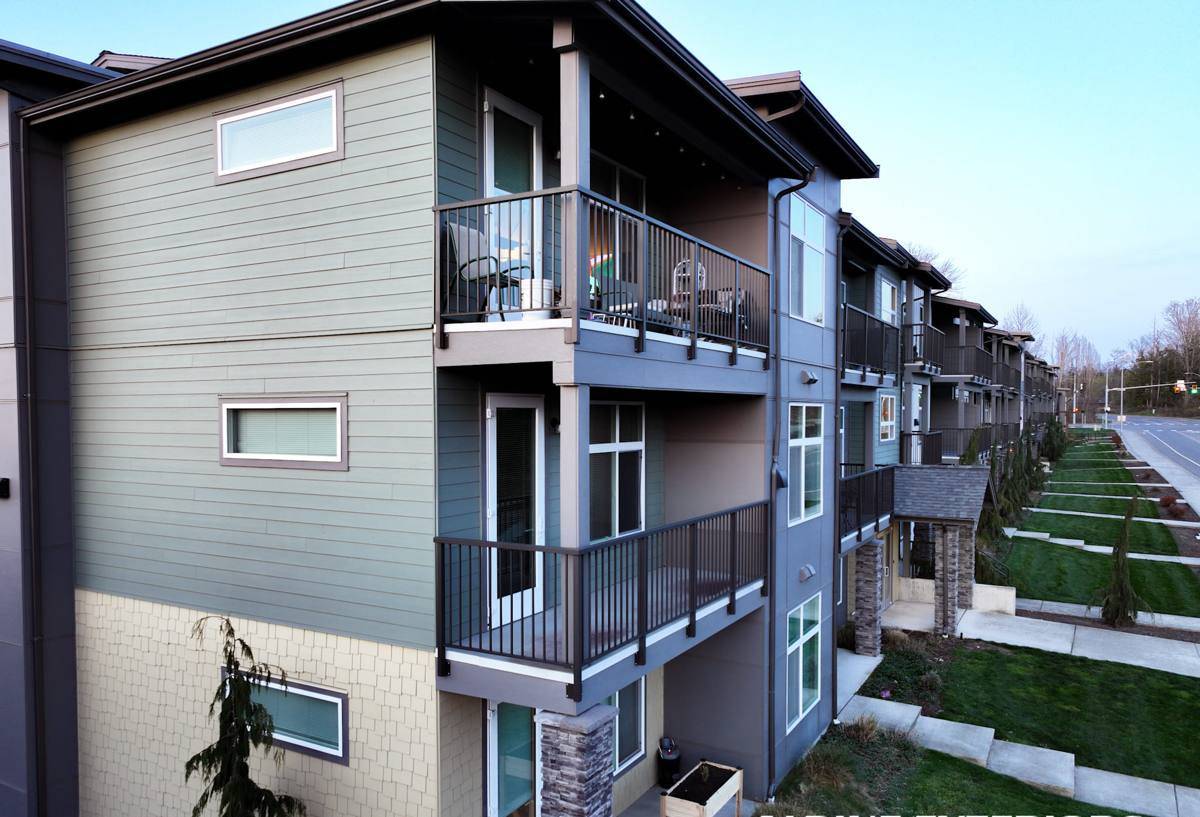
Allura fiber cement is a genuine cement-and-cellulose-fiber composite, not vinyl or a wood composite. That matters in a marine climate like ours. It's non-combustible, it doesn't warp or rot the way wood trim does, and it holds paint better than most wood-based siding over the long run. Allura also offers factory-primed and prefinished options, textured and smooth profiles, and a lineup that competes on price — often coming in a bit under Hardie in material cost, which is the main reason it shows up in competing bids.
If a contractor installs it correctly, with the right fasteners, clearances, and joint treatment, it will perform as a fiber cement product should. We're not disputing that. Our decision isn't about a defect in the product — it's about the whole package: how it's specified, how it's warrantied, how available it actually is in this market, and how it holds up specifically under the moisture and salt exposure we deal with here.
Where the Gap Shows Up
The differences that matter to a homeowner aren't usually visible on install day. They show up five, ten, twenty years in — in how the finish holds color, how joints behave after repeated wet-dry cycles, and what happens when you need a warranty claim honored by a company that's still stocking your exact profile.
Regional Reality: Salt Air, Driving Rain, and Moss Season
Fairhaven sits right on Bellingham Bay, and that proximity to salt air is not a small factor — it's the whole ballgame for exterior materials here. Add in Whatcom County's long wet season, wind-driven rain off the water, and months of shade and moss pressure on north-facing walls, and you have a climate that is genuinely harder on siding than most of the country. Products that perform fine in a drier, more moderate climate get tested here in ways their spec sheets don't always account for.
That's the lens we use for every material decision, not just siding brand. A caulk joint, a paint film, or a factory finish that's "adequate" in a lot of markets has to actually hold up through a Fairhaven winter, spring, and the condensation-heavy shoulder seasons in between. This is also why we don't install vinyl, LP SmartSide, Cemplank, primed spruce, or cedar as our primary product — the same regional logic applies across the board. Allura isn't singled out; it just happens to be the fiber cement alternative we get asked about most.
Factory Finish: The Detail That Decides Longevity
Fiber cement siding's biggest long-term vulnerability isn't the board itself — it's the paint film on top of it. A factory-applied, baked-on finish with a real multi-decade coating warranty behaves very differently than field-applied paint or a lighter factory coating, especially with salt air accelerating UV and moisture breakdown.
This is the single biggest reason we lean hard toward one specific product line rather than treating fiber cement as an interchangeable commodity. The finish system is the product, as much as the cement board underneath it.
| Factor | What to Ask About | Why It Matters Here |
|---|---|---|
| Finish process | Factory-baked multi-coat vs. lighter factory primer | Salt air and UV break down thinner finishes faster |
| Color warranty | Length and what's actually covered (fading, chipping, peeling) | Determines real cost of ownership, not just install price |
| Regional engineering | Is the product formulated for wet/humid climates specifically? | Generic formulations can perform differently in the PNW than in dry regions |
| Local stock and availability | Can profiles and touch-up match be sourced locally for repairs? | Affects repair timelines and future resale/remodel matching |
| Installer network | How many local crews are factory-trained on this specific product? | Improper install voids warranties regardless of product quality |
Warranty Structure: Read the Fine Print, Not the Headline Number
Every fiber cement manufacturer advertises a warranty. The number on the brochure isn't the whole story — what matters is what's covered, whether it's prorated after a certain number of years, whether it transfers to a new owner if you sell the house, and whether the manufacturer has a track record of actually honoring claims at scale over a long period.
James Hardie has been in the fiber cement business in North America longer than most competitors, which means there's a longer real-world track record of warranty claims being processed, not just a document promising they will be. We put weight on that when we're the ones whose name is on the install and who our customer calls first if something goes wrong ten years down the road.
Questions Worth Asking Any Contractor
- Is this warranty prorated, and at what year does the payout start dropping?
- Does the warranty cover labor to remove and replace, or just the material?
- Is the warranty transferable to a future homeowner, and is there a fee to transfer it?
- Who backs the warranty if the installing contractor is no longer in business?
- Has this manufacturer been through a major product recall or class-action settlement, and how was it handled?
Installation Sensitivity and Crew Familiarity
Fiber cement siding is unforgiving of shortcuts regardless of brand — wrong fastener pattern, missed clearances at grade, or poor flashing detail will cause problems no matter whose logo is on the board. But familiarity matters. A crew that installs the same product system day in and day out develops muscle memory around its specific quirks: how it cuts, how it reacts to our humidity during storage and install, how its joints need to be treated in this climate.
We made a decision as a company to go deep on one fiber cement system rather than broad across several. That means every crew member has installed the same HZ-rated product dozens of times, knows its clearance requirements cold, and isn't guessing at manufacturer specs for a less common product. That consistency is worth more to us — and to the homeowner — than the modest savings from a lower-cost material.
Availability and Long-Term Support in This Market
One practical issue that doesn't get discussed enough: how easy is it to source matching material five or ten years after your original install, when you need a repair panel replaced after storm damage or a remodel addition? In our region, Hardie's distribution and local stocking is deeper and more consistent than some of the alternative fiber cement brands, including Allura. That affects how easily a future contractor — us or anyone else — can do a clean repair that actually matches your existing siding instead of a visible patch.
Why We Only Install James Hardie
Putting all of this together — the factory finish process, the depth of the warranty track record, the regional engineering for wet climates, crew familiarity, and long-term material availability — we made the call to standardize on James Hardie fiber cement as the only product we install. It's non-combustible, it's built in climate-specific HZ formulations, its ColorPlus factory finish is designed to hold up under exactly the kind of UV and moisture cycling that Fairhaven and greater Whatcom County throw at exterior materials, and the warranty backing it has a long real-world history behind it.
That's not a knock on every other product on the market. It's a standard we hold ourselves to because we're the ones a homeowner calls if something doesn't hold up, and we'd rather build our business on one system we know inside and out than spread our expertise thin across several.
What This Means for Your Project
- We'll walk you through which Hardie product line fits your home's exposure, style, and budget
- We'll explain the ColorPlus finish options versus field-painted alternatives
- We'll be upfront if a lower-cost material would technically work, and why we still won't install it
- We'll show you what proper installation to manufacturer spec actually involves
If you're comparing quotes and want a straight answer on why one bid specs a different product than ours, we're glad to walk through it in person. Reach out for a free, no-pressure estimate and we'll take a look at your home's specific exposure and talk through what actually makes sense for it.