 Fairhaven Siding
 Birchwood's Exterior Challenge: Salt Air, Rain, and Moss
Homes in Birchwood sit close enough to the water and the weather patterns of Bellingham Bay that exterior materials take a different kind of beating than they would inland. Salt-laden air corrodes fasteners and finishes over time. Driving rain, pushed sideways by wind off the water, finds every gap in flashing and trim that a calmer climate would never expose. And Whatcom County's long, damp stretch of fall through spring gives moss, algae, and mildew months on end to take hold on north-facing walls and anything shaded by mature trees.
None of this is unusual for the neighborhood — it's just the trade-off of living somewhere this beautiful. But it does mean the exterior products and installation details that work fine in a drier climate often don't hold up the same way here. That's the lens we bring to every siding, roofing, window, and deck job we do in this area.
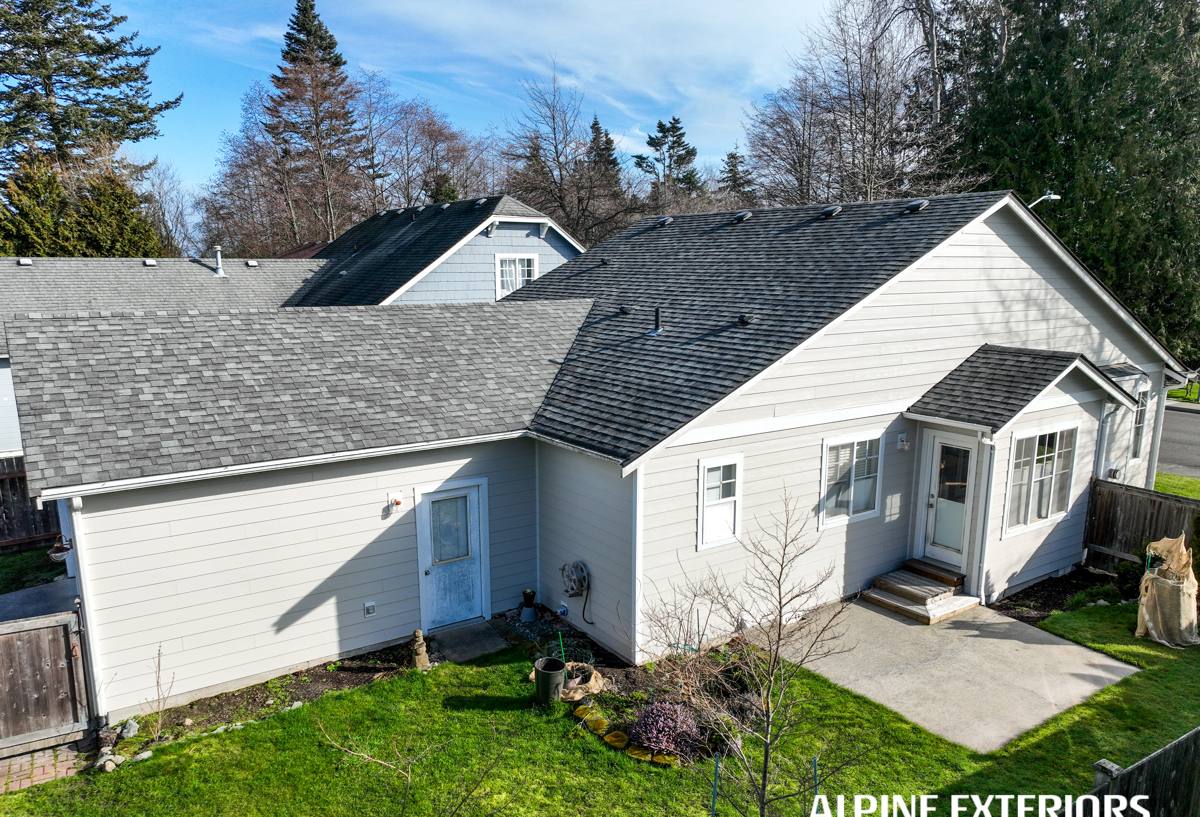
How Coastal Exposure Actually Damages Siding
Moisture Intrusion
Rain that's driven sideways doesn't just run down a wall — it works its way behind trim, into seams, and around window and door openings if the flashing and water-resistive barrier underneath aren't detailed correctly. Once moisture gets behind siding, it can sit there for weeks in our climate before anything dries out, which is exactly the kind of condition that leads to rot in wood-based products and hidden sheathing damage that isn't visible from the outside.
Salt and Corrosion
Airborne salt accelerates corrosion on fasteners, flashing, and any exposed metal trim. Cheaper or mismatched fastener systems show rust streaks and loosening well before their expected lifespan in a marine-influenced climate like Birchwood's.
Moss and Organic Growth
Shaded, north-facing, and low-airflow wall sections stay damp longer, which is exactly what moss and algae need to establish. Beyond the cosmetic issue, sustained organic growth on a wall surface holds moisture against the material underneath, which shortens the life of paint, caulking, and the substrate itself if it's left unaddressed.
What This Means for Different Siding Materials
Not every siding material handles this environment the same way. Here's an honest look at how common options perform under Birchwood's specific combination of salt air, wind-driven rain, and prolonged damp seasons.
| Material | Moisture Behavior | Typical Local Concern |
|---|---|---|
| Vinyl | Doesn't rot, but expands/contracts with temperature swings and can warp or crack in wind exposure | Seams and J-channels are common water entry points if not detailed carefully |
| Primed wood or cedar | Absorbs moisture readily; performance depends heavily on paint maintenance | High upkeep cost and rot risk if repainting is delayed even one season |
| LP SmartSide (engineered wood) | Treated to resist moisture, but is still a wood-strand product at its core | Cut edges and fastener penetrations need consistent sealing to stay protected |
| James Hardie fiber cement | Cement-based composition doesn't absorb moisture the way wood products do and won't rot | Performance still depends on correct installation — flashing, gapping, and fastening to spec |
We install James Hardie fiber cement exclusively. We don't install vinyl, LP SmartSide, Cemplank, Allura, primed spruce, or cedar siding. That's a deliberate standard, not a sales pitch — we'd rather stand behind one product system we trust in this climate than offer several and hope the cheaper ones hold up.
Why We Standardized on James Hardie
Fiber cement is a mix of cement, sand, and cellulose fiber, which gives it a fundamentally different relationship with moisture than wood-based siding. It doesn't swell, warp, or feed rot the way organic materials can. It's also non-combustible, which matters to a lot of homeowners regardless of climate.
James Hardie makes climate-specific product lines engineered for different regions, and the HardieZone HZ5 formulation is built for areas that see the freeze-thaw cycles and sustained moisture exposure typical of the Pacific Northwest. The factory-applied ColorPlus finish is baked on under controlled conditions, which gives it more consistent coverage and better fade resistance than a field-applied paint job — and it carries its own finish warranty separate from the substrate warranty. For a house in Birchwood facing salt air and months of damp weather every year, that combination of moisture resistance and finish durability is why we don't hedge with a cheaper alternative.
Product Lines We Work With
- HardiePlank lap siding — the most common horizontal siding profile, available in several exposure widths and textures
- HardiePanel vertical siding — often used for accent sections, gables, or a board-and-batten look
- HardieShingle — a shingle-style profile for homes wanting that texture without the maintenance of real wood shakes
- HardieTrim — matching trim boards for a finished, consistent system around windows, corners, and fascia
Installation Details That Matter in This Climate
Fiber cement's performance is only as good as the installation behind it. In a wind-driven rain environment like Birchwood, a few details make an outsized difference:
- Proper rain-screen gap or drainage plane behind the siding so any moisture that gets past the surface can drain and dry instead of sitting against the sheathing
- Correctly lapped and sealed flashing at every window, door, and roof-to-wall transition — the most common failure point in coastal wind conditions
- Manufacturer-specified fastener spacing and clearance from butt joints, which affects both wind resistance and long-term panel stability
- Caulking and sealant only where Hardie's specifications call for it — over-caulking can trap moisture just as easily as under-caulking lets it in
- Ground clearance and proper flashing at the base of the wall to keep splash-back and standing moisture away from the bottom course
These aren't optional extras — they're the difference between a siding job that performs for decades and one that develops hidden problems within a few wet seasons.
Beyond Siding: The Rest of the Exterior Envelope
Siding doesn't work in isolation. On a lot of Birchwood homes, the roof, windows, and decks are dealing with the same salt air and rain exposure, and a weak point in any one of them puts pressure on the others.
Roofing
A roof in poor condition sends water down onto siding and trim it was never meant to handle, and moss on a roof surface is often the same organic growth pattern you'll see on a shaded wall — it holds moisture and shortens material life if it's not managed.
Windows
Window flashing integrates directly with the siding around it. Old or poorly flashed windows are one of the most common sources of hidden water intrusion we find when we open up a wall during a siding project.
Decks
Decks take direct rain exposure with no roof overhead, and ledger board connections where a deck ties into the house are a frequent moisture entry point if they weren't flashed correctly when built.
Because we handle all four — siding, roofing, windows, and decks — we can look at a Birchwood home's exterior as one connected system rather than fixing one piece while ignoring how it interacts with the rest.
What Affects the Cost of a Siding Project
| Factor | Why It Matters |
|---|---|
| Home size and wall complexity | More corners, gables, and dormers mean more cutting, trim, and labor time |
| Extent of existing damage | Rotted sheathing or framing found underneath old siding adds repair scope before new siding goes on |
| Siding profile and accessories | Lap width, shingle-style sections, and trim detailing affect material and labor cost |
| Site access | Tight lots, slopes, or limited staging area can add time for scaffolding and material handling |
| Tear-off vs. overlay | Full removal of old siding costs more up front but lets us properly inspect and repair the wall assembly underneath |
We won't give a number without seeing the house — anyone who quotes a full siding job over the phone without an on-site look is guessing. A walk-through lets us catch things like hidden moisture damage before they become a mid-project surprise.
Choosing a Contractor for a Coastal Job Like This
Not every contractor who installs siding has real experience with the moisture and wind conditions specific to a place like Birchwood. A few things worth asking before you hire:
- Are they certified or specifically trained on James Hardie installation, not just general siding work?
- Will they walk you through how they'll handle flashing at windows, doors, and roof lines — not just the field of siding itself?
- Do they carry proper licensing and insurance for exterior work in Washington?
- Can they explain what they'll do if they find rot or moisture damage once the old siding comes off?
- Are they willing to put the scope of work, materials, and warranty terms in writing before starting?
A local crew that works in this climate regularly understands why these details aren't optional — they've seen what happens on the houses where they were skipped.
Caring for James Hardie Siding in Birchwood's Climate
Fiber cement is low-maintenance compared to wood, but "low-maintenance" isn't "no-maintenance," especially with the moss and algae pressure common in this area.
- Rinse siding periodically with a garden hose to clear salt residue and organic buildup, especially on shaded or north-facing walls
- Avoid high-pressure washing directly at seams and joints, which can force water behind the panels
- Keep gutters clear so overflow doesn't run down and pool against the siding at roof lines
- Trim back vegetation that keeps a wall section shaded and damp longer than the rest of the house
- Have caulking and trim joints checked periodically, since sealant is the first thing to wear in sustained wet conditions
If you're weighing a siding, roofing, window, or deck project on a Birchwood home, we're glad to walk the property with you and give you a straightforward, no-pressure look at what we'd recommend and why. There's no cost or obligation to get our take — just fill out the form below to get started.