 Fairhaven Siding
 Puget: A Waterside Community With Its Own Set of Exterior Challenges
Puget sits close to the water in the Fairhaven area of Bellingham, part of the wider stretch of Whatcom County shoreline that runs along the Salish Sea. Homes here share a lot in common with the rest of Bellingham Bay's waterfront neighborhoods, but proximity to open water, tree cover, and the mix of housing ages in the area all combine to put a specific kind of stress on exteriors. We work throughout Whatcom County, and areas like Puget are where we consistently see siding, trim, and roofing show wear earlier than homes further inland get.
None of this means a house in Puget is destined for problems. It means the materials and installation details matter more here than they do in a drier, more sheltered part of the county, and that's the lens we bring to every estimate we write for the area.
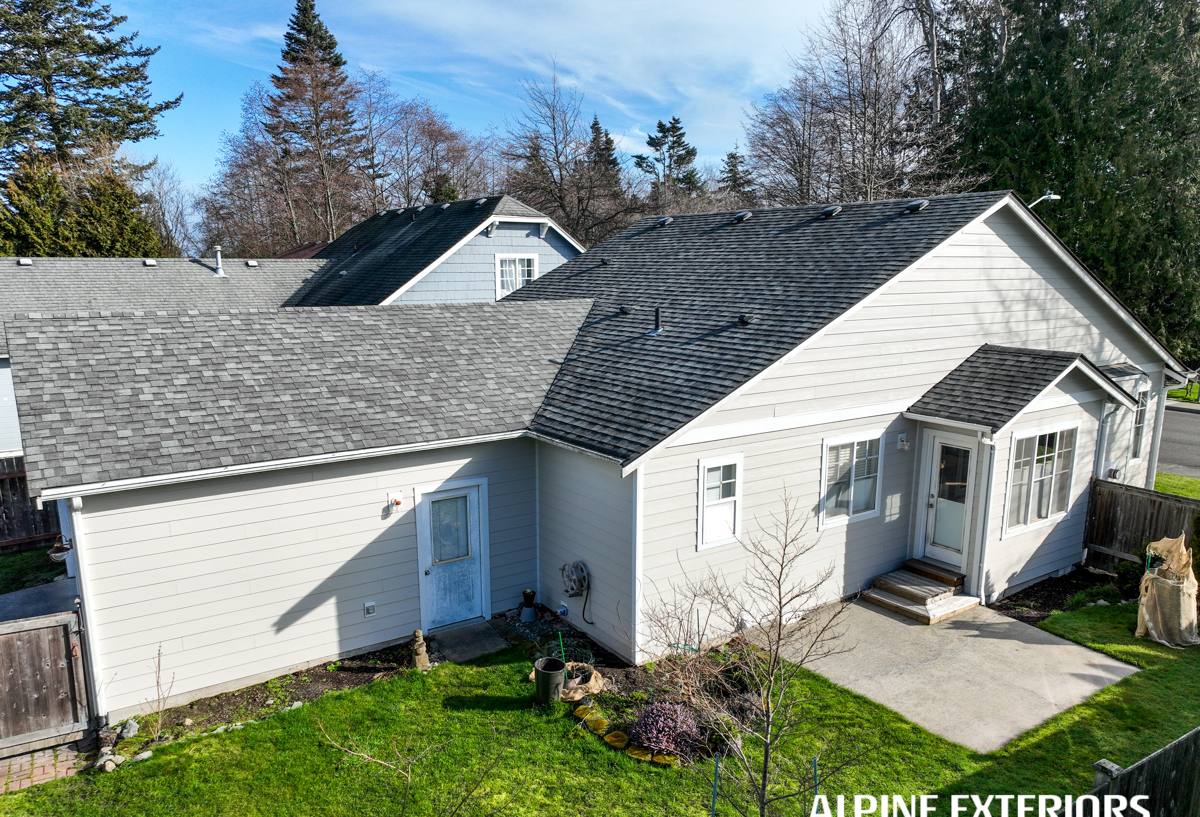
What the Local Climate Actually Does to a Home's Exterior
Salt Air and Steady Marine Moisture
Being close to the water means a house is exposed to a near-constant drift of salt-tinged, moisture-laden air, not just during storms. That kind of exposure doesn't announce itself. It works slowly, over years, on fasteners, flashing, and lower-grade finishes — showing up eventually as rust streaking below nail heads, cracked caulk joints, or paint that's chalked out well before its expected lifespan.
Wind-Driven Rain
Rain near open water rarely falls straight down. Wind pushes it sideways into lap joints, trim seams, and any gap around a window or door casing. A siding system that performs fine in a calmer, drier microclimate can still let water in here specifically because of how wind interacts with the shoreline and the surrounding terrain.
A Long Moss and Mildew Season
Mild temperatures, consistent dampness, and mature tree canopy add up to a moss and mildew season that can run most of the year, especially on north-facing walls and any spot shaded from direct sun. Porous or moisture-retentive materials become a growth surface over time, and it usually starts in places homeowners rarely check — behind landscaping, under eaves, along a shaded side wall.
Drainage and Grading
Depending on where a lot sits relative to the water and surrounding grade, drainage around the foundation and how quickly water moves away from a wall after a storm can vary block to block. Getting water management right at the base of the siding and around the foundation matters as much as the siding material itself.
Why We Only Install James Hardie Siding
We don't offer a menu of siding brands and let price decide the outcome. We install James Hardie fiber cement siding, and only James Hardie, based on what we've seen consistently on tear-offs and repair calls in exactly this kind of marine climate.
- Non-combustible core: fiber cement doesn't feed a fire the way wood-based products can, which matters for household safety and can matter for insurance considerations.
- Factory-applied ColorPlus finish: the color coat cures under controlled factory conditions rather than being brushed on at the job site, giving it far better resistance to fading, chalking, and moisture intrusion.
- Climate-engineered HZ product lines: Hardie's HZ5 formulation is built for regions with heavy, sustained moisture and freeze-thaw cycling — a closer match to coastal Whatcom County than a generic national spec.
- Dimensional stability: fiber cement doesn't swell, cup, or warp the way engineered wood products can after repeated wet-season moisture cycles.
- Strong transferable warranty: Hardie backs its products with one of the more substantial warranty structures in the industry, provided installation follows spec.
We don't install LP SmartSide, vinyl siding, Cemplank, Allura, primed spruce, or cedar. Those are legitimate products, and plenty of contractors install them competently. We made a professional decision that in a climate this consistently wet and salt-exposed, standing behind one system we understand completely serves homeowners better than offering a cheaper alternative that quietly shifts maintenance risk onto them down the road.
Beyond Siding: Roofing, Windows, and Decks for Puget Homes
Siding is where our stance is strongest, but most exterior problems in a coastal neighborhood don't stop at the walls. We handle roofing, window replacement, and decks as well, because a home's exterior functions as one connected system — a roof that's shedding water poorly, windows with failed seals, or a deck that's trapping moisture against the house will all eventually show up as a siding or trim problem too.
Roofing
Roofs in this area take on the same wind-driven rain and moss exposure as the walls below them, just with more direct sun and weather. Flashing details around penetrations and valleys matter more here than shingle brand alone, and it's usually the flashing, not the shingles, that fails first.
Windows
Older windows in coastal homes tend to show failed seals, fogging, and drafts sooner than the same window would in a drier climate, because of the constant humidity cycling. Replacement windows installed with proper flashing integration into the surrounding wall assembly help keep water out of the wall cavity, not just out of the window itself.
Decks
A deck attached to the house creates a ledger connection that has to be flashed correctly, or it becomes a chronic moisture entry point right where the deck meets the siding. This is one of the more common hidden damage sources we find on tear-offs in wet coastal neighborhoods.
How a Project Actually Runs
Assessment
We start by looking at the whole exterior, not just the material the homeowner called about. That means checking for hidden moisture at trim, window returns, deck ledgers, and low wall sections where water tends to collect, since those are the areas that determine what a project really needs.
Prep and Tear-Off
Whatever we're replacing, we remove it down to the sheathing so we can see the condition underneath. Any rot or compromised sheathing gets addressed before anything new goes back on — covering over a hidden problem just guarantees it resurfaces later.
Weather Barrier and Flashing
This is the step that matters most in a climate like this. A correctly lapped weather-resistant barrier, properly integrated window and door flashing, and consistent kick-out flashing at roof-wall intersections are what actually keep wind-driven rain out — more than the finish material itself.
Installation and Finish
Materials go on to manufacturer spec, including fastening patterns and clearances that matter more in high-moisture regions than they do elsewhere. For siding, that means following Hardie's installation requirements exactly, since a warranty is only as good as the installation behind it.
Walkthrough and Cleanup
We walk the finished exterior with the homeowner, cover care and what to watch for seasonally, and clean the site thoroughly before we leave.
What Drives the Cost of Exterior Work Here
Every project is different, but the same handful of factors move the number up or down on most jobs we estimate in this area.
| Factor | Why It Matters Locally |
|---|---|
| Hidden moisture or rot found at tear-off | Coastal moisture exposure means sheathing repair is more common here than in drier inland areas |
| Wall complexity and trim detail | More corners, dormers, and trim lines mean more flashing work, which matters more with wind-driven rain |
| Material line and finish | Hardie's HZ5 product and premium ColorPlus finishes cost more upfront but hold up longer in salt air and constant dampness |
| Access and lot terrain | Sloped or tight waterfront lots can add setup time for scaffolding and material staging |
| Scope bundling | Combining siding with roofing, windows, or a deck in one project often reduces overall cost versus doing each separately over time |
We give straightforward, itemized estimates rather than a single lump number, so homeowners can see exactly where their money is going.
Signs an Exterior in Puget Needs Attention
- Soft or spongy spots when you press on siding or trim, especially near the bottom of walls
- Visible moss or dark streaking on siding, particularly on shaded or north-facing walls
- Paint or finish that's chalking, fading, or peeling well ahead of what you'd expect
- Gaps or separation at trim joints, window casings, or where a deck meets the house
- Rust staining below nail heads or fasteners
- Musty smell or visible staining on interior walls near exterior corners
Any one of these on its own isn't necessarily an emergency, but catching them early is almost always cheaper than waiting for a full failure.
Why a Local Crew Matters
A crew that works this stretch of Whatcom County regularly knows what wind-driven rain and salt air actually do to a house here, not in general, but in this specific setting. That shows up in small decisions — how flashing gets detailed at a deck ledger, how much clearance gets left at grade, which walls get watched most closely for moss — that a crew unfamiliar with the area might not think twice about. It also means someone is genuinely reachable afterward if a question comes up, rather than a phone number that used to belong to a name from out of town.
Get a Straightforward Estimate
If you're noticing early wear on siding, roofing, windows, or a deck around your Puget home, or you're just planning ahead, we're happy to take a look and give you an honest read on what your exterior actually needs — no pressure, no inflated scope. Use the form below to request a free estimate.