 Fairhaven Siding
 Bow sits along the water south of Fairhaven, close enough to the Samish Bay shoreline that salt air is simply part of daily life for the homes there. Combine that with the wind-driven rain that rolls in off the Salish Sea for much of the year and the long, damp moss season that follows, and you get a climate that is genuinely hard on exterior building materials. We work in this area regularly, and the siding, roofing, window, and deck problems we see on Bow homes tend to follow a pattern that's worth understanding before you spend money fixing or replacing anything.
What Bow's Coastal Climate Does to a House
Every material on the outside of a home in this part of Washington is dealing with three things at once: moisture, salt, and organic growth. None of these are dramatic on their own, but they compound over years, and they hit homes near the water harder than homes further inland.
Salt Air and Corrosion
Airborne salt from the bay settles on siding, trim, fasteners, and flashing. Over time it accelerates corrosion on anything metal that isn't properly rated or protected, and it can degrade paint films and caulk faster than you'd expect a few miles inland. Materials and fasteners that aren't built for a marine-influenced environment tend to show their weaknesses here first.
Wind-Driven Rain
Rain in this region rarely just falls straight down — it comes sideways, pushed by wind off the water. That matters more than people realize, because wind-driven rain gets forced into joints, laps, and seams that would stay dry in a calmer climate. Siding systems and installation details that work fine in a sheltered inland lot can fail on an exposed Bow property if they weren't built and installed with that wind loading in mind.
The Long Moss Season
Between the rainfall totals and the tree cover common around Bow, moss and algae have a long growing window here — often close to nine months out of the year on shaded, north-facing walls and roof planes. Moss holds moisture against a surface, and sustained moisture is the single biggest driver of rot, paint failure, and material breakdown on any exterior.
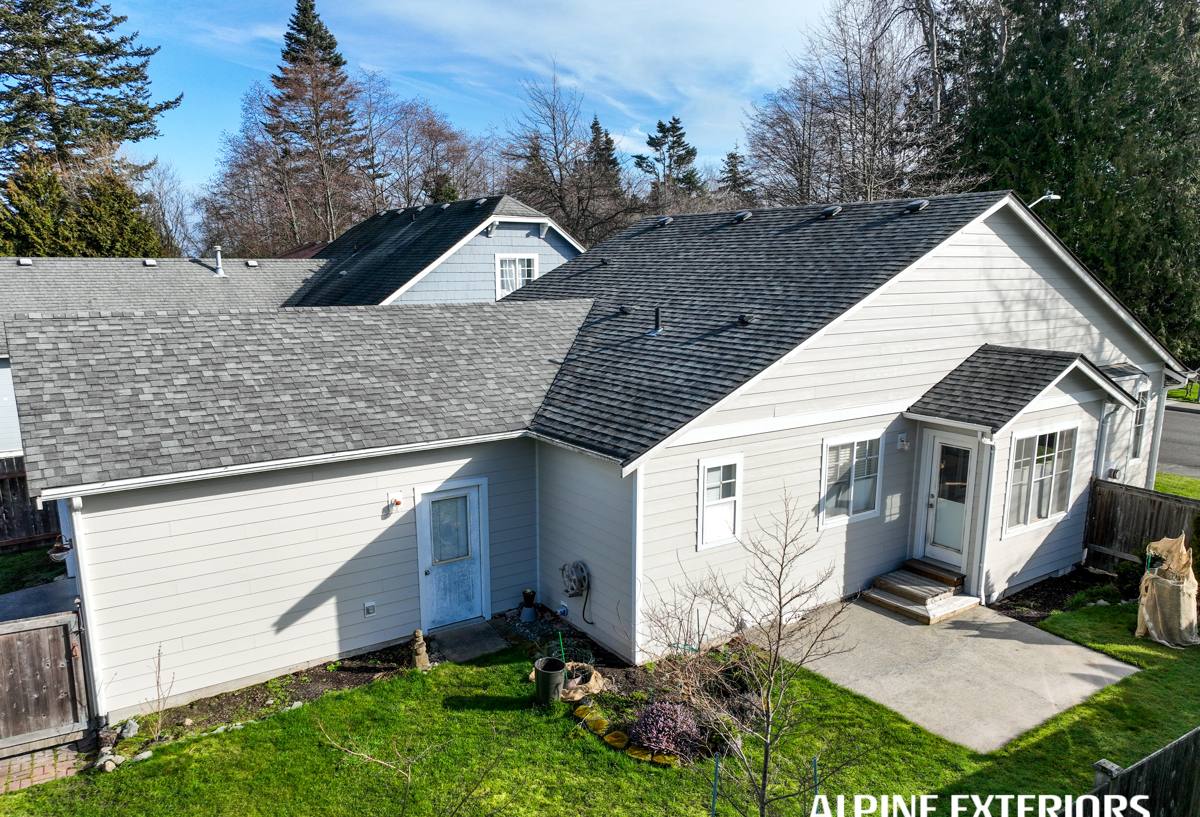
Why the Siding Material You Choose Matters More Here
Inland or in a drier climate, you can get away with more forgiving materials and looser installation tolerances. On an exposed, salt-air, high-moisture site like Bow, the margin for error shrinks. This is exactly why we standardized on James Hardie fiber cement siding and don't install vinyl, LP SmartSide, cedar, primed spruce, Cemplank, or Allura. It's not that those products have no place anywhere — it's that we've made a professional judgment that they carry trade-offs we're not willing to put our name behind, especially on homes facing this kind of weather.
| Material | Moisture Behavior | Salt Air / Coastal Fit | Long-Term Maintenance |
|---|---|---|---|
| Vinyl siding | Doesn't rot, but seams and J-channels can trap moisture; warps under heat and impact | Can fade and become brittle faster under sun and salt exposure over decades | Low upfront care, but limited repair options and shorter realistic lifespan |
| Cedar / primed spruce | Natural wood; absorbs and releases moisture, prone to swelling, cupping, rot at joints | Needs diligent sealing and refinishing to hold up near salt air | High — repainting/staining on a recurring cycle, moisture monitoring |
| LP SmartSide / OSB-based | Engineered wood strand product; performs well when sealed edges stay intact, vulnerable if breached | Manageable with correct install, but edge and cut-end sealing is critical and unforgiving of shortcuts | Moderate — depends heavily on installation quality and caulking upkeep |
| James Hardie fiber cement | Non-combustible, dimensionally stable, doesn't absorb moisture like wood-based products | Engineered HZ product lines specifically for the Pacific Northwest's wet, marine-influenced conditions | Low — factory-baked ColorPlus finish resists fading and doesn't need repainting on the same cycle |
The James Hardie System We Install
James Hardie makes climate-specific product lines, and the HZ5 formulation is engineered for wetter, more variable climates like ours — including the added moisture load a place like Bow deals with. It's fiber cement, meaning it's primarily sand, cement, and cellulose fiber, not wood. That composition is what gives it resistance to moisture absorption, pest damage, and rot in a way that wood-based sidings simply can't match, and it's also non-combustible, which matters for insurance and peace of mind alike.
ColorPlus Factory Finish
Most of what we install uses Hardie's ColorPlus finish — baked on at the factory under controlled conditions rather than field-painted on site. That finish is formulated to hold color and resist the kind of UV and moisture exposure that fades site-applied paint faster near open water. It also comes backed by its own finish warranty separate from the substrate warranty, so you're covered on both the material and the color.
Warranty Structure
James Hardie backs its siding with a long-term transferable limited warranty on the substrate, plus a separate warranty on the ColorPlus finish. Transferability matters if you ever sell — it's a real asset for the next owner, not just a piece of paper for you.
How We Approach Siding Work in Bow
Every property we look at near the water gets evaluated for its actual exposure — how much direct wind and rain it takes, how much shade and moss pressure it has, and what condition the existing sheathing and flashing are in underneath whatever siding is currently there. That inspection drives the plan, not a one-size-fits-all package.
Installation Details That Actually Matter
Fiber cement performs the way it's supposed to only when it's installed to manufacturer spec — correct fastener type and spacing, proper clearances at grade and roof lines, and flashing details that account for wind-driven rain rather than just straight-down rain. We follow Hardie's installation requirements closely because loose installation is what causes the moisture problems people wrongly blame on the siding material itself.
Working Around Coastal Conditions
We plan around weather windows more carefully on exposed sites, and we pay extra attention to fastener corrosion resistance and flashing integration on homes with direct water exposure. It's a more careful process than a standard inland install, and it should be.
Beyond Siding: Roofing, Windows, and Decks
Siding rarely fails in isolation — the same wind-driven rain and moss pressure that ages siding also works on roofs, window flashing, and any exterior deck surfaces. We handle all four, which matters because these systems interact: a roof that's shedding water onto a wall incorrectly, or window flashing that's failed, will undermine even a well-installed siding job. Looking at the whole exterior envelope together, rather than one component at a time, catches problems a siding-only inspection would miss.
Roofing
Roof condition and siding condition are connected — deferred roof maintenance is one of the more common hidden causes of siding and trim damage we find during estimates.
Windows
Window flashing integration is one of the most common failure points on any home, and it's especially unforgiving in a high-wind-driven-rain climate. When we replace siding, we check window flashing as part of the job, not as an afterthought.
Decks
Exterior decks in this climate deal with the same moisture and moss exposure as siding, just horizontally instead of vertically — which is often harder on a surface. We build and repair decks with drainage and material choices suited to that reality.
What Drives the Cost of a Siding Project in Bow
| Cost Factor | Why It Matters |
|---|---|
| Existing wall condition | Rot or moisture damage found under old siding adds repair scope before new siding goes on |
| Home exposure | Homes with more direct wind/water exposure often need more careful flashing and detailing work |
| Siding profile and trim complexity | Lap size, panel vs. plank choices, and trim detail all affect labor and material |
| Access and site conditions | Slopes, tree cover, and staging space around the home affect scheduling and labor |
| Color and finish choice | ColorPlus factory finishes vs. field-applied paint carry different cost and longevity trade-offs |
Maintenance Checklist for Homes Near the Water
- Rinse siding and trim periodically to remove salt residue, especially on sides facing prevailing wind and water
- Trim back vegetation and tree limbs that shade walls and roof planes, since shade extends moss season
- Check and clear gutters before the fall rains start — overflow is a major source of localized wall moisture
- Inspect caulking around windows, doors, and trim joints yearly for cracking or separation
- Watch for moss or dark streaking on north-facing and shaded walls, and address it before it spreads
- Have flashing at rooflines, decks, and window heads checked periodically, since flashing failures are often invisible until damage is already underway
Why a Local Crew Matters for This Kind of Work
A contractor who only occasionally works this close to the water can miss the details that matter here — the extra care on flashing, the fastener choices, the way moss pressure changes maintenance recommendations by exposure. We work this coastline regularly, which means we're not guessing at how a house in Bow behaves differently than one further inland; we've seen it directly, repeatedly, on real jobs.
If you're dealing with aging siding, a roof that needs attention, window leaks, or a deck showing its age, we're happy to take a look and give you a straightforward, no-pressure estimate — just fill out the form below.