 Fairhaven Siding
 Building a Deck That Actually Holds Up in Happy Valley
Happy Valley sits close enough to Bellingham Bay that salt-laden air reaches almost every yard, and far enough into the tree cover that shade, damp ground, and moss are just part of daily life. A deck built here works harder than a deck built inland. It has to shed driving rain off sloped lots, resist the slow creep of moss and algae through the gray months, and stand up to salt air that speeds up corrosion on anything less than fully rated hardware. When we build or rebuild a deck for a Happy Valley home, we start from those conditions rather than treating the project like a generic backyard add-on.
This page covers what we look at specifically for custom deck work in this part of Fairhaven and Whatcom County — the site conditions, the material trade-offs, our process, and what it takes to keep a deck looking and performing well for decades instead of years.
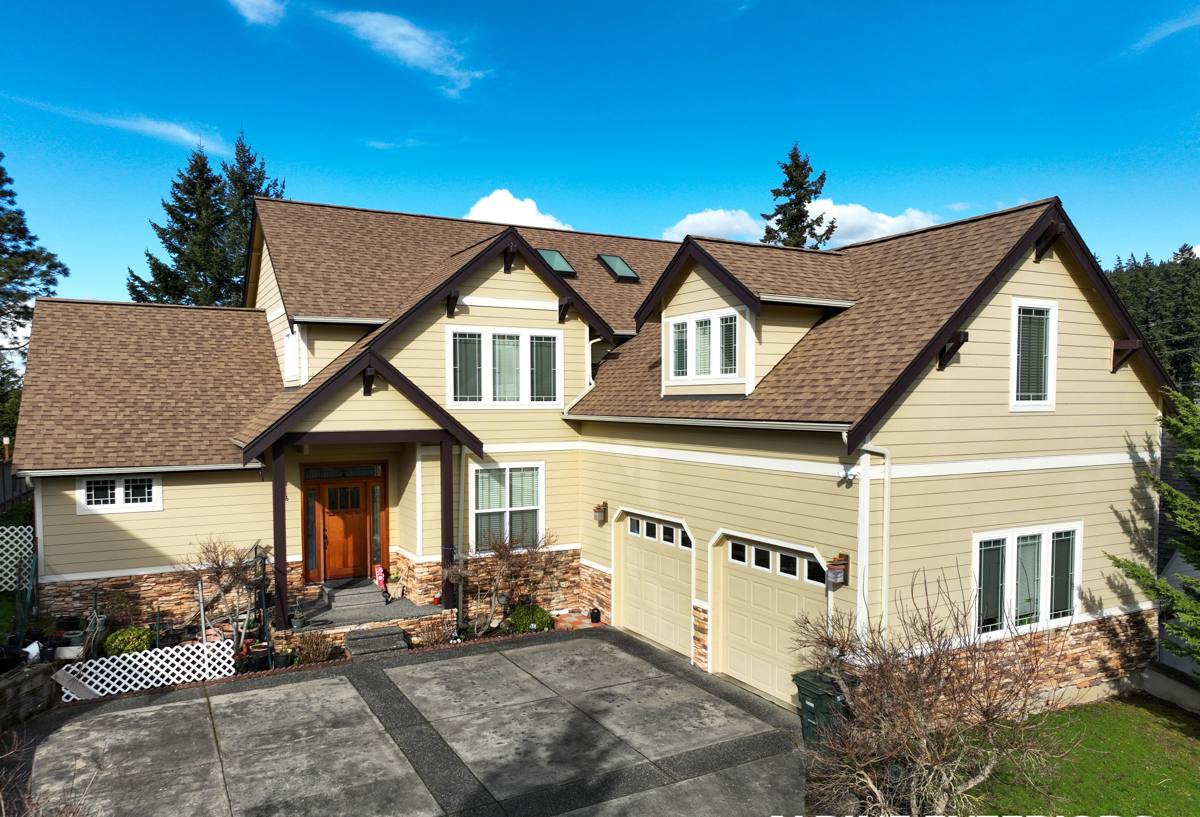
What Happy Valley's Lots and Homes Ask of a Deck
A lot of the housing stock in and around Happy Valley is older, with additions and outdoor living spaces added over time rather than built in from day one. That means ledger board attachments, existing siding, and older foundations are often part of the conversation before a single deck board goes down.
Site conditions we plan around
- Sloped or uneven yards that call for taller support posts, engineered footings, or multi-level deck design
- Mature tree cover that keeps sections of the deck shaded and damp for much of the year, accelerating moss and mildew growth
- Older homes where the ledger attachment point needs new flashing, sistering, or reinforcement to meet current code
- Drainage that has to move water away from the house and off the deck surface, not just off the edge of the boards
None of these are unusual problems on their own, but ignoring any one of them is how a deck ends up with soft framing, a moldy underside, or a ledger board that's rotting behind the siding within a few years.
Framing and Structure: Getting the Bones Right
The framing is the part of a deck nobody sees once it's finished, which is exactly why it's the part that separates a deck that lasts thirty years from one that needs major repair in ten. In a marine climate with a long wet season, framing decisions matter more than they would somewhere drier.
What we do differently here
We use pressure-treated lumber rated for ground contact on all structural framing, even on elevated decks, because moisture wicking up through posts and beams doesn't stop at the treated/untreated line. Every ledger connection gets proper flashing and a moisture barrier between the ledger and the house siding — this is one of the most common failure points we find on older decks in this area, and it's almost always hidden until the siding comes off. Joist tape over the tops of joists keeps standing water from soaking into end grain, which is where rot typically starts first.
Footings get sized to the actual soil and slope conditions on the lot, not a one-size-fits-all number. On the sloped parcels common around Happy Valley, that often means deeper footings or additional support posts compared to a flat-lot deck of the same size.
Decking Material Options for Salt Air and Moss Season
The decking surface is where most homeowners focus, and it's also where the climate trade-offs are clearest. There's no universally "best" material — it depends on how much maintenance you want to take on and what look you're after.
| Material | Upfront Cost | Moss & Moisture Resistance | Maintenance |
|---|---|---|---|
| Cedar | Moderate | Naturally rot-resistant, but surface needs upkeep | Annual cleaning and re-sealing to prevent graying and moss |
| Pressure-treated pine/fir | Lowest | Good with proper sealing; end grain is the weak point | Cleaning and re-staining every 1–2 years |
| Composite (capped) | Higher | Excellent — resists moisture absorption and moss growth on the surface | Periodic washing; no staining or sealing |
| PVC | Highest | Excellent — fully moisture-proof board | Low; occasional washing |
Our take
For a shaded, damp Happy Valley yard, we generally steer clients away from uncapped or budget composite boards — in constant moisture and shade, the exposed core can hold water longer than a solid wood board would, which works against the whole point of choosing composite. If you want low maintenance, a fully capped composite or PVC board is worth the extra upfront cost. If you love the look and feel of real wood and don't mind yearly upkeep, cedar is a solid choice as long as it's detailed correctly underneath.
Railings, Fasteners, and Hardware That Won't Rust
Salt air is hard on metal, full stop. Standard hot-dipped galvanized fasteners can start showing rust streaks on a deck near the water within a few seasons. We spec stainless steel or coated fasteners rated for coastal/marine exposure on every deck we build in this area, along with hidden fastener systems where the decking material supports it, since exposed screw heads are the first thing to show corrosion.
Railing systems get the same scrutiny. Powder-coated aluminum and properly finished wood railings hold up well; bare or lightly coated steel components tend to show rust at welds and joints faster than homeowners expect in this climate. We'll walk through railing options based on your style preference and how close your lot sits to the water.
Our Process From First Call to Final Walkthrough
- Site visit and assessment — we look at slope, drainage, existing structure (if any), sun/shade exposure, and how the deck will connect to the house
- Design and material walkthrough — we go over layout, decking material trade-offs, railing style, and any code or permit requirements specific to your property
- Written estimate — a clear scope of work and price range before anything is scheduled
- Permitting — we handle the permit application and inspections required for your project
- Demo and framing — removal of any failing structure, followed by framing built to the specs above
- Decking, railing, and finish work — surface installation, railings, stairs, and any trim or skirting
- Final walkthrough — we go over the finished deck with you and explain what maintenance it needs going forward
Maintenance Checklist to Protect Your Investment
Whatever material you choose, a little seasonal attention goes a long way in a climate with this much rain and shade. Here's what we tell every Happy Valley client to keep on their calendar:
- Sweep leaves and debris off the deck surface regularly in fall — trapped organic matter is what feeds moss and mildew
- Clean the deck surface at least once a year with a deck-safe cleaner, more often in heavily shaded areas
- Check and clear gaps between boards so water can drain through instead of pooling
- Inspect the ledger board area and any spots where the deck meets the house for signs of moisture intrusion
- Re-seal or re-stain wood decking on the schedule appropriate to the product (typically every 1–2 years)
- Check railing posts and fastener heads annually for early signs of rust or loosening
Permits and Code Considerations in Whatcom County
Most custom decks above a certain height or attached to the house require a building permit, and inspections typically cover footing depth, ledger attachment, and railing height/spacing for safety. Requirements can vary depending on your specific parcel and whether the deck is attached or freestanding. We handle the permit process as part of every project so you're not stuck untangling code requirements on your own, and so the finished deck is built to hold up to an inspection now and to a home sale down the road.
Why a Local Happy Valley Crew Matters
A crew that already works in this specific pocket of Fairhaven has seen the older ledger attachments, the sloped lots, and the shaded, moss-prone yards that come with this terrain. That's the difference between a deck design that looks good on paper and one that's actually built for the site it's going on. We're not guessing at how much rain your yard sees or how fast moss creeps in under tree cover here — we already know, because we've built decks a few streets over.
If you're ready to talk through a custom deck for your Happy Valley home, we're happy to come take a look at your property and put together a straightforward, no-pressure estimate — just fill out the form below to get started.