 Fairhaven Siding
 Siding Built for Downtown Bellingham's Weather, Not Just Its Look
Downtown Bellingham sits close enough to the water that homes here deal with a specific combination most siding products were never engineered for: salt-laden air drifting up from Bellingham Bay, wind-driven rain that hits walls sideways instead of straight down, and a wet season that stretches long enough to grow a steady crop of moss and algae on anything that stays damp. Add in the shade from mature trees on many older lots downtown, and you've got siding that rarely gets a full day of sun to dry out between storms. That's a tough environment for wood, for vinyl, and for the cheaper fiber cement alternatives. It's exactly the environment James Hardie fiber cement was engineered to handle.
This page is about one service in one place: installing James Hardie fiber cement siding on homes in and around Downtown Bellingham. We're not going to give you a generic rundown of what fiber cement is — you can find that on our main fiber cement page. Here we're talking about what this specific product needs to do on this specific stretch of Whatcom County coastline, and how we install it so it actually does that job for decades instead of years.
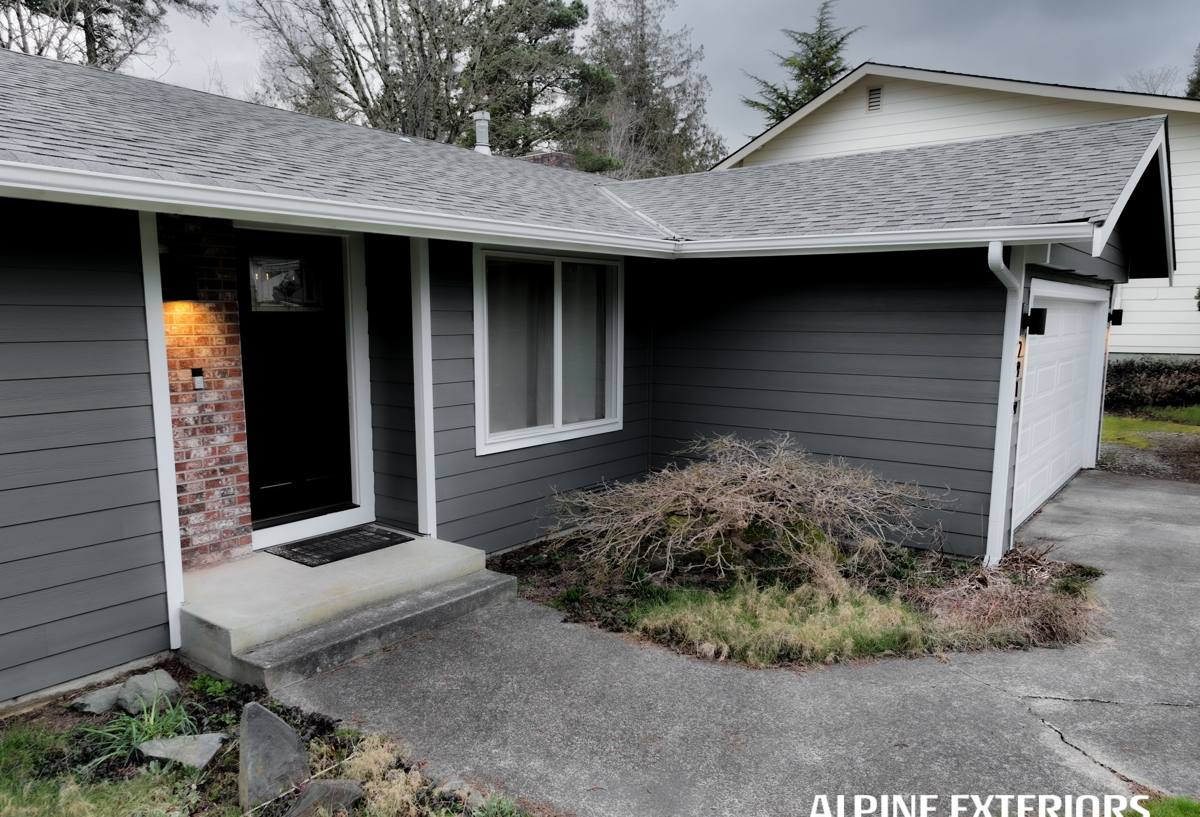
What Downtown Bellingham's Climate Actually Does to Siding
Salt Air
Proximity to the bay means airborne salt settles on exterior surfaces even blocks inland, especially on homes with unobstructed exposure toward the water. Salt accelerates corrosion on fasteners and trim metal, and it can degrade paint films faster than inland weather would. Fiber cement itself doesn't corrode — it's a cement, sand, and cellulose composite — but everything attached to it (nails, flashing, trim caps) needs to be rated for that environment, or the siding ends up looking great while the details around it fail.
Driving Rain
Storms coming off the Salish Sea don't just fall on Downtown Bellingham roofs — they get pushed sideways into walls, window trim, and every seam in the siding. That means water-resistive barrier detailing, flashing, and caulking joints matter as much as the siding panel itself. A beautiful fiber cement installation with sloppy flashing will let water behind the cladding, and once water gets behind any siding material, rot and mold follow no matter how good the surface product is.
Moss and Algae Season
Whatcom County's damp, mild winters and shaded lots (common in the older, tree-lined blocks near downtown) create ideal conditions for moss and algae growth on north-facing and shaded walls. This is mostly a cosmetic and maintenance issue rather than a structural one, but it's a real factor in choosing a finish. James Hardie's factory-applied ColorPlus finish resists mildew growth better than field-applied paint, and it holds color longer under the kind of low-light, high-moisture conditions common downtown.
Quick Reference: Climate Factor to Installation Response
| Climate Factor | What It Does to a Home | How the Installation Addresses It |
|---|---|---|
| Salt air from the bay | Corrodes exposed metal fasteners and trim over time | Corrosion-resistant fasteners and flashing rated for coastal exposure |
| Wind-driven rain | Pushes water into seams, laps, and trim joints | Proper water-resistive barrier, correct lap sequencing, sealed penetrations |
| Long moss/algae season | Discolors and holds moisture against shaded walls | Factory-cured ColorPlus finish, proper standoff and ventilation gaps |
| Mature tree cover | Reduces drying time after storms, drops debris into gutters and laps | Correct panel clearance and drainage detailing at the bottom course |
Why We Only Install James Hardie Here
We've made a standing decision as a company to install James Hardie fiber cement exclusively — not LP SmartSide, not vinyl, not other fiber cement brands like Cemplank or Allura, not primed spruce or cedar. That's not a marketing line, it's a practical one that comes directly from working in this climate. Vinyl can warp and fade under UV and temperature swings, and it doesn't hold up structurally the way a cement-based product does. Wood, even well-maintained cedar, is in a constant fight against the moisture and moss conditions we just described. Other fiber cement brands may look similar on a spec sheet, but James Hardie backs its product with a specific factory finish system (ColorPlus) and a strong transferable limited warranty, and the company engineers regional HZ5 product formulations specifically for climates like ours in the Pacific Northwest. When we're putting siding on a home that's going to face salt air and driving rain for the next 30-plus years, we want the product with the strongest track record for that exact fight — not the cheapest one that satisfies a spec sheet.
What Correct Installation Looks Like Downtown
Fiber cement is only as good as its installation. A huge share of the siding failures we get called out to inspect aren't failures of the material — they're failures of the details around it. For a Downtown Bellingham home, that means:
- Water-resistive barrier installed and lapped correctly, shingle-style, so water sheds outward at every seam
- Flashing at every window, door, and roof-to-wall intersection, sized and lapped to shed wind-driven rain, not just straight-down rain
- Panel gaps and caulking done to Hardie's published spec — not caulked solid, which traps moisture, but sealed where the manufacturer actually calls for it
- Fasteners rated for coastal/high-moisture exposure, driven at the correct depth so they don't crack the board or leave it loose
- Proper clearance between the bottom of the siding and grade, decks, roofs, or paved surfaces, so the lowest course isn't sitting in standing water or splashback
- Correct nailing pattern and stud alignment so panels aren't fastened into open air behind the sheathing
Every one of these is a place where a rushed or inexperienced crew can cut a corner that won't show up as a problem for a year or two — and then shows up as rot, staining, or a warranty claim that Hardie won't cover because the installation didn't follow spec. That last part matters: James Hardie's warranty coverage depends on the product being installed to their published instructions. A crew that doesn't know those instructions cold can void the very warranty that's a big part of why you chose the product.
Our Process for Downtown Bellingham Homes
1. On-Site Assessment
We walk the exterior and look specifically at exposure — which walls take the worst of the wind-driven rain, which stay shaded and damp longer, where existing moisture or moss damage is already showing, and what the current siding and flashing conditions tell us about what needs to be corrected, not just covered up.
2. Product and Finish Selection
We help you choose the right Hardie board profile (lap, shingle, panel) and ColorPlus finish for the home's style and the neighborhood's character, while flagging any finish choices that will show moss or water staining faster in shaded, low-sun spots.
3. Tear-Off and Substrate Check
Old siding comes off and we inspect the sheathing underneath for existing rot or moisture damage — common on older downtown homes — and address it before anything new goes up. Covering damaged sheathing with new siding just hides a problem that gets worse.
4. Water Management Install
Water-resistive barrier and flashing go in first, and this is where we spend real time. It's invisible once the siding is up, but it's the layer doing most of the work against driving rain.
5. Siding Installation to Spec
Panels go up following James Hardie's installation manual exactly — fastener type, spacing, gaps, caulking — so the manufacturer's warranty stays fully intact.
6. Final Walkthrough
We walk the finished job with you, checking trim, caulking lines, and touch-up work before we call it done.
Why Local Experience Downtown Matters
A crew that's worked other parts of Whatcom County but not specifically the tighter lots and shaded, tree-lined streets closer to downtown will still get the product right — but they may not anticipate the specific drainage and moss-prone spots that come with narrower setbacks, mature landscaping, and older home footprints common in this part of Bellingham. Knowing which walls on a typical downtown lot stay wet longest, and detailing those areas accordingly, is the kind of thing that comes from having actually worked the area — not from a spec sheet.
What This Kind of Job Typically Involves Cost-Wise
Every home is different, and we don't want to throw out numbers that don't apply to your project. In general, cost on a fiber cement job depends on:
| Factor | Why It Matters |
|---|---|
| Home size and wall complexity | More corners, gables, and trim details mean more labor and material |
| Condition of existing sheathing | Rot repair found during tear-off adds scope but prevents a bigger problem later |
| Siding profile and finish | Lap, shingle, and panel styles carry different material and install costs |
| Access and site conditions | Tight downtown lots, mature landscaping, or limited staging space can affect labor time |
The only way to get real numbers is a walkthrough of your specific home, which is exactly what a free estimate is for.
Ready to Talk About Your Home
If you're dealing with moss staining, water damage, or siding that's simply reached the end of its life on a Downtown Bellingham home, we're glad to come take a look and give you an honest read on what it needs. There's no pressure and no obligation — just a straightforward assessment from a crew that installs one product, does it to spec, and knows this part of Whatcom County. Use the form below to request your free estimate.