 Fairhaven Siding
 Siding Built for Silver Beach's Bluff-Top Exposure
Silver Beach sits close enough to Bellingham Bay and the Fairhaven shoreline that homes here take on a different kind of weather than houses ten minutes inland. Salt-laden air moves up off the water, driving rain comes in sideways during winter storms, and the tree cover that makes the neighborhood pretty also means long stretches of shade where moss and algae get a foothold and never fully dry out. Siding on a Silver Beach home isn't just decorative — it's the first and most-tested line of defense against a climate that stays damp for months at a stretch.
We install siding across Whatcom County, but Silver Beach and the rest of the Fairhaven area get a specific mix of conditions that changes how we approach the job: exposure orientation matters more, moisture management at seams and penetrations matters more, and the product itself has to tolerate salt air without chalking, swelling, or feeding mold. That's the lens we bring to every estimate in this neighborhood.
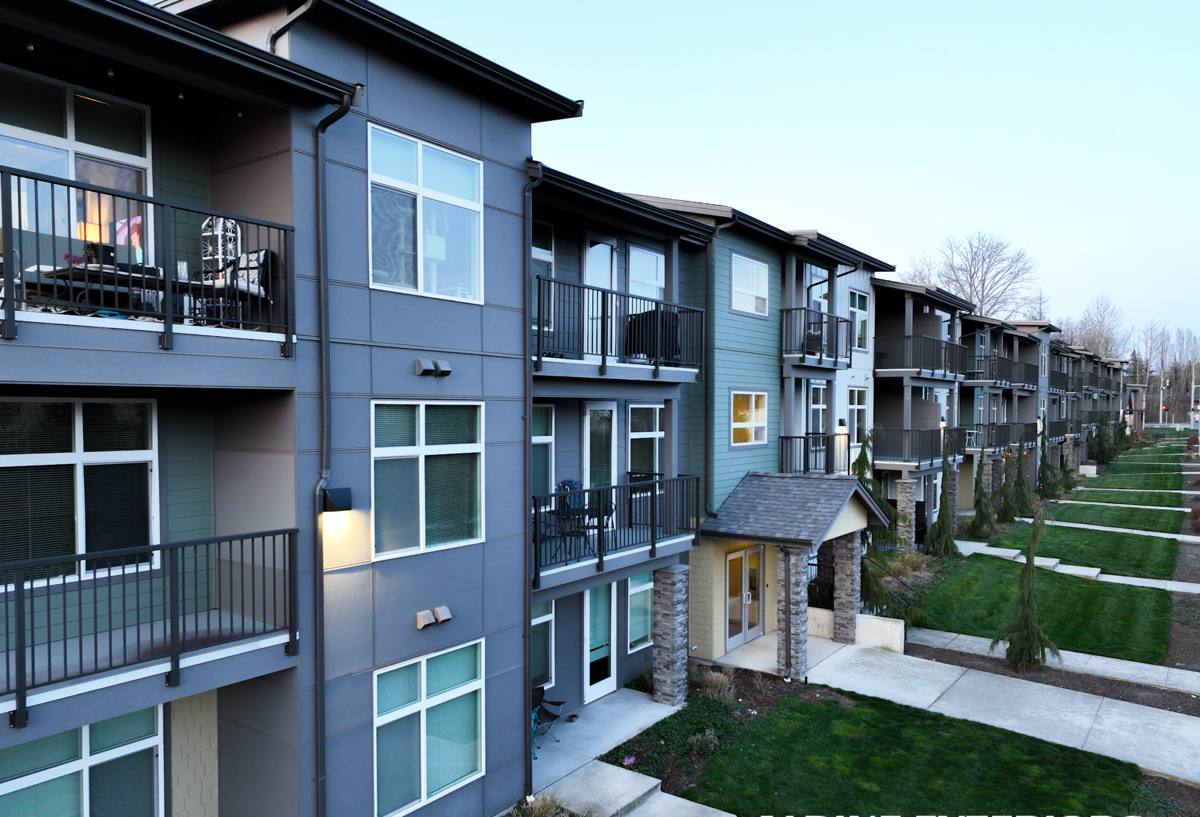
What Silver Beach's Climate Actually Does to Siding
Salt Air
Proximity to the bay means airborne salt settles on exterior surfaces year-round, not just during storms. Salt is corrosive to fasteners and hardware, and it accelerates the breakdown of finishes that weren't engineered to handle it. Over years, a siding product with a weak factory finish will show fading, chalking, or a dull, washed-out look on the sides of the house that face the water.
Driving Rain
Wind off the bay pushes rain horizontally into wall assemblies, not just straight down. That means the details most homeowners never think about — how siding overlaps, how it's flashed at windows and doors, how water is directed away from seams — matter as much as the siding material itself. A product that's water-resistant in a lab test can still fail on a wall if it's installed without attention to drainage and flashing.
Moss and Algae Season
Whatcom County's damp, shaded stretches from fall through spring give moss, algae, and mildew a long runway to establish themselves on any surface that stays wet. Wood-based sidings absorb moisture and give organic growth something to root into. Fiber cement doesn't feed mold the way wood-based products do, but even fiber cement needs proper ventilation behind it and correct joint treatment to shed water instead of holding it against the wall.
Why We Only Install James Hardie Fiber Cement Here
We've standardized on James Hardie fiber cement siding for every home we side, including every job in Silver Beach and Fairhaven. That's not a marketing preference — it's a decision built around what actually holds up in this climate over decades, not just the first few years.
- Non-combustible core: fiber cement doesn't burn, which matters given the wildfire-smoke seasons the Pacific Northwest has seen in recent years and the general fire-safety value to a home.
- Doesn't feed rot or mold: unlike wood-based sidings, Hardie's fiber cement composition isn't an organic food source, which matters directly in a neighborhood with a long moss and algae season.
- Engineered for wet climates: James Hardie makes climate-specific HZ5 product formulated for the Pacific Northwest's moisture exposure, rather than a one-size-fits-all national product.
- ColorPlus factory finish: baked-on finish resists fading and chalking far better than field-applied paint, which matters on the salt-air-facing sides of a Silver Beach home.
- Long, transferable warranty: backed by a manufacturer warranty that stays with the house if it sells, which matters to buyers and appraisers in a market where siding condition gets noticed.
We don't install LP SmartSide, vinyl, Cemplank, Allura, primed spruce, or cedar. Each of those has legitimate uses elsewhere, but we made a professional call that James Hardie is the product we're willing to put our name behind and warranty our labor against, especially in an exposure like Silver Beach's.
What a Correct Siding Installation Involves
The siding product is only part of the equation. A large share of siding failures we get called to look at — moisture intrusion, rot at trim, staining, premature paint failure — trace back to installation shortcuts, not the material itself. On a Silver Beach home, we pay particular attention to:
Water Management Behind the Siding
Correct installation starts with a weather-resistive barrier and rainscreen or drainage gap so that any moisture that does get past the siding face has somewhere to go instead of sitting against the sheathing. This matters more here than in a drier inland location because the wall assembly spends more of the year wet.
Flashing at Every Penetration
Windows, doors, vents, hose bibs, and light fixtures are where most water intrusion actually starts. Each of these needs proper flashing and sealant detailing — done in the right order, not just caulked over after the fact.
Fastening and Nailing Pattern
James Hardie specifies exact fastener types, spacing, and nailing patterns for each product line and exposure category. Installing to that spec is what keeps the manufacturer warranty valid and keeps panels from working loose in wind-driven storms.
Clearances and Gaps
Siding needs proper clearance from grade, roof lines, decks, and other penetrations so water isn't wicking up from below or pooling where two surfaces meet. This is a common shortcut on rush jobs and one of the first things we check on an existing home before quoting a replacement.
Our Process for a Silver Beach Job
- On-site assessment: we walk the home, check current siding and sheathing condition, note exposure direction relative to the bay, and look for existing moisture or rot issues before quoting anything.
- Product and color selection: we go through James Hardie's HZ5 lines and ColorPlus palette so you land on a look and profile that fits the home and the neighborhood.
- Tear-off and sheathing check: once old siding is off, we inspect sheathing for hidden rot or moisture damage before anything new goes up — this is often where problems from the old siding surface for the first time.
- Weather barrier and drainage plane installation: the water-management layer goes in correctly before a single piece of siding is hung.
- Siding installation to manufacturer spec: correct fastening, flashing, and clearances throughout, not just on the visible parts of the house.
- Final walkthrough: we go over the finished job with you, including care and maintenance notes specific to a bay-adjacent property.
Why a Crew That Already Works Silver Beach Matters
Siding work here has recurring conditions that a crew only really learns by doing the work in the neighborhood repeatedly: which sides of a house take the worst of the wind-driven rain, how much moss buildup to expect on shaded north faces, how salt exposure differs house to house depending on elevation and tree cover. A crew that's worked Fairhaven and the surrounding Whatcom County waterfront isn't guessing at these details — they've already seen how the last several jobs held up.
That local experience also shows up in smaller, practical ways: knowing which HZ5 configurations perform best on homes with heavy shade, recognizing early signs of moisture problems in older Silver Beach homes before they become structural, and understanding how the neighborhood's tree cover and bluff exposure change ventilation needs from one property to the next.
Cost Factors for Silver Beach Siding Installation
Every home is different, but the factors that move price on a Silver Beach siding job are fairly consistent. Below is a general guide — not a quote — to help you understand what drives cost up or down.
| Factor | Why It Matters Here |
|---|---|
| Existing sheathing condition | Salt air and driving rain increase the odds of hidden moisture damage that needs repair before new siding goes on |
| Home exposure to bay-facing wind | Bay-facing walls may need additional flashing and drainage detail versus sheltered sides |
| Tree cover and shade | Heavily shaded walls with moss history may need extra prep or ventilation consideration |
| Siding profile and ColorPlus finish chosen | Different HZ5 profiles and factory finishes carry different material costs |
| Trim, window, and penetration count | More flashing points means more labor time to detail correctly |
| Tear-off vs. new construction | Removing and disposing of old siding adds labor beyond a fresh install |
Signs Your Silver Beach Home May Need New Siding
- Persistent moss or algae staining that returns shortly after cleaning
- Soft or spongy spots when you press on the siding, especially near the bottom edges
- Visible warping, buckling, or gaps between siding pieces
- Paint that's peeling or bubbling rather than just fading evenly
- Musty smell near exterior walls, especially in closets or rooms on shaded sides of the house
- Visible rot or discoloration at trim, corners, or window surrounds
- Siding that's original to a home more than 20-25 years old, particularly wood-based products
Any one of these on its own isn't necessarily an emergency, but if you're seeing two or three together, it's worth having someone look at the wall assembly, not just the surface.
Get an Honest Look at Your Home
If you're in Silver Beach or elsewhere around Fairhaven and want a straight answer about your siding's condition — whether that's a full replacement, a partial repair, or just a professional opinion that it's fine for now — we're happy to come take a look. The estimate is free, there's no pressure, and we'll tell you what we'd actually do if it were our own house.