 Fairhaven Siding
 Roof Replacement in Chuckanut: A Climate-First Approach
Chuckanut sits in one of the more demanding microclimates we work in around Whatcom County. Homes here are tucked against forested hillsides above the water, which means they take on three stresses at once: salt-laden air drifting up from the bay, driving rain that comes in sideways during winter storms, and heavy tree cover that keeps roofs shaded and damp for a good part of the year. Any one of those factors will shorten a roof's life if it's ignored. Together, they're the reason a roof that might last 25-30 years in a dry inland neighborhood can start showing real trouble a decade sooner out here if it wasn't built and maintained for these conditions.
A roof replacement in this area isn't just a matter of pulling old shingles and nailing down new ones. It's a chance to correct whatever the original roof got wrong for this specific site — ventilation, underlayment, flashing, and material choice all matter more here than they do in a lot of other parts of Whatcom County.
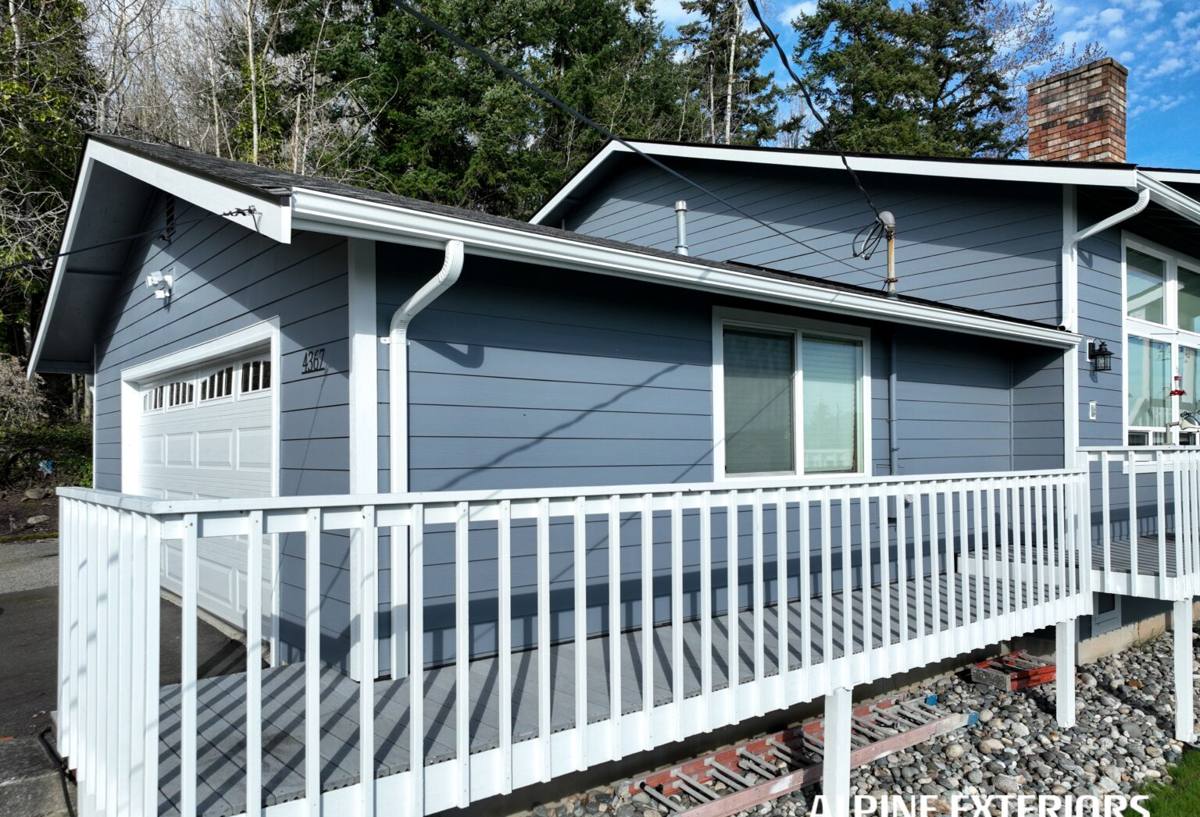
What Chuckanut's Climate Does to a Roof
Salt Air and Corrosion
Airborne salt from the bay settles on every exposed surface, including metal roofing components, fasteners, and flashing. Standard galvanized fasteners and untreated metal flashing corrode faster in this environment. Over years, that corrosion works its way into nail heads, valley metal, and drip edge, creating small failure points long before the shingles themselves wear out.
Driving Rain
Storms off the water don't fall straight down — they come in at an angle, which pushes water up under shingle edges, around vent boots, and into any seam that isn't properly lapped or sealed. A roof detailed for calmer conditions inland often isn't detailed aggressively enough for what Chuckanut sees in a typical winter.
Moss and Shade
Heavy tree cover is part of what makes Chuckanut a beautiful place to live, but it also means roofs stay shaded and damp longer after every rain. That's ideal growing conditions for moss and algae, which hold moisture against the roofing material, work their way under shingle tabs, and accelerate granule loss. A roof surrounded by trees needs a different maintenance rhythm and, in some cases, different material choices than a roof out in the open.
Signs a Chuckanut Roof Needs Replacing, Not Just Repairing
- Moss growth that comes back within a few months of cleaning, especially in shaded valleys and north-facing slopes
- Granules collecting in gutters in noticeable amounts, indicating shingles are past their protective life
- Curling, cupping, or cracked shingles, particularly on slopes that face the prevailing wind and rain
- Rust staining or visible corrosion around flashing, vents, or valley metal
- Soft spots in the decking when walked, or visible sagging along the roofline
- Daylight visible through the attic, or damp insulation and staining on interior ceilings
- Repeated leaks in the same location despite prior patch repairs
If you're only seeing one or two of these, a repair may still make sense. If several are present at once, or the roof is already past 20 years old, replacement is usually the more honest recommendation — patching a roof that's structurally near the end of its life just delays a bigger repair bill later.
What a Correct Roof Replacement Looks Like Here
Tear-Off and Deck Inspection
We remove the old roofing down to the deck rather than layering over it. That's the only way to actually see what's underneath — soft or rotted decking, especially in valleys and around chimneys, is common on older roofs in shaded, damp areas like Chuckanut, and it needs to be replaced before anything new goes down.
Underlayment Built for Wind-Driven Rain
Given how much sideways rain this area gets, we pay close attention to underlayment coverage and lapping, with extra ice-and-water shield style membrane at eaves, valleys, and around every roof penetration — the spots where wind-driven rain is most likely to find a way in.
Corrosion-Resistant Flashing and Fasteners
Given the salt air, we use flashing and fastener types selected for their corrosion resistance rather than defaulting to whatever is cheapest. Valleys, step flashing along walls and chimneys, and drip edge all get this treatment, since these are the components most exposed to both moisture and salt.
Ventilation That Matches the Site
A shaded, damp roof needs good intake and exhaust airflow to keep the deck dry from underneath, not just from above. Poor ventilation traps moisture in the attic, which speeds up decking rot and can void material warranties. We check existing ventilation and correct it as part of the replacement, not as an afterthought.
Moss-Resistant Details
Where trees keep a roof shaded most of the year, we talk through options like zinc or copper strips near the ridge, which release trace metals that discourage moss regrowth as rain washes over them. It's not a permanent fix on its own, but it meaningfully slows regrowth between cleanings.
Material Choices for a Shaded, Salt-Air Site
| Material | How it handles moss/shade | How it handles salt air | Typical lifespan here |
|---|---|---|---|
| Architectural asphalt shingle | Good with algae-resistant granules; needs periodic cleaning in heavy shade | Performs well with corrosion-resistant fasteners and flashing | 20-25 years in this climate |
| Standing seam metal | Sheds moss more easily due to smooth, steep-pitched surface | Needs coated or corrosion-resistant panel and fastener selection | 40+ years with correct materials |
| Cedar shake | Prone to moss and rot retention in shaded, damp conditions | Vulnerable to accelerated weathering near salt air without diligent upkeep | Shorter effective life here without heavy maintenance |
| Composite/synthetic shingle | Resists moisture absorption better than natural wood products | Generally stable in salt air; confirm manufacturer warranty terms | Comparable to architectural asphalt, varies by product |
We don't push one material on every home. The right call depends on how much direct tree shade the roof gets, the roof's pitch, the home's architectural style, and the homeowner's budget and maintenance appetite. What we do rule out, as a matter of our own standard, are roofing choices that require more moisture-sensitive installation detailing than we can reliably guarantee will hold up under Chuckanut's combination of shade and salt exposure.
Our Replacement Process
- On-site inspection: We walk the roof and attic, check for soft decking, existing moss and algae patterns, ventilation, and flashing condition, and take note of tree cover and drainage paths specific to the property.
- Written estimate: You get a clear scope of work and pricing before anything is scheduled — no surprise add-ons once tear-off starts unless we find hidden decking damage, which we'll show you before proceeding.
- Material selection: We go over the trade-offs above in plain terms so you can choose based on your budget, how much shade the roof gets, and how much upkeep you want to do long term.
- Tear-off and deck repair: Old roofing comes off, the deck is inspected, and any rotted or soft sections are replaced before new underlayment goes down.
- Installation: Underlayment, flashing, ventilation components, and roofing material are installed to the details described above, with extra attention at valleys, penetrations, and eaves.
- Final walkthrough: We review the finished roof with you, including gutters and any moss-resistant treatments installed, and go over what routine maintenance will look like going forward.
Why Local Experience with Chuckanut Homes Matters
A crew that mostly works dry, open, inland roofs will approach a Chuckanut job the same way they approach every other job — and that's exactly how avoidable moss and moisture problems creep back in within a few years. Working this area regularly means already knowing which slopes on a given lot will hold shade the longest, which fastener and flashing upgrades are worth the extra cost here versus optional elsewhere, and how much ventilation a shaded roof actually needs compared to one out in full sun.
It also means understanding how Chuckanut's terrain affects access and staging — steep driveways, tree clearance, and limited work areas are common here, and planning for that in advance keeps a project on schedule instead of running into surprises on day one.
Maintaining Your New Roof in Chuckanut
- Have gutters and downspouts cleared at least twice a year, more often if surrounded by conifers that shed needles
- Schedule a moss check-and-clean every 1-2 years, sooner on heavily shaded north-facing slopes
- Trim overhanging branches back to reduce shade, debris buildup, and physical abrasion on the roofing surface
- Have flashing and fasteners visually checked every few years for early signs of corrosion, especially after severe winter storms
- Address small leaks immediately rather than waiting — in this climate, trapped moisture causes damage faster than in drier areas
Cost Factors to Expect
Every roof replacement is priced around the specifics of the home, so we won't quote a number here that doesn't apply to your situation. What generally moves the price up or down in Chuckanut specifically includes: roof size and pitch, the amount of decking repair needed once tear-off begins, the material chosen, how much extra flashing and ventilation work the site needs, and access difficulty on wooded or steep lots. We walk through all of that with you before we give you a number, so there's no guessing involved.
If your Chuckanut roof is showing moss that won't stay away, granules piling up in the gutters, or you're just not sure whether it's a repair or a replacement year, we're happy to take a look. Reach out for a free, no-pressure estimate using the form below.