 Fairhaven Siding
 Why Downtown Bellingham Windows Wear Differently
Downtown Bellingham sits close enough to the water that salt-laden air is a daily fact of life, not an occasional nuisance. Combine that with Whatcom County's long wet season, driving rain that comes in sideways off Bellingham Bay, and a moss season that can stretch from fall through spring, and you get a set of conditions that age windows faster than most manufacturers' test labs ever account for. Wood sashes swell and stick. Aluminum frames pit and corrode at the joints. Vinyl can hold up fine on the glass side but fail quietly at the flashing and sealant, letting water track behind the trim for years before anyone notices a stain.
Older homes in and around Fairhaven and Downtown Bellingham often still have original wood windows or a first round of replacements from decades back that were never really matched to this climate. That's the starting point for most of the calls we get: not "I want new windows" as a style upgrade, but "these don't work anymore" — drafts, fogged glass, wood rot at the sill, or a window that simply won't open after years of moisture cycling.
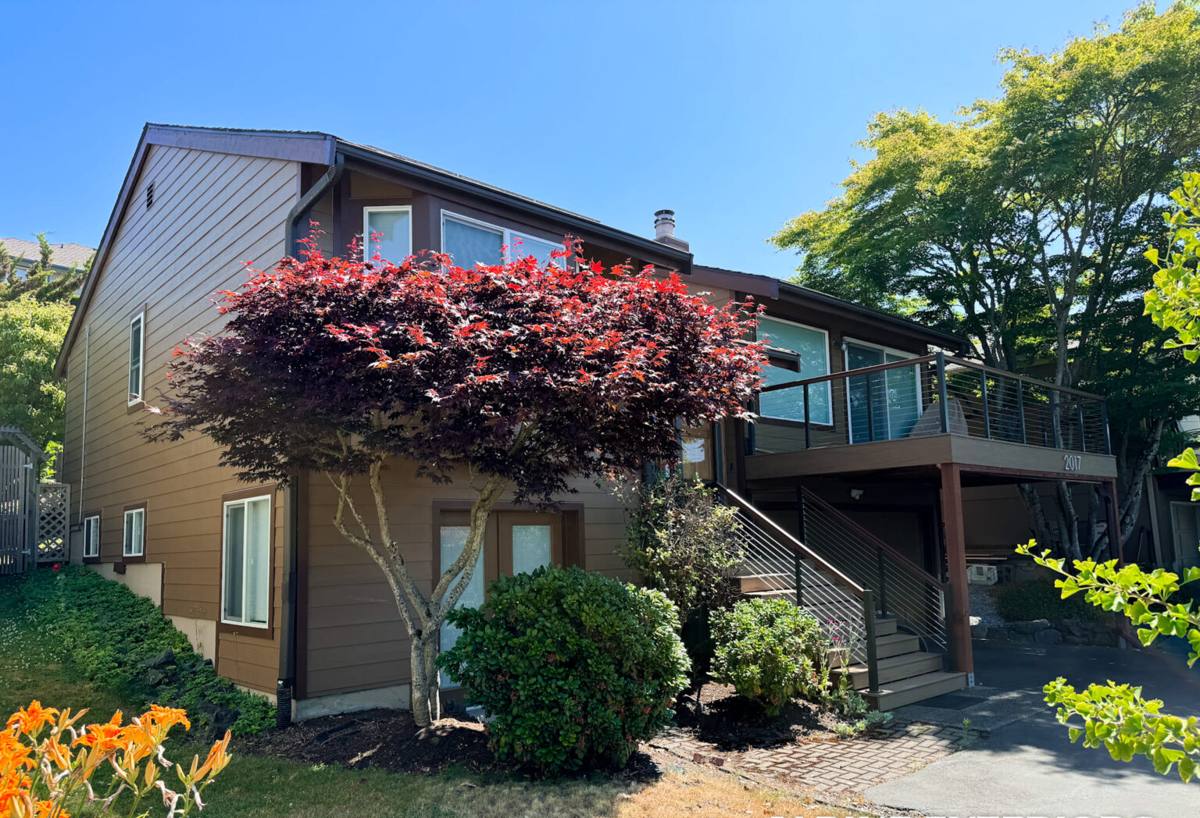
What "Custom" Actually Means for This Neighborhood
Custom doesn't mean expensive or ornate. It means the window is sized, built, and detailed to fit the actual opening and the actual exposure of that wall — not pulled off a shelf in a standard size and shimmed to fit. In older Downtown Bellingham homes, openings are rarely perfectly square after decades of settling, and a lot of the original casing and trim is worth preserving for the look of the house. Custom sizing lets us match those openings without tearing out more trim than necessary, and it lets us choose different specs wall by wall — heavier weatherstripping and better glass on the water-facing side of a house, standard specs on a sheltered side, for example.
Where Custom Sizing Pays Off Most
- Bay and bow windows on older homes, where the angles are rarely factory-standard
- Additions or remodeled openings that don't match modern standard sizes
- Character homes where you want to keep the original trim profile and sightlines
- Walls facing prevailing wind and rain, where extra sealing detail matters most
Where a Custom Approach Still Beats Assuming "Standard Is Fine"
Even when a window ends up close to a standard size, we still measure and detail it as if it weren't. A quarter-inch gap packed with foam and caulk is where most of the water intrusion problems in this area start. It's cheaper to get the fit right the first time than to chase a leak two winters later.
Frame and Glass Choices That Make Sense in This Climate
There's no single "best" window material — there's a best match for the exposure, the house style, and how much upkeep the owner wants to do. Here's how the common options actually perform against salt air, rain, and moss-season damp specifically:
| Frame Material | Behavior in Salt Air / Rain | Upkeep |
|---|---|---|
| Vinyl | Doesn't corrode; performance depends entirely on install quality and seal detailing | Low — occasional track cleaning |
| Fiberglass | Very stable dimensionally, holds paint well, resists the corrosion that affects metal | Low to moderate |
| Wood (clad exterior) | Good insulator, but exposed wood needs protection from driving rain and constant damp | Moderate — exterior cladding reduces this significantly |
| Aluminum | Prone to pitting and corrosion near salt air over time unless properly finished | Higher — watch joints and finish |
For most Downtown Bellingham homes we lean toward vinyl or fiberglass frames with clad wood as an option where the homeowner wants a real wood interior look with a protected exterior face. We treat glass selection the same way: low-E coatings and the right gas fill cut down on condensation, which matters here because the temperature and humidity swings between a cold, wet morning and a heated interior are constant for most of the year.
The Install Detail That Matters More Than the Brand of Window
We say this to nearly every homeowner we talk to: the window brand matters less than the flashing, sealant, and shim work around it. A high-end window installed with sloppy flashing will leak. A mid-range window installed correctly, with proper sill pan flashing, house wrap integration, and backer rod and sealant done in the right order, will outperform it every time. In a climate that gets driving rain off the bay for months at a stretch, water management around the opening is the whole game.
What a Correct Install Includes
- Removing old material down to the rough opening and checking the sheathing for hidden rot before anything new goes in
- Sill pan flashing that directs any water that does get past the window back outside the wall, not into it
- Proper integration with the house wrap or building paper — lapped correctly, not just taped over
- Backer rod and sealant applied in the right sequence, not sealant alone smeared over gaps
- Shimming that keeps the frame square and supports it evenly, so the sash operates correctly for years, not just on day one
- Interior and exterior trim reinstalled or replaced cleanly, matched to the home's existing style
Problems We Commonly Find Behind Older Windows
When we pull out windows in this part of Bellingham, a few issues come up often enough to be worth mentioning honestly, so homeowners aren't surprised mid-project:
- Rotted sill framing where wood windows sat in standing moisture for years without a proper drainage path
- Missing or failed flashing from a previous replacement, where the new window looked fine but was never properly sealed to the wall
- Moss and organic buildup on and around window trim contributing to trapped moisture at the sill
- Corroded aluminum frames from earlier decades that have pitted enough to bind or no longer seal properly
None of this is meant to alarm anyone — it's normal wear for the climate and the age of housing stock here. It's just why we open up the opening and look before quoting a number we'd have to walk back later.
Our Process for a Downtown Bellingham Custom Window Job
- On-site assessment. We look at each opening individually — exposure, current condition, existing trim, and any signs of past water intrusion.
- Measurement and spec. We measure each opening as-built, not assumed, and match frame material and glass spec to that wall's exposure.
- Removal and inspection. Old windows come out carefully, and we check the framing and sheathing underneath before anything new goes in.
- Any needed repair. If we find rot or damaged sheathing, we address it before installing new windows — not after.
- Install with full flashing detail. Sill pan, house wrap integration, backer rod and sealant, proper shimming.
- Trim and finish. Interior and exterior trim matched to the home, caulked and painted or finished as needed.
- Final walkthrough. We check operation, seal, and appearance with the homeowner before calling the job done.
Maintaining Custom Windows Through Moss Season
New windows installed correctly need very little from a homeowner, but a few habits extend their life noticeably in this climate:
- Clear debris and moss buildup from sills and surrounding trim before the wet season sets in each fall
- Check exterior caulking annually for cracking or separation, especially on the side of the house that takes the most wind-driven rain
- Keep gutters and downspouts clear so roof runoff isn't sheeting down over window heads
- Operate sashes periodically through the winter so tracks don't seize up from cold and damp
- Wipe down frames near the coast periodically to reduce salt residue buildup
Why Hiring a Crew That Works This Neighborhood Matters
Window replacement done wrong doesn't usually fail in the first month — it fails two or three winters in, once water finds its way past a bad seal or the wrong material starts corroding. A crew that regularly works Downtown Bellingham and greater Fairhaven has already seen what this specific exposure does to specific materials and installs, and builds the job around that instead of a generic checklist. That's the difference between a window that needs attention again in five years and one that's still tight in twenty.
If you're dealing with drafty, stuck, or fogged windows on a Downtown Bellingham home, we're glad to come take a look, measure the openings, and give you an honest, no-pressure estimate — no obligation, just a clear picture of what your home actually needs.