 Fairhaven Siding
 Roofing in the Puget Area Isn't the Same as Roofing Inland
Homes in the Puget area near Fairhaven sit close enough to the water that the roof over your head is doing more work than a roof twenty miles inland. Salt-laden air off the Sound accelerates corrosion on exposed metal fasteners and flashing. Driving rain, pushed sideways by wind off the water, finds every weak seam and under-lapped shingle. And the long, wet stretch of fall through spring here in Whatcom County gives moss and algae months at a time to take hold on anything north-facing or shaded. A roof that would hold up fine in a drier part of the state can fail early here if it wasn't built with this specific climate in mind.
That's the difference between a generic roof installation and one done right for this neighborhood: the materials, the flashing details, the ventilation, and the prep work all need to account for salt, moisture, and moss pressure that's higher than average for Western Washington.
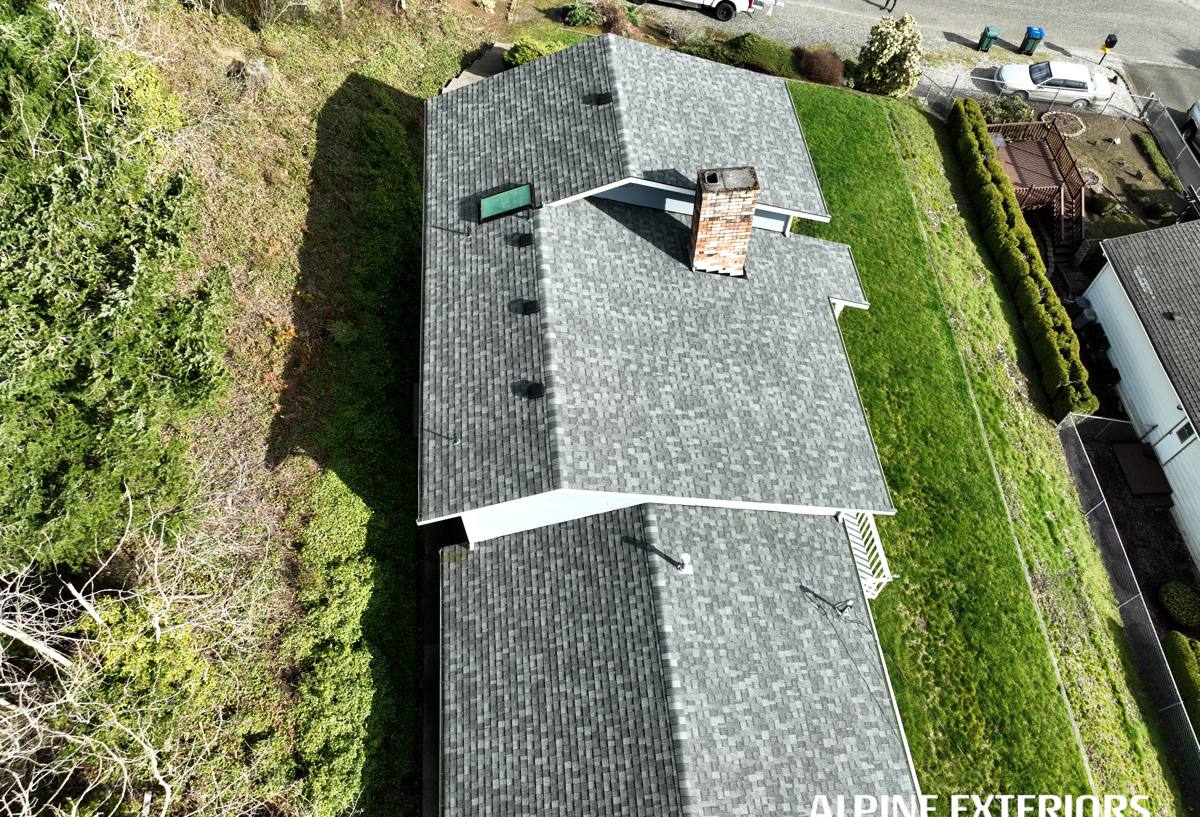
What Puget Homes Need From a New Roof
Before we talk about shingles or metal panels, it helps to understand what's actually working against a roof in this location:
- Salt air corrosion — exposed fasteners, flashing, and vent components need to be rated for coastal exposure, not just standard galvanized steel.
- Wind-driven rain — proximity to the Sound means rain doesn't always fall straight down; it can push up under shingle edges and around poorly sealed penetrations.
- Extended moss season — shade from mature trees combined with our wet fall-through-spring stretch means moss and algae have far more time to establish than in drier climates.
- Constant moisture cycling — roofs here rarely get a long dry stretch to fully shed trapped moisture, which makes underlayment quality and ventilation more important than in arid regions.
Any of these on its own is manageable. Together, over years, they're what separates a roof that makes it to 25-30 years from one that needs premature repair.
What a Correct Installation Actually Involves
Tear-Off and Deck Inspection
A proper new roof starts with a full tear-off to bare decking, not a layover. This is the only way to actually see the condition of the roof deck underneath — soft spots, rot around old penetrations, or delamination that's often hidden until the old material comes off. Any damaged decking gets replaced before anything new goes down. Skipping this step is one of the most common shortcuts in the trade, and it's also the one that causes the most expensive problems later.
Underlayment
Given how much moisture this area sees, we treat underlayment as a real line of defense, not a formality. A synthetic underlayment with good water resistance, properly lapped and fastened, buys you protection during the install itself and backup protection for the life of the roof if a shingle ever gets damaged.
Flashing and Penetrations
Valleys, chimneys, skylights, and vent penetrations are where most roof leaks actually start — not in the open field of shingles. Flashing needs to be correctly lapped with the underlayment and roofing material (not just caulked over), and in a salt-air environment, the flashing material itself needs to be corrosion-resistant.
Ventilation
An attic that can't breathe traps moisture, which shortens the life of the roof deck and the roofing material from underneath. Balanced intake and exhaust ventilation matters more here than in drier climates because there's simply more moisture in the air to manage.
Choosing a Roofing Material for This Location
There's no single "best" roofing material — it depends on your home, your budget, and how much long-term maintenance you're willing to take on. Here's an honest comparison for a home in this climate:
| Material | Typical Lifespan | Moss/Algae Resistance | Salt Air Suitability | Maintenance |
|---|---|---|---|---|
| Architectural asphalt shingle | 25-30 years | Good with algae-resistant granules; still needs periodic cleaning | Good, standard choice | Low to moderate |
| Standing seam metal | 40-50+ years | Excellent — sheds moss more effectively than shingles | Very good with coastal-rated fasteners and finish | Low |
| Cedar shake | 20-30 years with upkeep | Poor without regular treatment; retains moisture | Fair — needs more frequent maintenance near salt air | High |
| 3-tab asphalt shingle | 15-20 years | Fair, less algae protection than architectural grade | Fair | Moderate |
For most homes in this area, we steer people toward architectural-grade asphalt shingle or standing seam metal. Cedar shake can look great, but it demands a level of ongoing maintenance — regular treatment and moss removal — that a lot of homeowners underestimate given how long our moss season runs. That's a maintenance-burden and moisture-behavior tradeoff we'll walk through honestly, not a knock on the product itself.
Our Installation Process, Step by Step
- On-site inspection and estimate — we look at your existing roof, attic ventilation, and any problem areas before quoting anything.
- Material selection — we go over the tradeoffs above based on your home, budget, and how much upkeep you want to deal with.
- Permitting — we handle the local permit process so you don't have to chase paperwork.
- Tear-off and deck repair — full removal of old roofing, deck inspection, and replacement of any damaged sheathing.
- Underlayment and flashing — installed to shed wind-driven rain and hold up to salt air exposure.
- Roofing material installation — installed to manufacturer spec, with attention to the details that actually get skipped on rushed jobs.
- Ventilation check — confirming intake and exhaust are balanced for your attic.
- Final walkthrough — we go over the finished job with you before we consider it done.
Moss and Algae: Prevention Built Into the Job, Not an Afterthought
Moss doesn't just sit on top of a roof — given enough time, it holds moisture against the surface and can work its way under shingle edges, which shortens the life of the roofing material underneath. In this part of Whatcom County, with tree cover and a long wet season, moss pressure is higher than a lot of homeowners realize until they've lived with a roof here for a few years.
Rather than treating moss as something you deal with after it shows up, we build prevention into the install itself: algae-resistant shingle products where appropriate, zinc or copper strips near ridge lines on roofs prone to moss, and making sure valleys and low-slope sections are detailed to shed water instead of holding it. None of this replaces occasional roof cleaning and gutter maintenance on your end, but it meaningfully cuts down how much of that you'll need to do.
Managing Moisture Over the Life of the Roof
A roof installed correctly on day one still needs to manage moisture correctly for the next two to three decades. That comes down to a few things working together: underlayment that actually sheds water if it ever gets under the surface material, flashing that doesn't rely on caulk as its primary seal, and attic ventilation that lets trapped humidity escape instead of condensing against the underside of the deck. Homes near the water tend to run more humid attics than homes further inland, which is exactly why we don't treat ventilation as optional or secondary to the shingle choice.
Permits, Timeline, and What to Expect
Most residential roof replacements in this area take one to a few days on-site once work begins, depending on roof size, pitch, and weather. Weather is the real variable here — we work around the rain rather than rushing an install during it, because a roof installed in the wrong conditions can trap moisture before it ever sees its first real storm. Permitting requirements are handled as part of the job so there's no gap between the old roof coming off and the new one being properly sealed up.
Why Local Experience in This Area Matters
A crew that already works in Fairhaven and the surrounding Puget area knows the difference between a roof detail that's fine for a dry inland climate and one that needs to be tightened up for salt air and driving rain. That's not a marketing point — it shows up in which fastener grade gets used, how flashing gets lapped in valleys, and whether ventilation gets sized for a genuinely wet climate instead of a textbook average. It's the difference between a roof that needs attention again in ten years and one that goes the distance.
What to Ask Before You Sign a Roofing Contract
- Is the quote based on a full tear-off, or does it include the option of a layover?
- What underlayment product is specified, and is it rated for the moisture level in this area?
- What fastener and flashing materials are used, and are they rated for salt air exposure?
- How is attic ventilation being assessed and addressed, not just the shingles themselves?
- What's the manufacturer's warranty, and what's covered under the installer's own workmanship warranty?
- Is the contractor licensed and insured in Washington, and can they provide proof?
- What's the plan if hidden deck damage is found once the old roofing comes off?
If a contractor can't answer these clearly, that's worth paying attention to before any contract gets signed.
If your roof is showing its age or you're planning ahead for a replacement, we're happy to take a look and give you a straight, no-pressure estimate — use the form below to get started.