 Fairhaven Siding
 Composite Decking for Sehome Homes
Sehome sits close enough to the water and the hills around Fairhaven that its decks take a beating most homeowners underestimate until they're scraping moss off the boards for the third spring in a row. Salt-tinged air off Bellingham Bay, long stretches of driving rain, and a moss season that can run from October through May all work against a deck that isn't built and finished correctly for this specific stretch of Whatcom County. We install composite decking for Sehome homeowners who are done fighting wood rot, graying boards, and slick, mossy surfaces every winter, and who want a deck that actually holds up to the way this neighborhood's weather behaves.
This page covers composite decking specifically — what it needs to survive Sehome's climate, what a correct installation actually involves, and why the details matter more here than in drier parts of the state.
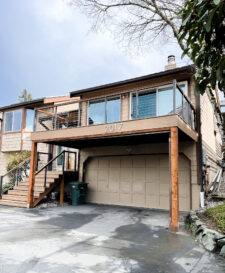
What Sehome's Weather Actually Does to a Deck
A lot of decking problems in this neighborhood aren't about the boards themselves — they're about moisture that never fully leaves. Sehome's mix of tree cover, hillside lots, and marine air means decks often stay damp longer than they would in a more open, sun-exposed yard. That has a few specific consequences:
- Moss and algae growth on any surface that stays shaded and damp, which turns slick and dangerous underfoot if it's not managed
- Trapped moisture under and around boards where airflow is restricted, which is what actually rots wood decking and corrodes poor-quality fasteners
- Salt-laden air that accelerates corrosion on hardware, screws, and any metal flashing that isn't rated for coastal exposure
- Freeze-thaw cycling during cold snaps, which stresses any decking material that absorbs water and expands
None of this is unique to Sehome, but the combination — shade, dampness, salt air, and driving rain off the bay — is more persistent here than in drier inland parts of Whatcom County. A deck built without that in mind will show it within a couple of seasons.
Why Composite Holds Up Better in This Environment
Composite decking doesn't solve every problem automatically — a poorly installed composite deck can still trap moisture and grow moss just like wood can. But the material itself gives you a real advantage in a climate like this: it doesn't absorb water the way wood does, so it doesn't swell, cup, splinter, or rot from the inside out. That matters a lot in a neighborhood where boards rarely get a full week to dry out between rain events.
| Factor | Wood Decking | Composite Decking |
|---|---|---|
| Moisture absorption | High — swells, cups, and rots over time | Low — engineered to resist water intake |
| Moss and algae | Grows into the grain, hard to fully remove | Sits on the surface, easier to clean off |
| Annual maintenance | Sanding, staining, or sealing most years | Periodic washing, no refinishing |
| Fastener corrosion risk | Depends on hardware quality | Depends on hardware quality (same standard applies) |
| Splintering underfoot | Common as wood ages and dries unevenly | Not a factor with composite boards |
| Upfront material cost | Lower | Higher |
| Cost over 15-20 years | Higher once refinishing labor is factored in | Lower total cost of ownership |
The honest trade-off is upfront cost. Composite boards cost more per square foot than standard pressure-treated lumber. What you're buying is fewer weekends spent maintaining it and a much lower chance of structural rot showing up under the surface where you can't see it.
What a Correct Composite Deck Install Actually Involves
Composite decking fails early almost always because of installation shortcuts, not because the material itself is bad. In a climate like Sehome's, a few details matter more than they would in a drier region:
Framing and Ventilation
The substructure underneath composite decking needs enough airflow to let any moisture that does get underneath actually evaporate. Joist spacing, height off grade, and gaps at the perimeter all affect how well a deck dries out after a rainy stretch. Composite boards are less forgiving of underventilated framing than people assume — the boards themselves resist water, but the framing underneath still needs to breathe.
Fasteners and Hardware
Given the salt content in the air this close to the bay, we use fasteners and structural hardware rated for coastal or marine-grade exposure, not standard interior-grade screws. This is one of the most common corners cut on lower-bid decking jobs, and it's usually invisible until hardware starts failing several years in.
Flashing at the Ledger Board
Where the deck attaches to the house, proper flashing keeps water from working its way behind the ledger board and into the house's rim joist or siding. This is one of the highest-consequence details on any deck build — done wrong, it can lead to hidden rot in the house structure itself, not just the deck.
Board Spacing and Drainage
Gapping between boards needs to account for composite's expansion and contraction with temperature, while also giving water a clear path off the deck surface instead of pooling. Manufacturer spec sheets specify this precisely, and it varies by product line.
Choosing Boards for This Climate
Not all composite decking is built the same, and the right choice for a shaded, damp Sehome lot isn't always the same as what works on a sunny, open site elsewhere in the county.
| Consideration | Why It Matters Here |
|---|---|
| Capped vs. uncapped composite | Fully capped boards resist moisture and staining better in a persistently damp, shaded yard |
| Surface texture | A grippier texture reduces slip risk during moss season and wet winters |
| Color | Darker colors show pollen and organic debris less but can run hotter in direct summer sun; lighter colors show moss growth more clearly, which can be an early-warning advantage |
| Warranty structure | Composite warranties vary widely on what's covered — fading, staining, structural integrity — and for how long |
We walk through these trade-offs with you before ordering material, not after. There's no universally "best" board — there's the right board for your yard's sun exposure, tree cover, and how the deck will actually be used.
Our Process, From Estimate to Finished Deck
We keep the process straightforward and don't push you toward the most expensive option by default:
- On-site assessment — we look at sun exposure, drainage, existing structure (if replacing an old deck), and how the site sheds water
- Honest product recommendation — based on your budget, shade level, and how much upkeep you actually want to do
- Written estimate — clear on materials, labor, and timeline, no vague allowances
- Permitting — we handle what's required for the scope of work before framing starts
- Build — proper framing, marine-rated fasteners, correct ledger flashing, and manufacturer-spec board installation
- Final walkthrough — we go over basic care with you before we call the job done
Maintaining a Composite Deck Through Moss Season
Composite decking is lower-maintenance than wood, not maintenance-free. In a neighborhood with a moss season that stretches most of the wet half of the year, a little regular attention goes a long way:
- Sweep off leaves, needles, and debris regularly — organic buildup is what feeds moss and algae growth
- Rinse the deck periodically with plain water, and use a soft-bristle brush on shaded areas where growth tends to start first
- Avoid pressure washing at close range or high PSI — it can damage the board surface and void some manufacturer warranties
- Check railings, stairs, and fastener points once a year for anything working loose
- Trim back overhanging branches where possible to cut down on shade and debris buildup
Permits and Local Considerations
Deck projects in Whatcom County typically require permitting depending on height, size, and attachment to the structure — the specifics depend on your lot and the scope of the project. We handle this as part of the build process rather than leaving it for the homeowner to sort out, and we build to the setback and structural requirements that apply to your property.
Why Hire a Crew That Already Works in Sehome
A deck built to a generic spec sheet, without accounting for how wet and shaded a particular Sehome lot runs, is a deck that starts showing problems early — usually moss, sometimes worse if the framing or flashing was rushed. We work in this neighborhood regularly enough to know which yards need extra attention to drainage and ventilation, and we build accordingly instead of treating every lot the same way. That's the difference between a deck that looks good for one season and one that holds up through a decade of Fairhaven winters.
If you're weighing composite decking for a Sehome property, we're happy to take a look and give you a straight answer on what your yard actually needs. Reach out for a free, no-pressure estimate using the form below.