 Fairhaven Siding
 The Downtown Bellingham Deck Problem: Salt Air, Rain, and Moss
Decks in Downtown Bellingham take a different kind of beating than decks further inland. The combination of bay-influenced salt air, long stretches of driving rain off the Salish Sea, and a moss season that can run from fall through spring means a deck here is rarely failing for just one reason. Usually it's several small things compounding: fasteners corroding a little faster because of the salt content in the air, ledger boards staying damp longer because the sun doesn't reach them through tree cover or building shade, and moss holding moisture against the decking surface for weeks at a time instead of drying out between rains.
None of that means a deck in this part of Whatcom County can't last. It means the build has to account for these conditions from the start, rather than using a generic approach that might work fine in a drier climate. When a deck was built without that in mind, it usually shows up as soft spots, rust streaks, or a structure that feels less solid than it used to.
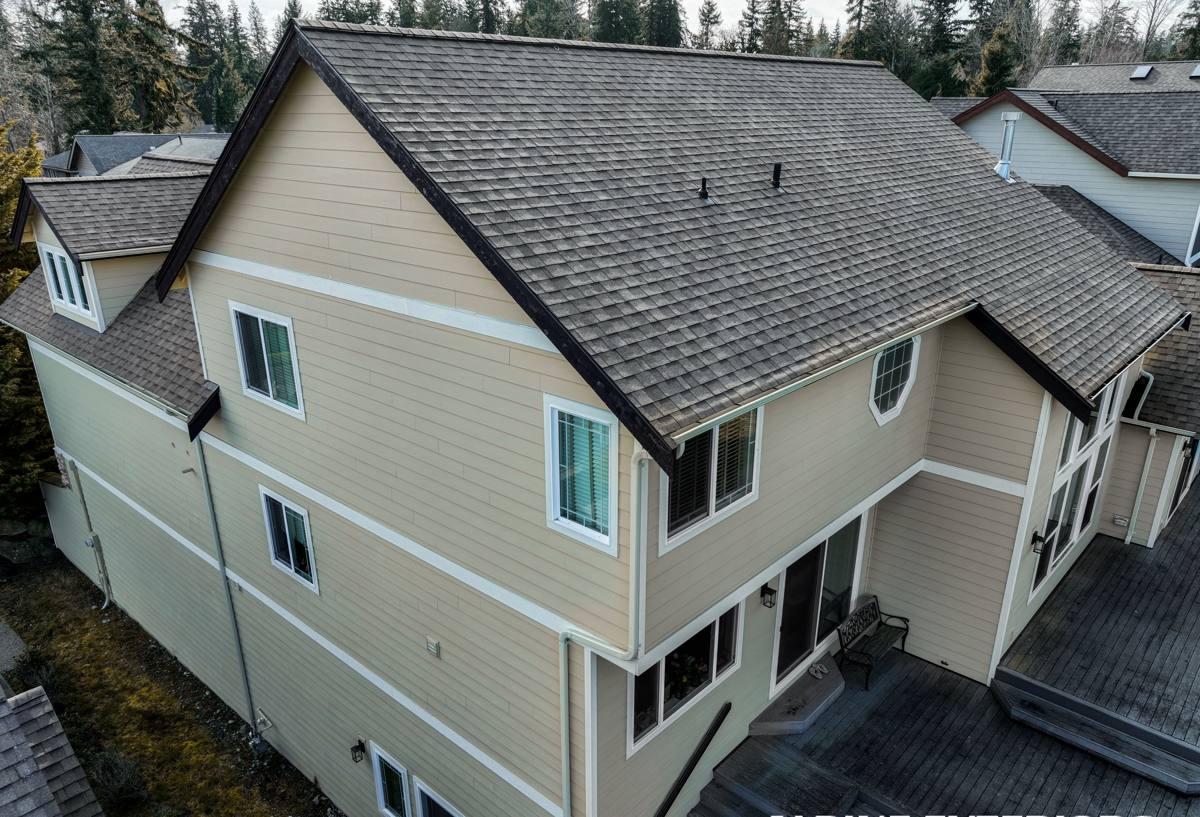
Signs It's Time to Replace, Not Repair
Not every tired-looking deck needs a full replacement. But there's a point where patching boards or re-staining stops being a real fix and just delays a bigger problem. Here's what we look for when deciding whether repair is still a reasonable option:
- Soft, spongy, or spalling wood at the ledger board (where the deck attaches to the house) — this is a structural red flag, not cosmetic
- Rust stains bleeding from fastener heads or joist hangers, which usually means the hardware itself is corroding
- Persistent moss or algae growth that comes back within weeks of cleaning, especially on the north or shaded side
- Visible gaps, cupping, or movement between deck boards that's gotten worse over the past year or two
- Posts or footings that feel loose, or a deck that noticeably flexes or bounces when walked on
- Flashing that's missing, cracked, or was never properly installed where the deck meets the house
- A deck older than 20-25 years that has never had its structural framing inspected or replaced
If you're only seeing surface graying or a few worn boards, a repair or refinish may genuinely be enough. We'll tell you that directly if that's what the deck needs — we'd rather give an honest assessment than sell a bigger job than necessary.
What a Correct Deck Replacement Actually Involves
A deck replacement is more than pulling up old boards and screwing down new ones. The parts you can't see — framing, flashing, and fastener choice — matter more for long-term performance in this climate than the decking material itself.
Framing and Structural Integrity
Joists, beams, and posts need to be sized and spaced correctly for the span and the load the deck will actually carry, not just matched to what was there before. If the original deck was under-built, we're not going to quietly replicate the same mistake. Footings get checked for frost depth and bearing, and any post that's been sitting in standing water or contact with soil gets addressed as part of the job, not left for later.
Ledger Board and Flashing
The ledger board — where the deck attaches to the house — is the single most common failure point on decks in wet climates like ours. Water that gets behind an improperly flashed ledger has nowhere to go, and it will rot the band joist and framing behind it long before the decking on top shows any sign of trouble. Correct flashing means metal flashing integrated with the house's water-resistive barrier, not just caulk or a strip of tape, and a gap or drainage path so water can't pool against the house.
Fasteners and Hardware
Given the salt content in the air this close to the water, we specify corrosion-resistant, code-rated fasteners and structural hardware (joist hangers, post bases, lag bolts) rated for exterior and coastal-adjacent exposure. Cheaper mixed-metal or under-rated hardware is one of the fastest ways a deck starts failing early — usually showing up as rust streaks and loosening connections within a few years.
Choosing the Right Decking Material
There's no single "best" decking material — the right choice depends on how much sun the deck gets, how much maintenance you want to do, and your budget. Here's how the common options compare for a shaded, damp, moss-prone site like many lots in and around Downtown Bellingham:
| Material | Moss/Moisture Resistance | Maintenance | Typical Lifespan |
|---|---|---|---|
| Pressure-treated wood | Fair — absorbs moisture, needs sealing | Annual cleaning and re-sealing recommended | 15-20 years with upkeep |
| Cedar | Good natural resistance, but still porous | Periodic cleaning and oil/sealer | 20-25 years with upkeep |
| Capped composite | Very good — resists moisture absorption | Occasional washing, no sealing needed | 25-30+ years, manufacturer-warrantied |
| PVC decking | Excellent — non-porous, doesn't absorb water | Lowest maintenance of the group | 25-30+ years, manufacturer-warrantied |
Wood costs less up front but asks more of you every year — and in a climate where moss and moisture are working against you most of the year, that maintenance gap shows up faster than in a drier region. Composite and PVC cost more initially but hold up better against the specific conditions here, particularly on shaded lots where boards rarely get a chance to fully dry out. We install all of these; our job is to walk through the honest trade-offs so you pick the one that fits your maintenance tolerance and budget, not to steer you toward whatever's easiest for us to install.
Permits and Site Realities in Older Bellingham Neighborhoods
Downtown Bellingham has a mix of older homes and lots with tighter setbacks, mature trees, and grade changes that don't always match what a permit drawing assumes on paper. Deck replacements above a certain height or footprint typically require a permit through the City of Bellingham, and if the deck's footprint, height, or attachment point is changing from the original, that almost always triggers a review. We handle that process as part of the job — pulling the permit, scheduling inspections, and making sure the finished structure matches what's approved — so you're not left navigating city requirements on your own.
Mature landscaping and tree cover, common on older lots in this area, also affect the job in practical ways: they're often what's keeping a deck shaded and damp in the first place, and they can limit equipment access or staging space during construction. We account for that during the estimate rather than discovering it mid-project.
Our Deck Replacement Process
We keep the process straightforward and communicate clearly at each stage, since a deck replacement affects your ability to use your backyard or entryway for a stretch of time.
- On-site assessment: We inspect the existing deck's framing, ledger, footings, and hardware to determine what's actually failing and why, not just what's visible on the surface.
- Honest scope and estimate: You get a clear breakdown of what needs full replacement versus what can be reused, along with material options and a price range for each.
- Permitting: If required, we handle the permit application and scheduling with the City of Bellingham before work begins.
- Demolition and disposal: The old deck is removed and hauled away, including a check of the ledger area and framing behind it once it's exposed.
- Structural rebuild: New or corrected framing, footings, and ledger flashing are installed to current code, sized for the actual load and span.
- Decking installation: Your chosen decking material is installed with corrosion-resistant fasteners appropriate for coastal-adjacent exposure.
- Final walkthrough and inspection: We walk the finished deck with you, and any required city inspection is completed and closed out.
What Affects Your Deck Replacement Cost
Deck replacement costs vary widely based on size, material, and site conditions, so we don't publish a flat number — but these are the factors that move the price up or down on most jobs:
| Factor | Why It Matters |
|---|---|
| Square footage | Larger decks require more framing, decking material, and labor hours |
| Decking material | Composite and PVC cost more per square foot than pressure-treated wood, but usually less over the deck's lifetime |
| Height and stairs | Elevated decks and stair systems require more structural framing, railing, and code-compliant guarding |
| Ledger and flashing condition | Rot behind the ledger or band joist adds repair scope beyond the deck itself |
| Demolition and haul-away | Removing and disposing of the old structure is priced into every replacement |
| Permit requirements | Permit fees and required inspections add cost and time depending on the scope of the project |
We provide a written estimate that breaks these factors out, so you can see what's driving the cost rather than getting a single lump-sum number.
Keeping Your New Deck Looking Good Through Moss Season
A properly built deck still needs some basic seasonal care in this climate — the goal is just to make that care manageable instead of constant. Keeping gutters and downspouts near the deck clear reduces the amount of runoff draining directly onto or near the structure. Sweeping off leaves and debris before the wet season sets in prevents moss from getting an early foothold, since moss spreads fastest on surfaces that stay damp and shaded. An occasional wash with a deck-safe cleaner (not just a pressure washer on high, which can damage both wood and composite surfaces) keeps moss from establishing long-term. Composite and PVC decking need far less of this than wood, but no material in this region is entirely maintenance-free — the difference is in how much and how often.
Why Local Experience in Downtown Bellingham Matters
A contractor who already works in this specific area understands things a generic estimate can't capture: how older lots here tend to be graded, what the City of Bellingham's permit office typically expects for deck submittals, and how much moisture a shaded or bay-facing deck actually deals with over a year. That local familiarity shows up in fewer surprises during the job — whether that's knowing to check for a specific type of framing common in older homes, or anticipating drainage issues before they become part of the estimate instead of a change order later. It also means someone is nearby if a question comes up after the job is done, rather than a crew that's moved on to another region entirely.
If your deck is showing the signs above, or you're just not sure whether it's a repair or a replacement situation, we're happy to take a look. Reach out for a free, no-pressure estimate — the form below gets you started.