 Fairhaven Siding
 Why Siding Repair Looks Different in Bellingham Than Almost Anywhere Else
Bellingham sits in a spot that's hard on exterior siding in three specific ways at once: proximity to salt water and salt-laden air off Bellingham Bay, long stretches of driving, wind-pushed rain rather than gentle straight-down rain, and a moss and lichen season that can run most of the year on shaded, north-facing walls. Any one of these is manageable. Together, they mean a siding problem that would sit dormant for years in a drier climate can turn into trapped moisture, soft trim, or fastener corrosion much faster here.
That's the lens we bring to every Bellingham siding repair call. We're not just patching a visible crack or a warped board — we're asking what let water in, whether salt air has already started working on fasteners or flashing, and whether moss growth is holding moisture against the wall longer than the siding was ever designed to tolerate.
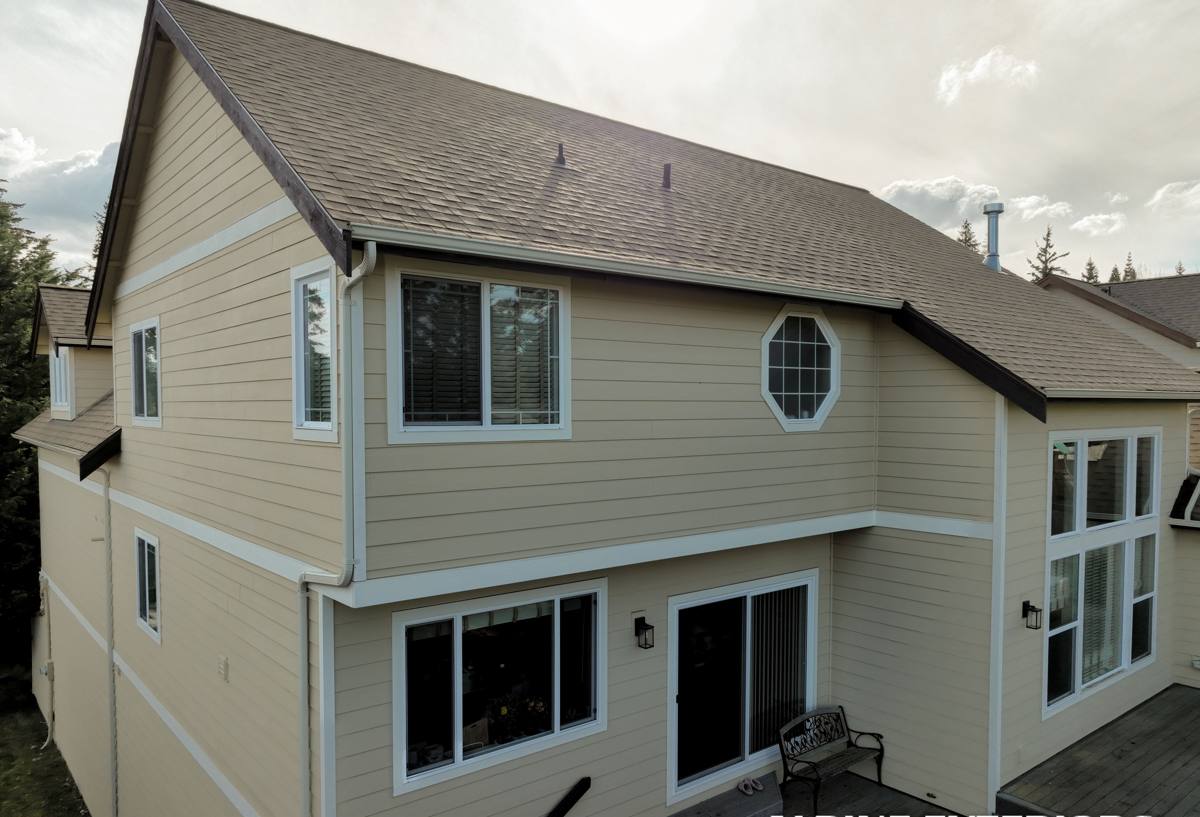
Signs a Bellingham Home Needs Siding Repair
Some damage is obvious. A lot of it isn't, especially on siding that's been painted or caulked over a few times. Here's what we look for on service calls in this area:
- Soft or spongy spots when you press on siding or trim, especially near the bottom courses and around window and door casings
- Persistent moss or dark streaking on the same wall section year after year, even after cleaning
- Visible gaps, cracked caulk lines, or separated joints where wind-driven rain can get behind the siding
- Rust staining below nail heads or fasteners, more common here than in drier inland areas because of salt air exposure
- Bubbling, peeling, or chalky paint concentrated on one elevation (usually the side that takes the most weather)
- A musty smell or visible staining on interior walls that back up to an exterior wall
- Boards that have visibly bowed, cupped, or pulled away from the wall line
Any one of these can be a small, contained repair. Several of them together, especially on an older home, usually mean water has been getting behind the siding for a while and the repair needs to include what's underneath, not just what's visible.
Repair Or Replace: How We Make the Call
Homeowners often assume any siding problem means a full replacement, or the opposite — that a quick caulk-and-paint fix will hold. Neither assumption is reliable without actually opening up the affected area. The honest answer depends on how far moisture has traveled and how much of the wall assembly is compromised.
| Factor | Points Toward Repair | Points Toward Replacement |
|---|---|---|
| Extent of damage | Isolated to one wall section or a handful of boards | Recurring across multiple elevations |
| Underlying sheathing | Dry, solid when probed | Soft, delaminating, or visibly rotted |
| Siding age and material | Newer material, or Hardie board in otherwise good shape | Original material near or past its service life |
| Cause identified | A specific, fixable entry point (flashing, caulk joint, fastener) | Systemic issue — bad original installation, no water-resistive barrier |
| Moss/moisture history | Recent, first occurrence | Long-term, repeated cycles of wetting and drying |
We'll tell you straight which side of that table your home falls on. If a repair is the right call, we do the repair. We don't upsell a full re-side when a section fix will hold up.
What a Correct Siding Repair Actually Involves
A repair that only addresses what's visible from the driveway tends to fail again within a season or two, especially in a climate that stays wet as long as Whatcom County's does. A repair done right includes a few steps that are easy to skip and easy to notice later when they've been skipped:
1. Find the actual water path
Cracked caulk or a warped board is usually a symptom, not the cause. We trace where water is actually entering — often a failed flashing detail above a window, a gap where trim meets siding, or a fastener pattern that never should have penetrated the panel where it did.
2. Open it up before closing it up
If there's any sign moisture reached the sheathing or framing, that gets inspected and dried or replaced before new siding goes back on. Covering a damp wall with fresh material just delays the same failure.
3. Match the material correctly
Because we work exclusively in James Hardie fiber cement, a repair on a Hardie-sided home means matching the correct plank profile, exposure, and ColorPlus finish so the patched section doesn't stand out or perform differently than the surrounding siding. On homes with other siding materials, we'll be upfront if a true match isn't realistic and talk through the options rather than gluing on something that won't hold up the same way.
4. Rebuild the water management, not just the surface
Correct flashing, house wrap continuity, and proper caulking at the right joints (not every joint — over-caulking fiber cement can trap moisture instead of shedding it) matter more to long-term performance than the cosmetic patch itself.
5. Reinstall to spec
Fastener type, spacing, and clearance from grade all affect how the repaired section holds up to the same salt air and driving rain that likely caused the original problem.
What's Different About Bellingham's Climate for Siding Specifically
Three regional factors show up repeatedly on repair calls in this area:
- Salt air: Homes closer to the water see faster corrosion on exposed fasteners and metal flashing than homes further inland in Whatcom County. This is often the real cause behind rust streaking that homeowners assume is just cosmetic.
- Driving, wind-pushed rain: Storms here don't always fall straight down, which means water finds horizontal and diagonal paths into joints and laps that would stay dry in calmer weather. Repairs need to account for wind direction, not just gravity.
- Extended moss season: Shaded and north-facing walls can stay damp for months at a stretch, which is exactly the condition moss and mildew need to establish. Left alone, that sustained moisture works against paint, caulk, and eventually the siding material itself.
Our Repair Process for Bellingham Homeowners
- On-site assessment. We inspect the affected area and the surrounding siding, checking for signs the problem extends further than what prompted the call.
- Honest diagnosis. We explain what we found, what caused it, and whether repair or a larger fix is the right move — with our reasoning, not just a recommendation.
- Written scope and estimate. No surprise add-ons once work starts unless we open a wall and find something that genuinely changes the picture, in which case we stop and talk to you first.
- Repair work. Matching material, correct flashing and water management detailing, and proper fastening — done to hold up through another wet season, not just to look fixed on move-out day.
- Walkthrough. We show you what was done and what to keep an eye on, especially if the underlying cause was something like grading or gutter drainage that's outside the siding itself.
Why Hiring a Crew That Already Works in Bellingham Matters
Siding repair is one of those trades where local, repeated experience actually changes outcomes. A crew that regularly works Whatcom County homes has already seen how salt air affects fasteners on bayside properties, how moss behaves on shaded lots common to this area, and which flashing details reliably fail under wind-driven rain versus which ones hold. That's the difference between a repair that's a permanent fix and one that's a temporary patch that looks fine until the next wet winter.
It also matters for material matching. Because we install James Hardie exclusively and do it across this region, we're working with product lines, colors, and profiles we already know well — not guessing at a match from a manufacturer we rarely touch.
A Quick Checklist Before You Call Anyone
- Note which wall or elevation the problem is on, and whether it's the side that faces prevailing weather
- Press gently on any soft-looking areas and note how far the softness extends
- Check for matching issues elsewhere on the same wall, not just the spot that prompted the concern
- Look inside on the same wall for any staining, bubbling paint, or musty smell
- Ask any contractor you're considering whether they'll inspect behind the siding before quoting a fix
Get an Honest Look at Your Siding
If you're seeing soft spots, persistent moss, cracked caulk lines, or rust staining on your Bellingham home's siding, it's worth having someone look at it before it turns into a bigger job. We offer free, no-pressure estimates — we'll tell you plainly whether you're looking at a straightforward repair or something more, and why. Fill out the form below to get a time scheduled.