 Fairhaven Siding
 Building a Deck That Actually Suits Happy Valley
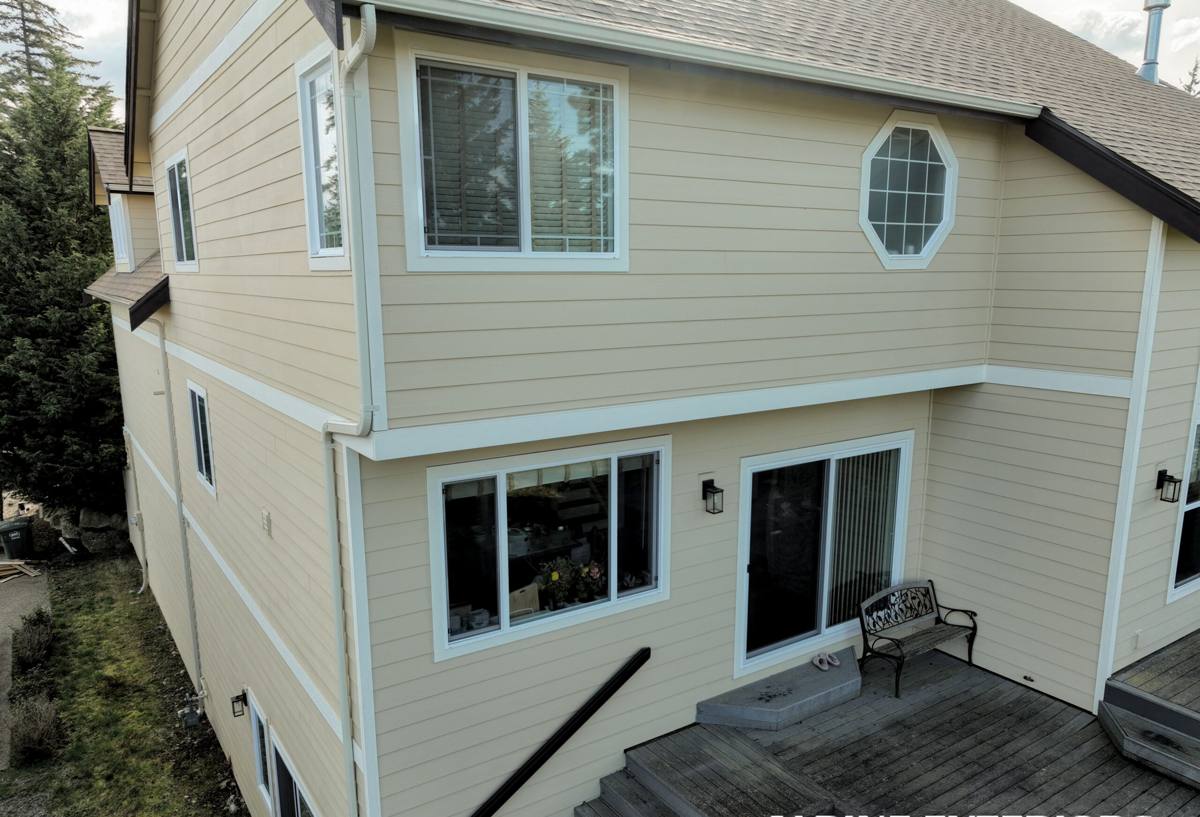
Happy Valley sits close enough to Bellingham Bay and the Salish Sea that salt-laden air is part of daily life, and it's shaded and wet enough in the wrong spots to grow a healthy crop of moss on anything that sits still too long. A deck built here isn't working against the same conditions as a deck in a dry inland town, and it shouldn't be built the same way. This page is about one job, done right, in one place: composite decking installed for homes in and around Happy Valley, Fairhaven, in Whatcom County.
We're not going to give you a generic rundown of composite decking. We're going to walk through what this specific climate does to a deck over time, what a correctly built composite deck needs to hold up to it, and how we approach the work when we're on your property.
Why This Climate Is Harder on Decks Than the Spec Sheet Suggests
Composite decking manufacturers test their boards for general durability, but "general" doesn't account for salt air, driving rain that comes in sideways off the water, and a moss season that can run most of the year on shaded, north-facing lots. Three things matter most for Happy Valley specifically:
Salt Air
Airborne salt doesn't rot composite boards the way it can degrade untreated metal, but it does settle into board grain and hardware over time. Fasteners, brackets, and railing components that aren't rated for coastal exposure corrode faster here than they would twenty miles inland. The board itself is more forgiving than the metal holding it together.
Driving Rain
Wind-driven rain off the water doesn't just fall on a deck — it gets pushed into seams, under railing posts, and against ledger boards where the deck meets the house. If flashing and drainage details are done casually, this is where water finds its way into places it shouldn't be, regardless of how good the decking material is.
Moss and Shade
Many Happy Valley lots have mature tree cover, which is part of the neighborhood's character but also means long stretches of shade and slow-drying surfaces. Moss and algae need moisture and low light to establish, and a poorly ventilated or poorly sloped deck gives them exactly that.
What "Composite" Actually Covers
Composite decking is a blend of wood fiber and plastic, and there's real variation within that category that matters more here than it would in a dry climate.
Capped vs. Uncapped Boards
Capped composite boards have a plastic polymer shell wrapped around the wood-plastic core, sealing it from moisture absorption on all sides. Uncapped boards expose more of the wood-fiber core, which can absorb moisture, swell slightly, and become more hospitable to mold and algae growth over time. In a climate with this much moisture exposure, we treat the cap as a functional requirement, not an upgrade.
Surface Texture
Smooth, low-texture boards shed water and debris faster but can get slick when wet or mossy. Wood-grain embossed boards give better underfoot grip in wet conditions but hold onto grime slightly longer in shaded spots. Which one makes sense depends on how shaded and exposed your specific deck location is — it's a real trade-off, not a marketing distinction.
What a Correctly Built Composite Deck Requires Here
The decking boards get most of the attention, but the substructure and fastening details are what actually determine whether a deck stays solid and dry for the long haul.
- Proper ledger flashing where the deck attaches to the house, so wind-driven rain can't work its way behind the siding
- Joist spacing matched to the manufacturer's requirements for the specific board profile — composite spans differently than wood
- Corrosion-resistant or coated fasteners and brackets suited to coastal air, not standard interior-grade hardware
- A hidden fastener system where the board profile supports it, reducing surface penetration points where water can sit
- Correct expansion gaps between boards, since composite expands and contracts with temperature more than people expect
- A slight slope away from the house and adequate airflow underneath so the deck actually dries out between rain events
Skip any one of these and the boards themselves — even good ones — end up fighting a losing battle against trapped moisture.
Managing Moss and Algae: Choices You Make Once vs. Upkeep You Do Forever
Some moss and algae resistance gets built in at installation. Some of it is ongoing maintenance no matter what you install. It helps to know which is which before you decide on a deck.
Ventilation and drainage under the deck are installation decisions — get the substructure height, spacing, and slope right and you reduce how long the surface stays damp after a Whatcom County rain. Board selection is also an installation decision — capped boards with a textured or lightly variegated finish tend to show moss film less than very dark, smooth boards, where any surface growth stands out immediately.
After that, ongoing care is on you: periodic washing with a soft-bristle brush and a mild deck cleaner (not a pressure washer on high setting, which can damage the cap), keeping nearby vegetation trimmed back for light and airflow, and clearing leaf litter out of board gaps before it composts in place. No composite deck in this region is maintenance-free — it's low-maintenance relative to wood, not zero-maintenance.
Composite vs. Other Decking Options for a Happy Valley Property
| Material | Moisture Behavior Here | Maintenance | Typical Lifespan |
|---|---|---|---|
| Composite (capped) | Strong resistance to swelling, rot, and moss staining when properly ventilated | Periodic washing; no staining or sealing | 25-30+ years, warranty-backed |
| Composite (uncapped) | More moisture absorption at cut edges and exposed core | More frequent cleaning; edge sealing recommended | Shorter than capped, varies by product |
| Pressure-treated wood | Absorbs water readily; prone to moss and algae in shaded, damp spots | Annual cleaning, periodic staining/sealing | 10-15 years before major repair |
| Cedar | Naturally rot-resistant but still needs sealing against driving rain and salt air | Regular sealing/staining to hold color and resist moisture | 15-20 years with upkeep |
| PVC | Fully synthetic, no wood fiber to absorb moisture | Low; similar washing routine to capped composite | 25-30+ years, warranty-backed |
We install composite for most Happy Valley clients because it strikes a workable balance: strong moisture performance for this climate, a manageable maintenance routine, and a cost that sits below full PVC systems while outperforming untreated or lightly maintained wood over time.
What Affects the Cost of a Composite Deck Project Here
We won't quote a number without seeing the site, but these are the factors that actually move the price on a Happy Valley composite decking job:
| Factor | Why It Matters |
|---|---|
| Condition of the existing substructure | Rebuilding a rotted or undersized frame costs more than decking over a sound one |
| Board tier and finish | Capped vs. uncapped, and standard vs. premium color/texture lines, carry different material costs |
| Railing system | Composite or aluminum railing adds cost over simple wood rail, but pairs better long-term with composite decking |
| Stairs and multiple levels | Each added stair run and landing increases labor and material significantly |
| Site access and slope | Steep or tree-covered Happy Valley lots can add setup time and material handling cost |
| Deck size and shape | Complex angles and cutouts around trees or structures increase waste and labor |
How We Approach a Happy Valley Composite Decking Project
Our process is straightforward, but the details inside each step are where the durability actually comes from.
- Site assessment — we look at sun exposure, shade patterns, existing drainage, and how close the deck sits to salt-air exposure or wind-driven rain paths
- Structural check — existing ledger, footings, and framing get inspected before we decide what's reused and what's rebuilt
- Drainage and ventilation plan — we set slope and under-deck airflow before a single board goes down, since this can't be fixed easily after the fact
- Framing and flashing — corrosion-resistant hardware and proper ledger flashing go in first
- Board installation — correct spacing, hidden fastening where the profile allows, and clean field cuts sealed per manufacturer spec
- Final walkthrough — we go over care basics specific to your deck's sun and shade exposure so you know what upkeep actually looks like
Why Hiring a Crew That Already Works Happy Valley Matters
A composite deck installed with generic, one-size-fits-all details can still fail early in this environment — not because the boards were bad, but because the flashing, fastener choice, or ventilation weren't matched to what salt air and driving rain actually do here. A crew that regularly works Fairhaven and the surrounding Whatcom County waterfront neighborhoods has already seen where decks in this area tend to fail, and builds around those failure points as a matter of habit, not an afterthought.
That local pattern recognition — knowing which lots hold moisture longest, which exposures take the worst of the wind-driven rain, which hardware actually holds up near the water — is the difference between a deck that looks right on installation day and one that's still solid a decade later.
If you're planning a composite deck for your Happy Valley property, we're happy to walk the site with you, look at your sun and drainage conditions, and put together a straightforward, no-pressure estimate. There's a form below to get that conversation started.