 Fairhaven Siding
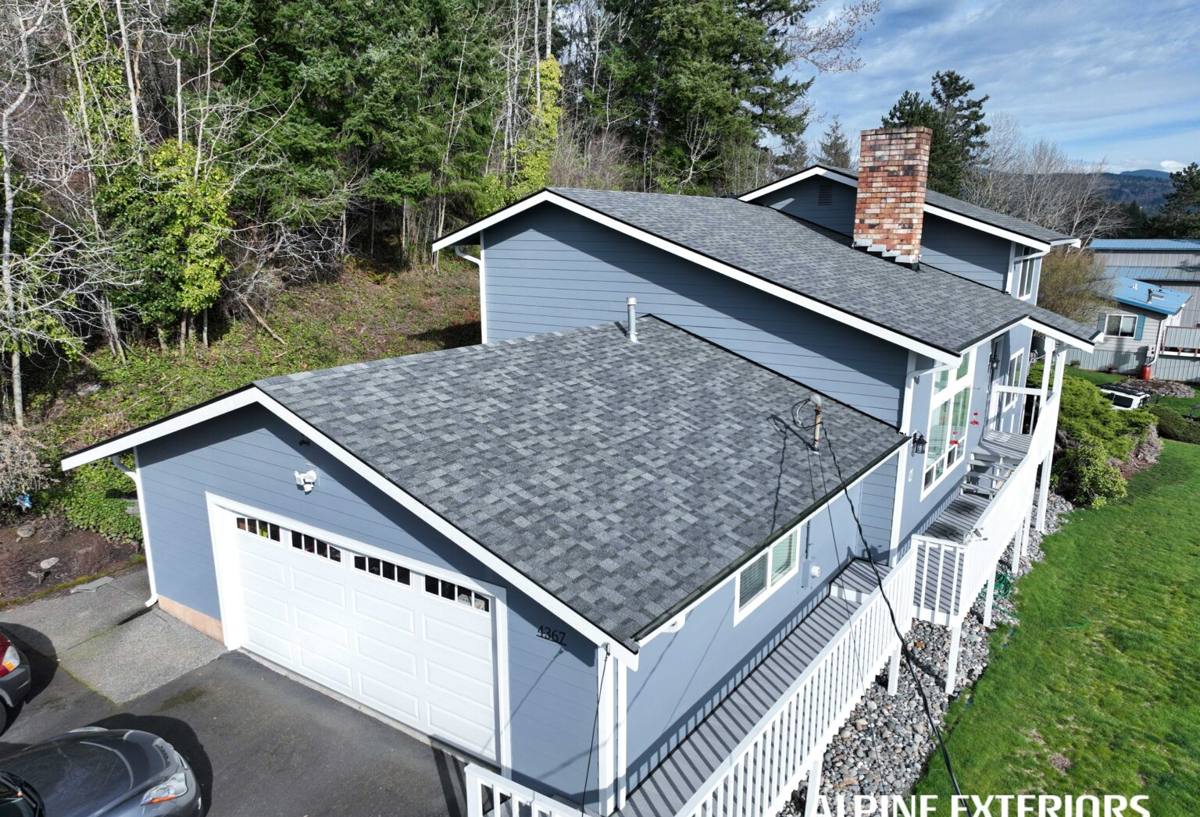
 Asphalt Shingle Roofing Built for the Bow Area's Coastline
Homes in and around Bow sit close enough to the Salish Sea that the weather off the water shapes almost every roofing decision worth making. Salt-laden air, wind-driven rain that finds its way under poorly lapped shingles, and a moss season that can run nine months out of twelve all put more stress on an asphalt shingle roof here than the same product would see fifty miles inland. We're a Fairhaven-based crew that regularly works the Bow area of Skagit County, and this page covers what an asphalt shingle roof actually needs to hold up in this environment, not the generic version of the pitch.
Why This Climate Is Hard on Asphalt Shingles
Asphalt shingles are a solid, cost-effective roofing product almost everywhere in the country, but three things about the Bow area's weather push them harder than average:
- Salt air corrosion. Metal fasteners, flashing, and exposed nail heads corrode faster near open water. A roof that skimps on corrosion-resistant hardware will show rust streaks and loosened shingles years before it should.
- Driving rain, not just steady rain. Wind off the water pushes rain sideways and uphill under shingle edges, valleys, and around penetrations. Standard lapping that would be fine in a calmer climate can let water intrude here.
- A long moss and moisture season. Overcast, damp stretches that run from fall through spring give moss, algae, and lichen plenty of time to establish. Once moss gets a foothold under shingle tabs, it holds moisture against the roof deck and lifts shingles from underneath.
None of this means asphalt shingles are the wrong choice for a Bow home — they're still one of the most practical roofing materials available for cost, appearance, and repairability. It means the installation details matter more here than they do in a drier, calmer climate.
What a Correctly Installed Shingle Roof Needs Here
Underlayment and ice/water protection
We use a synthetic underlayment as the primary water barrier under every shingle roof, and we add self-adhered ice-and-water membrane at eaves, valleys, and around every roof penetration — chimneys, vents, skylights. In a climate where wind-driven rain is routine, the underlayment is doing real work, not just serving as a backup.
Corrosion-resistant fasteners and flashing
Given the salt exposure this close to the water, we use hot-dip galvanized or stainless fasteners and flashing rather than the bare or lightly coated hardware that's fine further inland. It costs a little more up front and saves you a shortened roof life.
Balanced attic ventilation
A shingle roof without proper intake and exhaust ventilation traps warm, moist air against the underside of the roof deck. In this climate that trapped moisture condenses, feeds rot, and shortens shingle life from below — a problem you'll never see just by looking at the shingles themselves. We check soffit intake and ridge or box-vent exhaust on every job, not just new installs.
Valley and flashing detail
Valleys, chimney flashing, and sidewall step flashing are where the majority of shingle roof leaks in this climate actually originate — far more often than in the open field of shingles. We treat these details as the most important part of the job, not an afterthought once the shingles are down.
Signs Your Bow Home May Need Shingle Roofing Work
Roof problems in this climate are often easy to miss from ground level. Watch for:
- Granules collecting in gutters or at downspout outlets
- Shingle edges that look curled, cupped, or lifted
- Dark streaking or a green-black tint across shingle faces
- Moss visibly growing on the roof surface, especially on north-facing slopes
- Soft or sagging spots when the roof deck is walked
- Daylight visible through the roof deck from inside the attic
- Water stains on interior ceilings, especially near valleys or chimneys
- Rusted or streaking fasteners visible at flashing or vent boots
Any one of these on its own isn't necessarily an emergency, but they're worth a look before the next wet season rather than after a leak shows up inside the house.
Our Asphalt Shingle Roofing Process
- On-site inspection. We walk the roof and attic, check ventilation, look at flashing and valley condition, and photograph anything that needs a closer look.
- Honest scope and estimate. We tell you plainly whether you're looking at a repair, a partial re-roof, or a full replacement, and why — including what happens if you defer the work.
- Tear-off and deck inspection. On a full re-roof, we remove existing shingles down to the deck and check for rot or soft sheathing before anything new goes down. Hidden deck damage gets flagged and priced before we cover it up, not discovered later.
- Underlayment and flashing installation. Ice-and-water membrane at vulnerable areas, synthetic underlayment across the field, new flashing at valleys, chimneys, and walls.
- Shingle installation. Installed to manufacturer nailing patterns and exposure specs — the details that actually determine wind and wind-driven-rain performance, not just the shingle brand.
- Ventilation check and correction. Intake and exhaust balanced as part of the job, not treated as a separate upsell.
- Final walkthrough. We go over what was done, what to expect, and any maintenance worth doing on your schedule.
Choosing the Right Shingle for a Bow Home
Shingle tier matters more in a moss-prone, salt-air climate than it does in milder conditions. Here's how the common tiers compare for this environment:
| Shingle Type | Typical Lifespan Here | Moss/Algae Resistance | Best Fit |
|---|---|---|---|
| Standard 3-tab | Shorter end of rated life due to exposure | None built in | Budget-driven projects, secondary structures |
| Standard architectural (laminate) | Solid, mid-range performance | None unless specified | Most primary homes wanting a balance of cost and durability |
| Algae-resistant architectural | Holds appearance longer in damp climates | Copper or zinc granules built in | North-facing roofs, shaded lots, homes with a tree canopy nearby |
| Premium/designer architectural | Longest-rated of the asphalt options | Usually includes algae resistance | Homeowners prioritizing appearance and longevity over lowest cost |
For most Bow-area homes — especially anything shaded, tree-lined, or facing prevailing weather off the water — we recommend at least an algae-resistant architectural shingle. The upcharge over a standard shingle is modest relative to the years of clean appearance and reduced moss pressure it buys you.
Repair vs. Full Replacement: What Actually Drives the Decision
| Factor | Favors Repair | Favors Full Replacement |
|---|---|---|
| Age of roof | Under 10-12 years | Approaching or past rated lifespan |
| Extent of damage | Isolated area (one valley, one vent boot, storm damage to a section) | Granule loss, curling, or moss spread across most slopes |
| Deck condition | Deck sound where inspected | Soft spots or rot found in multiple areas |
| Ventilation | Already balanced and functioning | Poor or absent — needs correction anyway |
| Plans for the home | Selling soon, budget-limited | Long-term ownership, want to stop recurring repair calls |
We won't push a full replacement when a targeted repair will genuinely hold. We also won't recommend patching a roof that's already past the point where repairs are a good use of your money — we'll walk you through which situation you're actually in.
Moss and Ventilation: The Long-Term Maintenance Picture
Even a correctly installed shingle roof in this climate benefits from some ongoing attention. Moss growth is manageable if it's addressed early — gentle removal and zinc or copper strip installation at ridgelines can slow regrowth significantly. What causes real damage is moss left to establish and thicken over multiple seasons, holding moisture against the shingles year-round. Combined with proper attic ventilation, keeping moss in check is the single biggest thing a homeowner here can do to get full value out of a shingle roof's rated lifespan.
Why a Crew That Already Works the Bow Area Matters
A roofing crew that mostly works drier, inland climates will often install a shingle roof correctly by national code and still leave it under-prepared for what this coastline actually throws at it — lighter underlayment, standard fasteners, ventilation sized for a different climate. Working this area regularly means we size ventilation, flashing, and underlayment for driving rain and salt exposure as a default, not as an upgrade you have to ask for. It also means we're a known, reachable crew if a question or a warranty issue comes up after the job is done, rather than someone passing through on a one-off project.
Get a Free, No-Pressure Estimate
If you're seeing granule loss, moss buildup, curling shingles, or you just want an honest read on how much roof life you have left, we're happy to take a look. The estimate is free, there's no pressure attached to it, and you'll get a straight answer about repair versus replacement either way. Use the form below to get started.