 Fairhaven Siding
 Siding Built for Downtown Bellingham's Bay-Facing Weather
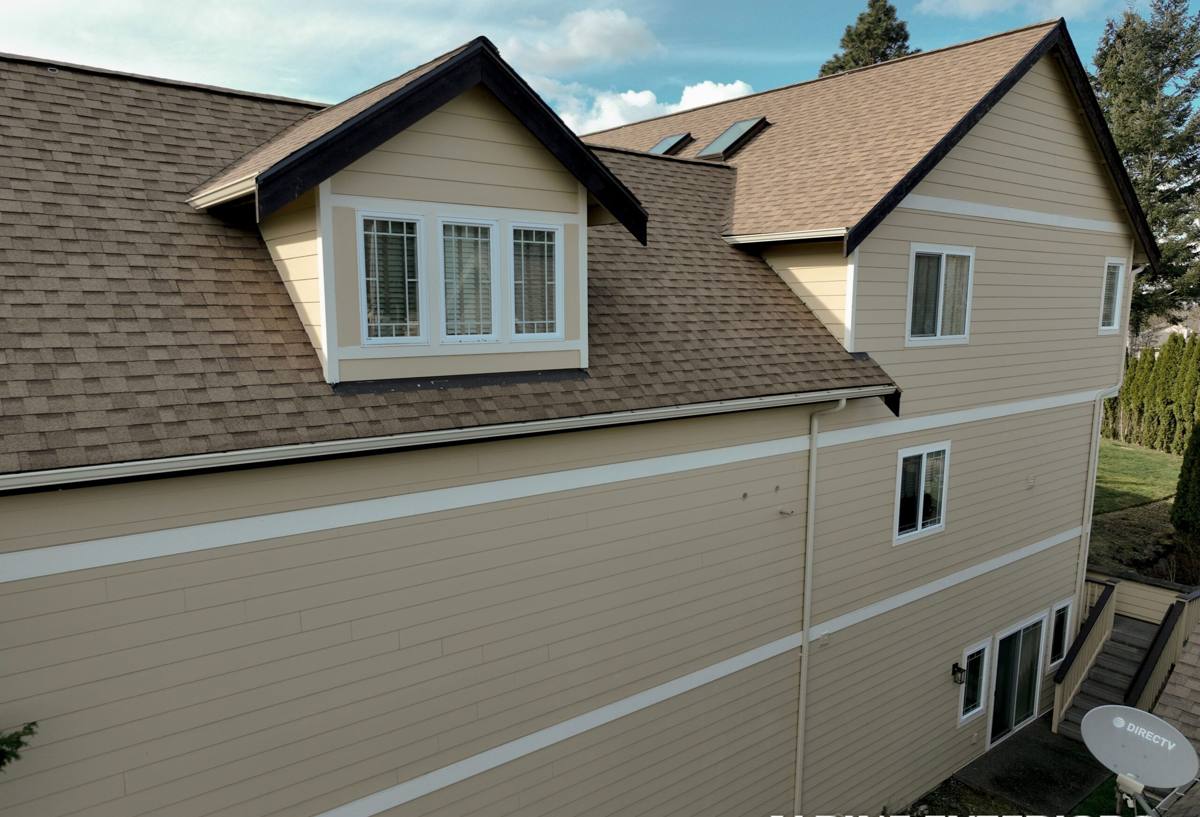
Downtown Bellingham sits close enough to the water that homes here take a different kind of beating than siding fifty miles inland. Salt-laden air off Bellingham Bay, driving rain that comes in sideways off the Strait, and a moss season that seems to run nine months out of twelve all work against whatever is nailed to your exterior walls. We're a Fairhaven-based crew that works this part of Whatcom County regularly, and we install exactly one siding product: James Hardie fiber cement. This page walks through what that means specifically for homes in and around Downtown Bellingham — not siding in general, but this product, in this neighborhood, dealing with this climate.
What This Climate Actually Does to a Wall
Before talking about the product, it's worth being specific about what "coastal Bellingham weather" means for a house.
Salt Air and Metal Fasteners
Proximity to the bay means airborne salt settles on exterior surfaces even blocks back from the water. Salt accelerates corrosion on exposed metal — fasteners, trim flashing, anything ferrous that isn't properly coated or protected. Siding systems that rely on exposed face-nailing or unprotected trim details show that corrosion first, usually as rust streaking down the face of the board within a few years.
Driving Rain and Wind-Driven Moisture
Bellingham doesn't just get rain — it gets rain pushed horizontally by wind off the water often enough that it's a design consideration, not a rare event. That means water gets forced up under laps, into butt joints, and behind trim in ways that straight-down rain never would. Any siding installation in this area has to be detailed assuming wind-driven rain is normal weather, not a storm exception.
Moss, Algae, and Shade
Downtown Bellingham's mix of mature trees, close-set lots, and marine humidity creates long stretches where north- and west-facing walls stay damp and shaded. That's exactly the environment moss and algae need. Siding materials that absorb moisture or have porous surface texture give moss something to root into; materials with a factory-sealed, non-porous finish don't give it much purchase.
Why We Only Install James Hardie in This Climate
We get asked fairly often why we don't offer vinyl, LP SmartSide, cedar, or primed spruce alongside Hardie. The honest answer is that we made a call a while back to standardize on one product we can stand behind completely, rather than carry several and let the homeowner sort out the trade-offs. In a climate like this one, the differences aren't cosmetic — they show up as maintenance calls five and ten years out.
- Vinyl expands and contracts significantly with temperature swings and can crack or warp under UV exposure over time; it also doesn't hold paint, so color choices are locked in for the life of the product.
- LP SmartSide is an engineered wood product — it performs reasonably when installation and caulking are perfect and maintained, but any wood-based product is more moisture-sensitive than fiber cement, which matters directly in a driving-rain, high-humidity setting like this one.
- Cedar and primed spruce are real wood — attractive, but they require an ongoing maintenance commitment (refinishing, caulking, moisture monitoring) that most homeowners underestimate, and they're the most vulnerable of the group to the rot and moss issues this climate creates.
- Cemplank and Allura are fiber cement competitors to Hardie with reasonable core products, but we don't have the manufacturer support, factory finish system, or warranty structure with them that we have with Hardie, so we don't install them.
None of this means those products are junk — they all have a place. It means that for the specific combination of salt air, wind-driven rain, and moss pressure that Downtown Bellingham deals with, fiber cement with a factory-applied finish is the product we're willing to warranty our labor against.
What James Hardie Brings to a Coastal-Adjacent Job
Non-Combustible, Dimensionally Stable Core
Hardie's fiber cement core doesn't expand and contract with humidity and temperature the way wood or vinyl does, and it's non-combustible. In a marine climate where boards are constantly cycling between wet and dry, dimensional stability is what keeps joints tight and paint lines from telegraphing cracks over time.
ColorPlus Factory Finish
Rather than being painted on-site, Hardie's ColorPlus finish is baked on at the factory under controlled conditions, which gives it better adhesion and UV resistance than field-applied paint. That matters here specifically because a factory-cured finish sheds surface moisture more consistently, which is one more thing working against moss and algae getting a foothold.
HZ5 Engineering for the Pacific Northwest
Hardie makes climate-specific product lines, and the HZ5 line is engineered for regions with the kind of freeze-thaw and moisture cycling the Pacific Northwest sees. It's not a marketing distinction — it affects the formulation of the board itself for better performance in exactly the conditions Whatcom County produces.
What a Correct Installation Involves
The product only performs as well as the installation behind it. In this climate, a handful of details matter more than they would somewhere drier and calmer.
- Weather-resistive barrier and rainscreen consideration. A proper water-resistive barrier behind the siding, with attention to how wind-driven rain will move once it gets past the first line of defense, matters more here than in a dry climate.
- Flashing at every penetration and transition. Windows, doors, roof-to-wall intersections, and any deck ledger or utility penetration need flashing detailed to shed water outward, not rely on caulk alone.
- Correct fastener spec and placement. Hardie specifies fastener type, length, and placement precisely; using the wrong fastener or nailing pattern in a salt-air environment is exactly how you end up with rust bleed in a few years.
- Proper board clearances. Manufacturer-specified clearance from grade, roofing, and decking keeps splashback and standing moisture off the bottom edge of the siding, which is where rot and moss problems start first.
- Caulking and joint treatment per manufacturer spec. Butt joints and trim intersections need to be treated exactly per Hardie's published details — not "close enough" — because those are the first points where wind-driven rain finds a way in.
- Factory-cut edges sealed correctly. Any field cut needs the cut edge treated per spec so the factory finish's moisture protection isn't compromised at every trim line.
Our Process for Downtown Bellingham Projects
Because we work this area regularly, our process is straightforward and doesn't involve guessing at conditions we haven't seen before.
1. On-Site Assessment
We walk the exterior, check for existing moisture damage, moss buildup, and areas where the current siding or trim has already failed — these are usually the tell for how the house has been handling wind and rain exposure.
2. Scope and Product Selection
We talk through Hardie's plank, panel, and shingle options and which exposure and profile fit the house and the specific sides of the building that take the worst weather.
3. Written Estimate
You get a written scope covering removal, any sheathing or moisture repair found underneath, house wrap, flashing details, siding installation, and trim — no vague allowances.
4. Installation to Manufacturer Spec
Fastener schedule, clearances, flashing, and joint treatment are done to Hardie's published installation instructions, not shortcuts.
5. Final Walkthrough
We walk the finished job with you before calling it done, covering care and what to watch for going forward.
Comparing Siding Options for This Climate
| Factor | James Hardie Fiber Cement | Vinyl | Wood / LP SmartSide |
|---|---|---|---|
| Moisture tolerance | High — non-organic core | High, but seams can trap water | Moderate — organic material, moisture-sensitive |
| Salt air / corrosion exposure | Good with correct fasteners | Fasteners often exposed at panel edges | Moderate, fastener-dependent |
| Moss/algae resistance | Strong — sealed factory finish | Moderate — smooth surface, but seams collect debris | Lower — porous surface holds moisture |
| Finish longevity | Factory-cured ColorPlus finish | Color molded in, fades over time, can't repaint easily | Requires repainting/refinishing on a schedule |
| Maintenance commitment | Low — periodic wash and inspection | Low, but cracks/warping aren't repairable | Higher — caulking, refinishing, moisture checks |
Cost Factors Homeowners Should Understand
We don't quote broad prices without seeing the house, but a few things reliably move the cost on a Downtown Bellingham project:
- Condition of the sheathing and framing underneath the existing siding — moisture damage found during removal adds scope.
- Number and complexity of trim details, window returns, and roof-to-wall transitions.
- Whether the house needs a full tear-off versus a more limited section replacement.
- Access — steep lots, tight setbacks, and multi-story walls near the water add labor time.
- Product selection within the Hardie line — plank profile, exposure width, and color all vary in material cost.
A Practical Checklist Before You Hire Anyone
- Ask specifically what fastener schedule and clearance details they follow — vague answers are a red flag.
- Confirm whether they're a certified or experienced Hardie installer, not just a general contractor adding siding to their scope.
- Get the scope in writing, including what happens if moisture damage is found once the old siding comes off.
- Ask how they handle flashing at windows and roof transitions specifically — this is where most future leaks start.
- Confirm warranty terms in writing, both manufacturer and labor.
Why a Local Fairhaven Crew Matters Here
Siding installed by a crew that already understands Bellingham Bay's wind and rain patterns, the moss pressure on shaded lots, and the salt exposure closer to the water starts from a more informed baseline than a crew unfamiliar with the area. We're not guessing at how this climate behaves — it's the same weather we work in on every project nearby, which shows up in how we detail flashing, spacing, and joint treatment before a problem ever develops.
If you're considering new siding for a home in Downtown Bellingham, we're happy to walk the exterior with you and give a straightforward, no-pressure written estimate — just fill out the form below to get started.