 Fairhaven Siding
 Building Decks for Downtown Bellingham's Marine Climate
Downtown Bellingham sits close to Bellingham Bay, which means homes here deal with a version of Pacific Northwest weather that's a notch harder on outdoor structures than what you'd see further inland in Whatcom County. Salt-tinged air off the water, long stretches of driving rain from fall through spring, and shaded lots that stay damp well into summer all work against an outdoor deck that wasn't built with those conditions in mind. A deck that looks fine on installation day can start showing problems within a couple of seasons if the materials, fasteners, and drainage details weren't chosen for this specific environment.
We build and repair decks throughout Bellingham, and Downtown properties come with their own set of quirks — older homes with additions bolted on over the years, tight lots where drainage has nowhere obvious to go, and a mix of building eras that means no two ledger connections look quite the same. This page is about what a custom deck actually needs to hold up here, not generic advice that could apply anywhere in the country.
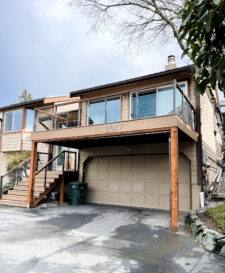
What Salt Air, Rain, and Moss Actually Do to a Deck
It helps to understand the specific ways this climate attacks a deck, because it changes which decisions actually matter.
Salt Air and Corrosion
Proximity to the bay means airborne salt settles on exposed metal over time. Standard fasteners and hardware can corrode faster here than they would ten or fifteen miles inland. Once a fastener starts rusting, it weakens the connection it's holding — and on a deck, that connection might be the one keeping a railing post upright or a ledger board attached to the house.
Driving Rain and Moisture Intrusion
Bellingham's rain doesn't just fall straight down — wind off the water pushes it sideways, which means water finds its way into joints, end grain, and any gap where flashing wasn't done right. Wood that stays wet for days at a time is far more prone to rot than wood that gets rained on and then dries out. The ledger board — where the deck attaches to the house — is the single most common failure point we see, almost always because of missing or improperly lapped flashing.
Moss, Algae, and Shade
Many Downtown Bellingham lots have mature trees or sit close enough to neighboring structures that parts of the deck rarely see direct sun. Combine that with our long wet season and you get ideal conditions for moss and algae growth on decking surfaces. Beyond looking bad, moss holds moisture against the wood surface and makes boards genuinely slippery — a real safety issue on stairs and near entry doors.
Choosing the Right Decking Material for This Area
There's no single "best" decking material — the right choice depends on your budget, how much upkeep you're willing to do, and how exposed your specific lot is to sun, shade, and moisture. Here's how the common options stack up for Downtown Bellingham conditions specifically.
| Material | How It Handles Our Climate | Maintenance | Typical Lifespan Here |
|---|---|---|---|
| Cedar | Naturally resists rot and insects; still needs sealing to slow graying and moisture uptake in shaded, damp spots | Annual cleaning, periodic sealing/staining | 15–20 years with upkeep |
| Pressure-Treated Pine/Fir | Treated core resists rot, but cut ends and fastener holes need field-treated sealant or they become entry points for moisture | Regular cleaning, sealing every 1–2 years | 15–25 years with upkeep |
| Composite/PVC Decking | Doesn't absorb water or rot; can still grow surface moss/algae in shaded spots and needs periodic washing | Occasional washing, no sealing or staining | 25–30+ years, manufacturer-dependent |
Wood Decking
Cedar and quality pressure-treated lumber remain solid choices, especially for homeowners who like the look and feel of real wood and don't mind maintaining it. The tradeoff in our climate is discipline: skipping a year of sealing on a shaded, damp deck can let moss and moisture get a foothold faster than it would in a drier region.
Composite and PVC Decking
Composite has become popular here because it removes the sealing and staining cycle entirely, which matters when a deck sits in shade for much of the year. It's a higher upfront cost, but for a lot of Downtown Bellingham homeowners who want to actually use the deck instead of maintaining it, that tradeoff makes sense. It's still worth washing composite periodically — algae doesn't care what the boards are made of.
Railings and Fasteners
Given the salt air off the bay, we default to fasteners and structural hardware rated for coastal or high-corrosion environments rather than standard-grade hardware. It costs a little more up front and saves real headaches down the line, since a corroded structural screw is far more expensive to discover and fix than to prevent.
Framing, Footings, and Code Requirements
Permits Through the City of Bellingham
Most new decks and significant deck rebuilds in the city require a building permit, and Downtown properties sometimes carry additional considerations depending on lot setbacks, historic overlay areas, or prior permitted work on the structure. We handle the permitting process and make sure the design meets current code before anyone picks up a saw — it's a lot cheaper to catch an issue on paper than after footings are poured.
Ledger Attachment and Flashing
Because the ledger connection is the most common failure point in this climate, we treat it as the most important detail on the job, not a formality. That means proper flashing that sheds water away from the house rather than behind the ledger board, correct fastener spacing and type, and — on older homes — sometimes discovering that a previous addition or deck wasn't flashed correctly at all. When that happens, we tell you plainly rather than building over a hidden problem.
Footings and Frost Considerations
Whatcom County doesn't see deep frost the way inland or higher-elevation areas do, but footings still need to be set to the depth and bearing requirements the local code calls for. On sloped or tight Downtown lots, getting equipment and materials to the footing locations can itself be part of the planning — something worth discussing early rather than discovering mid-project.
Designing for Downtown Bellingham's Lots
Slopes and Small Yards
Downtown Bellingham's terrain isn't flat, and a lot of homes here have decks that step down a grade, wrap a corner, or work around limited square footage. A custom deck built for a sloped or tight lot usually means more engineering thought on the framing side — taller support posts, additional bracing, or a multi-level layout — compared to a deck going onto a flat suburban backyard.
Privacy and Shade
Close lot lines and mature landscaping mean privacy is often a bigger design factor here than it might be in a more spread-out neighborhood. We talk through railing style, partial privacy screens, and pergola or cover options as part of the design conversation — not as an afterthought once the frame is already up.
Water and the View
Many Downtown Bellingham homeowners want a deck that takes advantage of bay or hillside views, which sometimes pushes the design toward larger elevated platforms or multi-level layouts. Bigger and higher decks put more load on the framing and footings, so the structural planning has to match the ambition of the design, not just the aesthetic.
Our Deck-Building Process
Every custom deck we build in Downtown Bellingham follows the same basic sequence, adjusted for the specifics of your property:
- On-site assessment of the lot, slope, existing structure, and any prior deck or addition work
- Design conversation covering layout, material, railing style, and how you actually plan to use the space
- Structural planning for footings, framing, and ledger attachment specific to your home and lot
- Permitting through the City of Bellingham before any construction begins
- Framing and construction, with flashing and fastener details built in from the start rather than patched in after
- Final walkthrough covering how to maintain the specific material you chose
We give you a straightforward, honest estimate before work starts — no surprise change orders for things a proper site visit should have caught the first time.
Keeping a Downtown Bellingham Deck Healthy
Whatever material you choose, a few habits go a long way in this climate:
- Sweep leaves and debris off the deck surface regularly, especially in shaded corners where moisture collects
- Clean moss and algae off decking and stairs at least once a year — more often on shaded sections
- Check and reseal wood decking on the schedule appropriate to the product, not just when it starts looking gray
- Inspect the ledger flashing and railing connections annually for signs of moisture staining or corrosion
- Keep gutters and downspouts near the deck clear so runoff isn't dumping extra water onto or under the structure
- Make sure decking boards have proper gaps for drainage and airflow underneath — tight, waterlogged gaps are where rot starts
Why a Local Crew Matters
A deck built to a generic national standard can still fail early in Downtown Bellingham if it wasn't built with our specific rain patterns, salt exposure, and moss season in mind. We work in this climate every day, which means we're not guessing at flashing details or fastener grades — we know what actually holds up here because we've seen what happens when it doesn't. Being based nearby also means faster response if something needs a follow-up look, rather than waiting on a crew that has to drive in from out of the area.
If you're planning a new custom deck or replacing one that's showing its age, we're happy to come take a look and talk through what makes sense for your specific property. Reach out for a free, no-pressure estimate using the form below.