 Fairhaven Siding
 Custom Windows in York: Why Local Climate Changes the Job
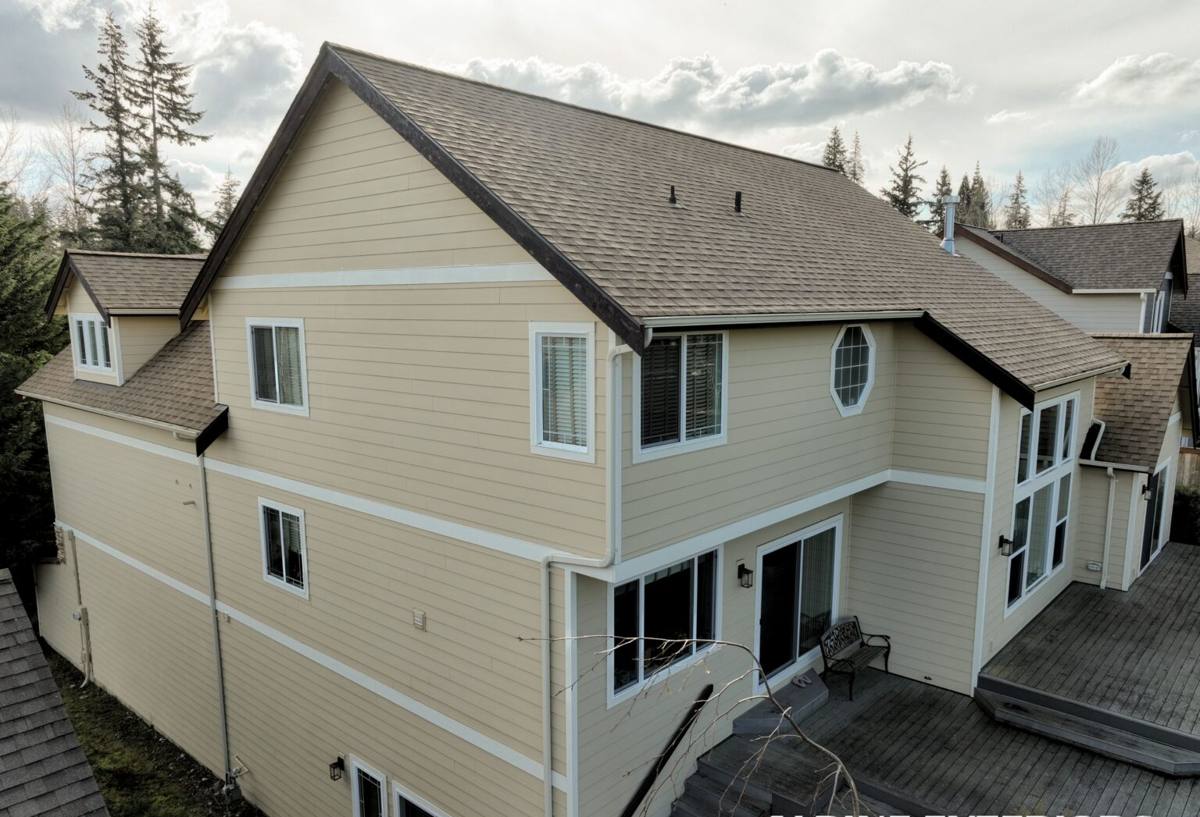
York is one of the older, established neighborhoods near Fairhaven, and like most of Bellingham and the rest of Whatcom County, it sits close enough to the Salish Sea that salt-laden air, wind-driven rain, and a moss season that can stretch from fall through spring are just part of owning a home here. Windows take more punishment in this environment than they would inland, and a lot of the window trouble we see in York isn't from bad products — it's from installations that were never built for this climate in the first place.
"Custom windows" doesn't necessarily mean unusual shapes or high-end architectural glass, though we do that work too. More often it means a window built and installed to fit an opening that isn't a standard stock size — common in older homes where the framing has settled or shifted slightly over decades, or where a previous remodel left an opening that off-the-shelf windows don't fit cleanly. Getting that right matters more here than in a drier climate, because any gap or shortcut in the fit becomes a path for moisture, and moisture is the one thing this region never runs short of.
What Salt Air, Rain, and a Long Moss Season Do to Windows
Each of the three conditions common to this area attacks windows in a different way, and they compound each other over time.
- Salt air accelerates corrosion on window hardware — hinges, locks, balance springs, and screen frames — especially on aluminum or lower-grade steel components. Once hardware starts to bind or corrode, homeowners often force windows open and closed, which stresses the frame and seals.
- Driving rain, especially when it comes in sideways during winter storms, tests flashing and sealant details that a calmer climate would never expose. A window that's watertight in a light shower can still leak under sustained, wind-driven rain if the flashing wasn't lapped correctly.
- Moss and algae take hold anywhere moisture sits and doesn't fully dry — sills, the tops of trim boards, and shaded corners of a wall. Beyond looking bad, moss holds water against wood and paint far longer than open air would, which is exactly the condition that leads to rot.
None of this happens overnight. It's usually a slow accumulation — a few years of minor seal failure, some hardware that gets stiffer every winter, a sill that stays damp a little longer each season — until a homeowner notices fogging between the panes, a draft, or soft wood at the bottom corner of a frame.
Signs a York Home Needs Window Attention
Most window problems give warning signs well before a full replacement is unavoidable. Worth checking for:
- Fogging or a milky haze between the panes of a double- or triple-pane window — the seal has failed and the gas fill or dead air space is compromised
- Visible daylight or a draft around the frame when the window is closed and locked
- Paint that's peeling or bubbling specifically at the sill or bottom corners, rather than evenly across the frame
- Soft or spongy wood when pressed at the sill, jamb, or lower corners
- Windows that are hard to open, close, or lock — often hardware corrosion or a frame that's racked out of square
- Moss or dark staining building up on the sill or exterior trim that keeps coming back after cleaning
Any one of these on its own might just need a repair or a resealing. Several at once, especially on a window that's original to an older home, usually points to full replacement being the more cost-effective route than continuing to patch it.
What a Correct Custom Window Installation Involves
Accurate, On-Site Measurement
Custom work starts with measuring the actual opening, not assuming it matches a catalog size. Older homes settle unevenly, so an opening that looks square on paper is often slightly out of true in real life. We measure width, height, and diagonal at multiple points and account for that variance before anything is ordered.
Flashing and Weatherproofing Details
This is the step that determines whether a window stays dry for twenty years or starts leaking in three. Proper installation means correctly lapped flashing tape or metal flashing at the sill, jambs, and head — installed in the right order so water is always directed outward and down, never trapped behind the siding. In a climate with regular driving rain, this detail matters more than the window itself.
Frame Selection for the Opening
Not every opening or every home calls for the same frame material or window style. We factor in sun exposure, wind exposure, and how sheltered or exposed that particular wall is before recommending a product, rather than defaulting to one option for the whole house.
Sealing, Insulation, and Finish Work
Once the window is set and shimmed level and plumb, the gap between the frame and the rough opening gets properly insulated — not overpacked, which can bow the frame, and not left with gaps. Interior and exterior trim is then finished and sealed so the whole assembly performs as one weathertight unit rather than a window that happens to be sitting in a hole.
Choosing Window Materials for Coastal Whatcom County Conditions
There's no single "best" window material — each has real trade-offs, and the right choice depends on the home, the budget, and how exposed that side of the house is to wind and rain.
| Material | Moisture & Salt-Air Resistance | Maintenance | General Cost Range |
|---|---|---|---|
| Vinyl | Good — won't rot or corrode, but can become brittle with age | Low; occasional cleaning | Lower |
| Fiberglass | Very good — stable in wet, salt-exposed climates, minimal expansion/contraction | Low | Mid to upper-mid |
| Aluminum | Fair — durable but prone to corrosion near salt air unless properly coated | Moderate | Mid |
| Wood-clad | Good on the exterior clad side; interior wood still needs protection from condensation | Higher — periodic finish upkeep | Upper |
We won't push a homeowner toward the priciest option if it doesn't fit the house or the budget, and we're upfront when a lower-maintenance material makes more sense for a wall that takes the brunt of winter storms. The honest trade-off with wood, for example, isn't that it performs poorly — it's that it asks for more attention over time, and in a climate this wet, deferred maintenance on wood shows up faster than it would somewhere dry.
Our Process for Custom Window Projects in York
Assessment and Measurement
We start with a walk-through of the home, checking each window in question for the signs of wear described above, then take precise measurements of the openings involved.
Ordering and Lead Times
Custom-sized windows are built to order, so lead times are longer than stock sizes — we'll give a realistic timeline up front rather than an optimistic one, so there are no surprises mid-project.
Installation Day
Work areas are protected, old windows are removed carefully to avoid unnecessary damage to surrounding siding or trim, and the new unit is set, flashed, insulated, and sealed following the same sequence every time — not shortcuts based on how the weather looks that morning.
Final Walkthrough and Cleanup
Every window is opened, closed, and locked to confirm smooth operation before we consider the job finished, and the site is cleaned up so there's no debris left behind.
Why Hiring a Crew That Already Works in York Matters
A contractor who works regularly in this part of Whatcom County has already seen how the local exposure to wind, rain, and salt air plays out on real homes — which walls tend to take the worst of winter storms, how older framing in this area tends to have settled, and what level of flashing detail actually holds up here versus what looks fine on installation day but fails in year two or three. That's not something a crew unfamiliar with the area picks up quickly, and it's the difference between a window that's watertight for its full service life and one that needs revisiting.
Working near Fairhaven and throughout the surrounding neighborhoods also means we're not guessing at permitting requirements or typical construction styles for homes of this age — we've already done the homework that a first-time visit to the area would require.
Maintenance Checklist to Extend the Life of Your Windows
Custom windows installed correctly can go decades without major issues, but a little seasonal attention — especially in a climate this wet — goes a long way.
- Clean sills and tracks of debris and moss buildup at least twice a year, more often on shaded or north-facing walls
- Check and lightly lubricate hardware (locks, hinges, balances) annually to prevent salt-air corrosion from seizing them up
- Inspect exterior caulking and sealant each fall before the heavy rains start, and reseal any cracked or separated joints
- Watch for condensation between panes, which signals a failed seal rather than a cleaning issue
- Keep gutters and downspouts clear so water isn't overflowing directly onto window heads below
- Repaint or refinish wood-clad frames on the manufacturer's recommended schedule rather than waiting for visible peeling
Get a Free, No-Pressure Estimate
If you're noticing drafts, fogged glass, sticking hardware, or moss buildup on windows anywhere in York, it's worth having someone take a look before a minor issue turns into a rot repair. We're happy to walk through your home, give an honest read on what's actually needed, and put together a straightforward estimate — no pressure, no upsell. Use the form below to get started.