 Fairhaven Siding
 Why Ferndale Windows Wear Out Faster Than the Brochure Says
Most window marketing is written for a dry climate. Ferndale isn't in one. Sitting in coastal Whatcom County near the Salish Sea, homes here deal with a marine layer that keeps humidity high most of the year, salt-laden air that speeds up corrosion on hardware and fasteners, and driving rain that comes in sideways during winter storms rather than falling straight down. Add a moss season that can run half the year in shaded, north-facing exposures, and you have conditions that find every weak point in a window assembly — not just the glass, but the frame, the seals, and the flashing behind the trim.
Old aluminum-frame windows and worn-out wood sashes are common in this area, and they share the same failure pattern: condensation between panes, cold drafts around the frame, and trim that stays damp long enough to grow moss or soft-rot the wood underneath. None of that is really a "window problem" in isolation — it's a moisture-management problem, and energy-efficient windows only deliver on their promise when they're installed with that in mind.
What "Energy-Efficient" Actually Means Here
Energy-efficient windows are rated on a few real numbers, not marketing language. The two that matter most for this climate are U-factor (how much heat escapes through the window — lower is better for our cool, wet winters) and air infiltration rate (how much outside air leaks through the assembly when it's windy and wet, which it often is here). Solar heat gain coefficient matters less in Whatcom County than it does in sunnier climates, since we don't get the same cooling-season sun load, but it still affects comfort in south- and west-facing rooms.
Frame material matters as much as the glass package. Here's how the common options actually perform under sustained damp, salt-air conditions rather than in a showroom:
| Frame Material | How It Handles Salt Air & Moisture | Maintenance | Typical Trade-Off |
|---|---|---|---|
| Vinyl | Won't corrode or rot; handles moisture well | Low — occasional cleaning | Limited color/finish options; can look plain on older homes |
| Fiberglass | Excellent — dimensionally stable, doesn't expand/contract with wet-dry cycles | Low | Higher upfront cost |
| Wood-clad | Good if the cladding and flashing detail are done right; vulnerable if not | Moderate to high — exposed wood needs attention | Best look for period homes; installation sensitivity is real |
| Aluminum | Poor without a thermal break — conducts cold and can corrode near salt air over time | Moderate | We generally steer clients away from bare aluminum for this reason, not because it's a bad metal, just a poor fit here |
We don't push one brand or material on every home. What we do insist on is a frame and glazing package that's actually rated for a coastal marine climate, with hardware and fasteners specified to resist the corrosion that salt air causes over time.
Glazing Details Worth Knowing
Double-pane, argon-filled units with a Low-E coating are the practical baseline for this area now — single-pane and older double-pane units without gas fill just can't keep up with our humidity and temperature swings without condensation problems. Triple-pane is available and does perform better, but for most Ferndale homes the jump in cost isn't matched by a proportional jump in comfort or energy savings compared to a well-installed double-pane, gas-filled, Low-E unit. We'll walk through that trade-off honestly rather than upsell it by default.
Signs Your Current Windows Are Working Against You
Homeowners often live with these issues for years before connecting them to the windows themselves. Worth checking for:
- Fog or moisture trapped between panes (a failed seal — the gas fill is gone and the window is now just glass with a gap)
- Condensation on the inside of the glass or on the sill during cold, wet weeks
- A noticeable draft near the frame even when the window is latched shut
- Moss, algae, or dark staining building up on the exterior trim or sill
- Paint or caulk failing repeatedly in the same spot around a window, even after touch-ups
- Rooms that are hard to keep comfortable regardless of what the thermostat is set to
- Visibly warped, soft, or discolored wood trim around the frame
Any one of these can point to a window problem, a flashing problem, or both — which is why we look at the whole assembly, not just the sash, before recommending replacement.
What a Correct Installation Actually Involves
The window unit itself is only part of the job. In a climate that gets wind-driven rain as often as ours does, how the window is installed matters at least as much as which window you buy.
Flashing and Weather Barrier
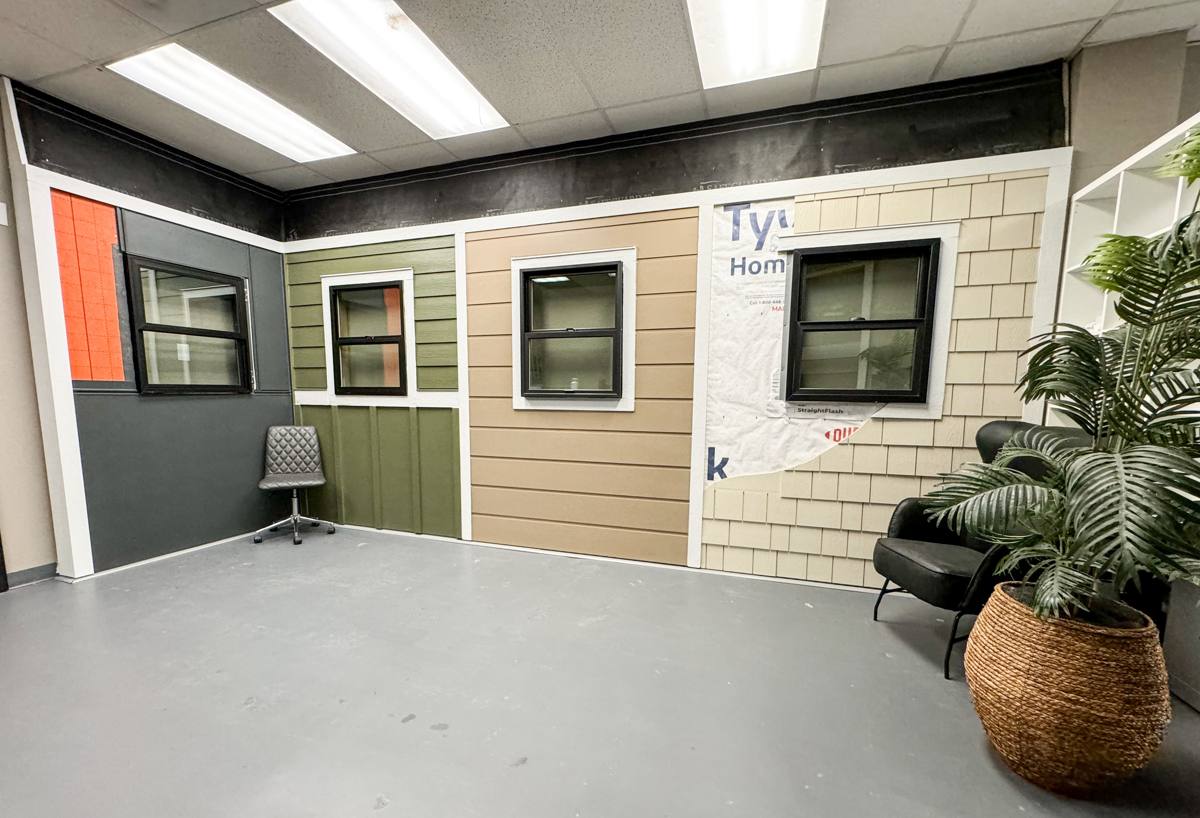
Every opening gets integrated with the home's weather-resistive barrier so that any water that reaches the assembly is directed back out, not into the wall cavity. That means proper head flashing above the window, correctly lapped side and sill flashing, and sealing that follows a shingle-style order — upper layers overlapping lower ones — so gravity and wind-driven rain can't work their way behind the trim. This is the step that gets skipped on rushed jobs, and it's the one that causes hidden rot years later.
Sealing and Insulation
The gap between the window frame and the rough opening needs to be insulated and air-sealed correctly — not just caulked around the visible trim. Over-packing that gap with the wrong material can actually bow the frame and cause operational problems, while under-insulating it leaves a cold, drafty perimeter that undercuts the efficiency rating you just paid for.
Fit and Level
A window that's out of square or level won't seal or operate correctly no matter how good the unit is. We check and shim for plumb, level, and square before final fastening, every time.
Our Process for Ferndale Window Projects
- On-site assessment: We look at your current windows, the surrounding trim and siding condition, and any signs of past moisture intrusion — not just the glass.
- Honest recommendation: We'll tell you which windows genuinely need replacement, which could be repaired, and which are fine, along with frame and glazing options suited to your home's exposure.
- Written estimate: Clear scope, product specifics, and pricing before any work starts — no vague allowances.
- Removal and flashing check: Old units come out carefully so we can inspect the rough opening and sheathing underneath for hidden rot or past water damage before anything new goes in.
- Installation: Correct flashing, air-sealing, and insulation around every unit, not just the window itself.
- Finish and cleanup: Trim, caulking, and site cleanup completed to match the rest of your exterior.
What It Costs and What Actually Drives the Price
Pricing depends on more than window count. These are the factors that move the number most:
| Factor | Why It Matters |
|---|---|
| Frame material | Vinyl is generally the most budget-friendly; fiberglass and wood-clad cost more upfront |
| Window size and configuration | Large picture windows, bays, and custom shapes cost more than standard double-hung or slider sizes |
| Condition behind the old window | If we find rot or water damage in the rough opening, repair work is priced separately once we can see it |
| Number of stories | Second-story and hard-to-access windows take more time and equipment |
| Trim and exterior finish work | Matching existing trim profiles or siding around the opening adds labor |
We give a written, itemized estimate so you can see exactly what you're paying for — not a lump figure with no explanation behind it.
Why It Matters to Hire a Crew That Already Works Ferndale
Window replacement in a marine climate isn't the same trade skill as window replacement in a dry inland region. A crew that regularly works Whatcom County homes already knows what to check for behind the trim on a house that's been through thirty or forty wet seasons, understands how to detail flashing for wind-driven rain instead of just vertical rainfall, and specifies hardware and fasteners that hold up against salt air instead of corroding within a few years. That local pattern-recognition is the difference between a window that performs well for decades and one that looks fine for a year or two before problems resurface.
We also carry that same standard into the surrounding siding and trim work, since windows and siding meet at the same flashing details — treating them as one connected system, rather than separate trades that don't talk to each other, is what keeps water out long-term.
Ready for a Straight Answer on Your Windows?
If you're not sure whether your windows need full replacement, minor repair, or nothing at all, we'll tell you honestly after taking a look. Reach out for a free, no-pressure estimate using the form below — we'll walk your home's specific exposure and give you options that make sense for it.