 Fairhaven Siding
 Deck Repair Built for Downtown Bellingham's Climate
Downtown Bellingham sits close enough to Bellingham Bay that salt-laden air, driving rain off the water, and a long, damp moss season are just part of owning a home here. Decks in this part of Whatcom County take a beating that decks in drier climates never see. Fasteners corrode faster, ledger boards trap moisture against siding, and north-facing decks under tree cover can stay damp for weeks at a stretch. If you own a home in or near Downtown Bellingham and your deck feels soft underfoot, has dark streaking, or squeaks and flexes more than it used to, that's not cosmetic — it's the wood or the connections telling you something.
We repair decks for homes throughout this neighborhood and understand the specific combination of coastal humidity, shaded lots, and older housing stock that makes deck problems here different from a repair job in a dry inland town. This page covers what actually goes wrong with decks in this area, what a correct repair looks like, and how we approach the work.
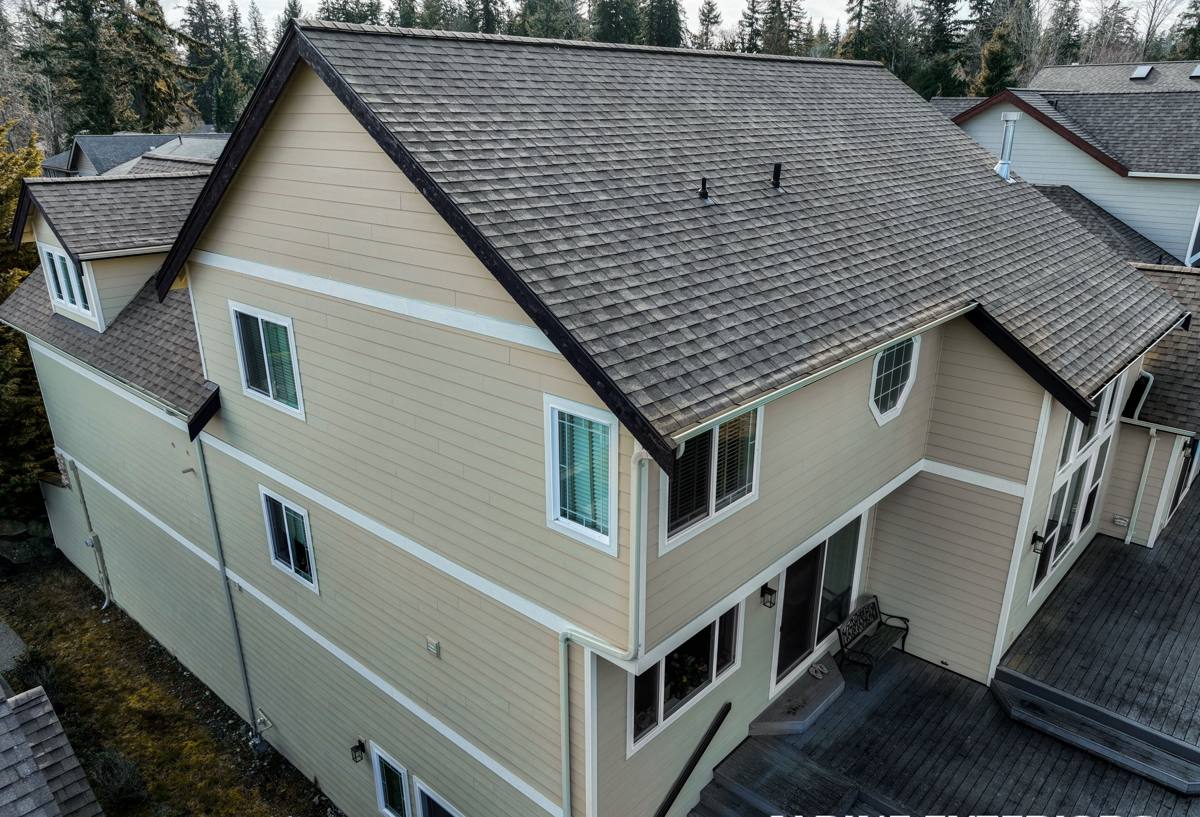
Why Downtown Bellingham Decks Fail Faster Than You'd Expect
A deck built the same way in Eastern Washington might last decades with minimal attention. In Downtown Bellingham, the same deck needs real maintenance and periodic repair because of a few compounding factors:
- Salt air corrosion: Proximity to the bay means airborne salt accelerates rust on fasteners, joist hangers, and structural screws — especially older galvanized hardware that wasn't rated for coastal exposure.
- Driving rain: Wind-driven rain off the water pushes moisture sideways into ledger connections, stair stringers, and any spot where flashing is missing or has failed.
- Moss and algae season: Bellingham's long, mild, wet stretch from fall through spring gives moss months to establish on deck boards, especially in shaded areas near mature trees. Moss holds moisture against the wood surface, which speeds up rot even when the boards look intact from a few feet away.
- Older homes, older decks: Many properties in and around Downtown Bellingham have decks that are original to the home or were added decades ago, often before current flashing and fastener standards were common practice.
None of this means a deck here is doomed — it means the maintenance and repair standard has to account for the environment, not just patch what's visibly broken.
Common Deck Problems We See in This Area
Ledger Board and Rim Joist Rot
The ledger board — where the deck attaches to the house — is the single most common failure point we find. If flashing was skipped or installed incorrectly, water gets trapped between the deck and the house siding and rots the ledger, the rim joist, or the wall sheathing behind it from the inside out. This is often invisible until the deck starts to feel loose where it meets the house.
Moss-Related Board Failure
Moss doesn't just look bad — it holds standing moisture against the top of deck boards, which is exactly the condition wood decay fungi need. Boards with heavy moss growth, especially on the shaded side of a deck, are worth inspecting even if they still feel solid.
Corroded or Failing Fasteners
Rust streaks around screw heads or nail holes are a sign the fasteners are corroding, which weakens the connection between boards and joists long before the wood itself fails. In salt-air conditions this happens faster than most homeowners expect.
Railing and Post Instability
Loose or wobbly railings are a safety issue, not just an annoyance. Post bases that sit in standing water or contact with wet soil are especially prone to rot at the base, which undermines the whole railing system even when the rest of the deck is sound.
Stair Stringer Deterioration
Stairs take direct rain exposure and constant foot traffic, and stringers are often the last thing anyone thinks to check. A stringer that's soft or checked at the base can fail without much warning.
What a Correct Deck Repair Actually Involves
A lot of "deck repair" is really just replacing whatever board looks bad and calling it done. That approach misses the cause and the problem comes back. Our process is built around finding and fixing the source of the moisture or structural issue, not just the symptom.
1. Inspection Below the Surface
We check ledger connections, joist condition, post bases, and flashing — not just the decking boards you can see standing on top. A deck can look fine on the surface with real structural problems underneath.
2. Moisture and Rot Mapping
We probe suspect areas to find the actual boundary of rot or decay rather than guessing. This tells us whether a repair can be localized or whether more of the structure needs attention.
3. Correct Flashing and Waterproofing
If the ledger board or a post base has failed due to trapped moisture, we address the flashing and water management, not just the wood — otherwise the same failure happens again in a few years.
4. Matched, Code-Appropriate Hardware
We use fasteners and structural hardware rated for exterior and coastal exposure, matched to the connection type, rather than whatever hardware happens to be on hand.
5. Structural Repair Before Cosmetic Repair
Joists, ledgers, posts, and stringers get addressed first. Decking boards and railings are replaced or repaired once the structure underneath is sound.
Repair vs. Replacement: How We Decide
Not every deck problem means a full rebuild, and not every deck is worth patching indefinitely. The table below outlines the general factors that push a decision one way or the other — every deck is different, so this is a starting point for a conversation, not a formula.
| Factor | Favors Repair | Favors Replacement |
|---|---|---|
| Extent of rot | Isolated to a few boards or one connection point | Widespread across joists, ledger, and decking |
| Structural framing condition | Solid, only surface boards affected | Joists or beams compromised |
| Deck age | Newer deck with a localized issue | Original framing decades old, near end of service life |
| Ledger/flashing condition | Flashing intact, isolated failure | Flashing missing or failed across the attachment |
| Code compliance | Meets current railing and structural standards | Undersized framing or non-compliant railing spacing |
We'll always tell you honestly which category your deck falls into rather than defaulting to the more expensive option.
Our Process, Start to Finish
- Free on-site inspection: We walk the deck, check structural connections, probe for rot, and look at drainage and flashing conditions specific to your lot.
- Written scope and estimate: You get a clear explanation of what's failing, why, and what fixing it correctly involves — no vague line items.
- Repair or rebuild: We complete the agreed scope, addressing structural issues before cosmetic ones, using fasteners and materials suited to coastal Whatcom County conditions.
- Final walkthrough: We review the completed work with you and flag any maintenance items worth watching, like shaded areas prone to moss regrowth.
Maintenance That Extends the Life of a Bellingham Deck
Even a well-built deck needs seasonal attention in this climate. A few habits make a real difference in how long a repair lasts:
- Sweep moss and debris off deck boards regularly during the wet months, especially in shaded corners.
- Keep gutters and downspouts clear so runoff isn't discharging directly onto or near the deck structure.
- Check railing posts and stair stringers annually for movement or soft spots, particularly after a hard winter.
- Reseal or refinish exposed wood on the schedule recommended for the specific product used — driving rain and UV exposure both shorten the interval compared to drier regions.
- Address small issues — a loose board, a hairline crack at a post base — before the next wet season rather than after.
Why Hire a Crew That Already Works in Downtown Bellingham
A contractor who works this neighborhood regularly already understands which lots hold moisture longest, which older homes tend to have outdated flashing details, and how much moss pressure a shaded deck is really under. That's not something you get from a crew that treats every job the same regardless of location. We bring that local familiarity into every inspection and repair, along with a straightforward answer about what your deck actually needs — no upsell, no guesswork.
Get a Free, No-Pressure Estimate
If your deck in or near Downtown Bellingham has soft spots, loose railings, or visible moss and staining, it's worth a look before the next wet season adds to the damage. Use the form below to request a free estimate — we'll come take a direct look and give you an honest read on what repair or rebuild would involve.