 Fairhaven Siding
 Composite Decking Built for Birchwood's Salt Air, Rain, and Moss
Birchwood sits close enough to Bellingham Bay that homes here deal with a version of weather that inland neighborhoods simply don't. Salt-laden air moves through the yard year-round, rain comes in sideways more often than straight down, and the shoulder seasons bring the kind of damp, low-light stretches that grow moss on anything that holds moisture. A deck built without those conditions in mind will show it within a few seasons — fasteners bleeding rust, boards cupping, moss creeping into seams. A deck built for them can go a decade or more with nothing but a seasonal cleaning.
This page is specifically about composite decking for the Birchwood area of Fairhaven, Washington, in Whatcom County. It's not a generic decking overview — it's what we've learned installing and repairing decks in this exact kind of coastal, tree-shaded, moisture-heavy environment, and what we think a homeowner here should actually know before signing a contract.
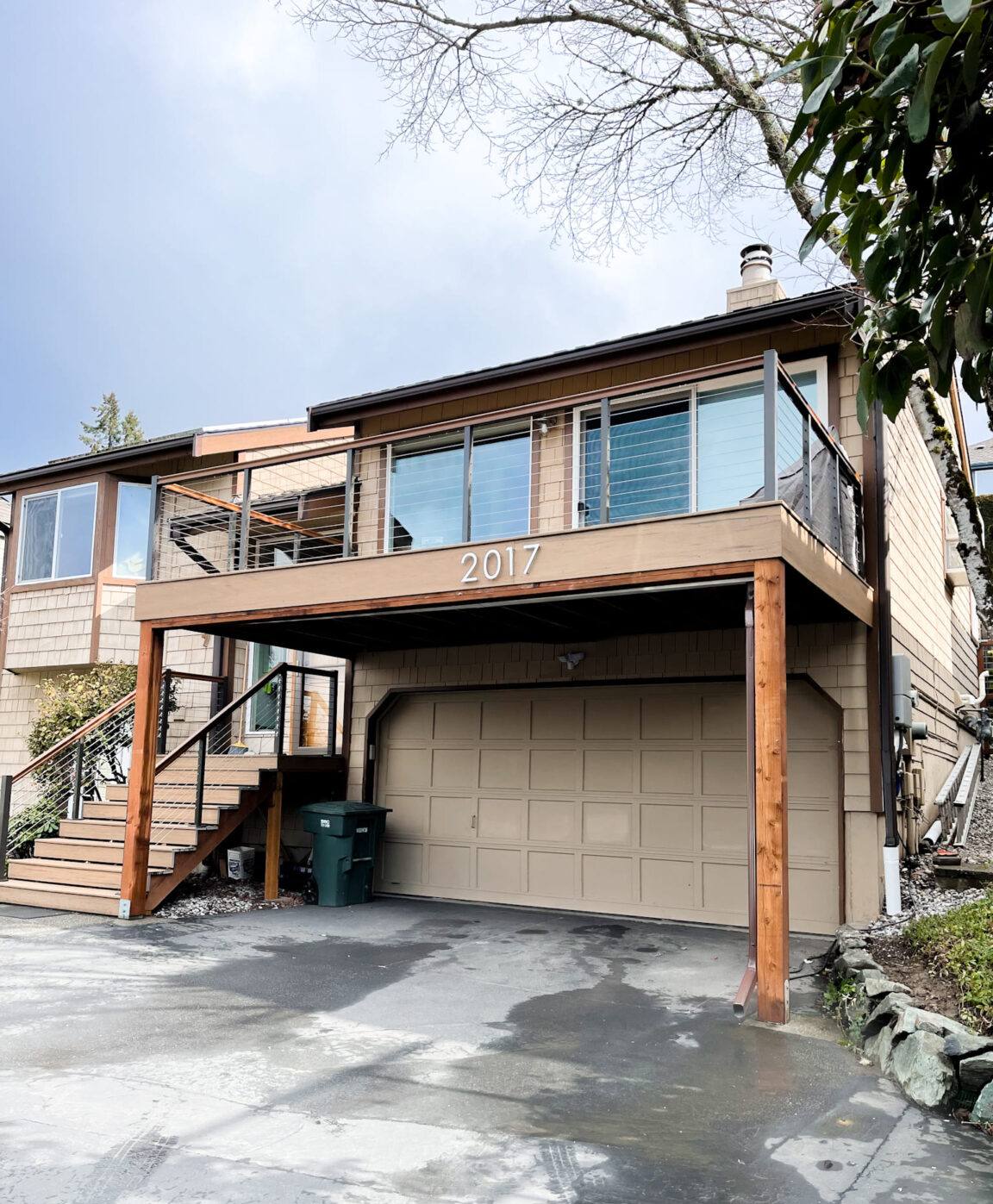
What Fairhaven's Marine Climate Does to a Deck Over Time
Salt Air and Metal Fasteners
Even a few miles from open water, airborne salt accelerates corrosion on anything but marine-grade or coated hardware. Standard galvanized screws and joist hardware can start showing rust streaks on light-colored composite boards within a year or two. It's a cosmetic problem at first, but it's also an early warning — once fasteners are corroding, their holding strength is dropping too.
Moss, Shade, and Standing Moisture
Whatcom County's tree cover and long wet winters mean a lot of Birchwood yards get filtered light at best, and some decks sit in near-constant shade for months. Moss and algae need moisture and low light to establish, and a deck surface that doesn't shed water quickly gives them exactly that. Once moss gets into board grooves or gaps, it holds water against the surface and becomes a slip hazard on top of a maintenance headache.
Driving Rain and Wind-Driven Water
Storms off the water tend to push rain sideways, not straight down. That matters for decking because it means water gets driven into fastener heads, board end-caps, and the gap between decking and house framing — areas that a purely "rain falls down" design doesn't protect. Flashing at the ledger board and proper end-gapping matter more here than they would somewhere with calmer, more vertical rainfall.
Why Composite Holds Up Better Than Wood in This Neighborhood
We install both wood and composite decking, and we're upfront with every homeowner about the trade-offs. In a climate like Fairhaven's, composite generally wins on total cost of ownership — not because wood is a bad material, but because wood asks for a level of upkeep that a lot of busy homeowners can't keep up with through a wet Pacific Northwest winter.
| Factor | Wood (Cedar/Pressure-Treated) | Composite |
|---|---|---|
| Moss/algae resistance | Needs regular cleaning and treatment | Resists growth better; still needs periodic washing |
| Salt air exposure | Accelerates weathering, splintering, fastener corrosion | Shell resists moisture intrusion; still needs corrosion-resistant hardware |
| Refinishing | Sanding/staining every 1-3 years | None required |
| Upfront cost | Lower material cost | Higher material cost |
| Expected lifespan (installed correctly) | 15-20 years with upkeep | 25-30+ years, most backed by manufacturer warranty |
Wood can still be the right call for some Birchwood homes — a smaller budget, a preference for real wood grain, or a shaded deck that gets refinished anyway. We'll give you a straight answer on both, not a sales pitch for whichever product has a better margin.
What a Correct Composite Deck Installation Actually Involves
Framing and Joist Protection
The composite boards get most of the attention, but the framing underneath is what determines whether the deck lasts. In a wet climate, untreated or unprotected joists are where rot starts, hidden under boards that look fine from above. We use joist tape or an equivalent moisture barrier on the top of every joist, which keeps standing water from soaking into the wood through fastener holes and cut ends.
Fastening Systems That Won't Streak or Loosen
Hidden fastener clip systems are standard on most composite decks now, and for good reason — no exposed screw heads means no rust streaks and a cleaner surface for water to shed off of. Where face-screwing is necessary (stair stringers, picture-frame borders, fascia), we use coated, corrosion-resistant fasteners rated for the salt exposure this area sees, not generic hardware-store screws.
Drainage and Airflow Underneath
A deck built low to the ground or against a house wall without adequate ventilation traps moisture underneath, which is exactly where moss, mold, and rot get started out of sight. We plan gaps, vents, or a proper substructure drainage system so air can move under the deck and water has somewhere to go besides sitting on the ground beneath it.
Railings, Stairs, and Fascia Details
These are the parts that fail first on a poorly built deck because they take the most direct weather exposure and the most physical stress. Post bases need to be properly flashed and sealed where they meet the decking, stair stringers need the same moisture protection as the main frame, and fascia boards need end-cap treatment so the composite core isn't left exposed to soak up rain.
Choosing a Board for a Coastal, Shaded Yard
Not every composite board is built the same, and the differences matter more in a climate like this one. The biggest variable is whether the board is capped on all four sides or only on the top and sides.
| Board Type | Moisture Resistance | Typical Cost Tier | Best Fit |
|---|---|---|---|
| Uncapped composite | Lower — core can absorb moisture at cut ends | Lowest | Budget projects, covered/dry areas |
| Capped (top/sides only) | Good — exposed ends need caps or sealant | Mid-range | Most standard decks |
| Fully capped (all 4 sides) | Best — sealed core resists moisture from every angle | Highest | Shaded, damp, or high-exposure sites like much of Birchwood |
For a shaded Birchwood lot that stays damp for long stretches of the year, we usually steer homeowners toward a fully capped board or, at minimum, insist on properly treated cut ends. The cost difference up front is smaller than the cost of dealing with a swollen, discolored board edge five years in.
How Our Process Works, Start to Finish
Every project follows the same sequence, whether it's a full deck rebuild or a repair-and-extend job on an existing structure:
- On-site assessment of the existing structure (if any), drainage, shade exposure, and ledger board condition
- Honest recommendation on board type and fastening system based on the specific site, not a one-size-fits-all pitch
- Written estimate with material and labor broken out, no vague allowances
- Permit pull where required, framing and joist protection installed first
- Decking installed with hidden fasteners and corrosion-resistant hardware throughout
- Railing, stair, and fascia details finished and sealed
- Final walkthrough where we point out what maintenance the deck actually needs, and what it doesn't
Maintenance Birchwood Homeowners Actually Need to Do
Composite decking is low-maintenance, not no-maintenance, and it's worth being honest about the difference. In this climate, the main job is keeping moss and organic debris from building up in board grooves and gaps, since that's what holds moisture against the surface. A seasonal wash with a deck cleaner and a stiff (non-metal) brush handles most of it — pressure washers can be used but at a wide angle and safe distance so they don't strip the board's texture.
Beyond cleaning, it's worth a quick yearly check of railing posts, stair connections, and any face-screwed hardware for early rust or looseness, especially after a hard winter. Catching a corroding fastener early is a five-minute fix; catching it after it's failed and taken a board with it is not.
Permits and Whatcom County Considerations
Most deck projects in and around Fairhaven require a building permit, particularly for anything attached to the house, elevated above a certain height, or involving structural framing changes. Requirements can also touch on setback distances and, depending on the lot, critical areas review given the proximity to shoreline environments common in this part of Whatcom County. We handle the permit process as part of the job rather than leaving it for the homeowner to figure out, and we won't cut that step to save time — an unpermitted deck can become a real problem at resale.
Why Hire a Crew That Already Works in Birchwood
A lot of decking problems we get called to fix weren't caused by bad materials — they were caused by a build that didn't account for this area's specific weather. A crew that mostly works inland, or mostly works dry-climate jobs, doesn't automatically think about joist tape, end-cap sealing, or corrosion-rated hardware as non-negotiables. Around here, they are.
We work siding and decking projects throughout Fairhaven and the surrounding Whatcom County area, which means we're already familiar with how the salt air, rain patterns, and shade conditions in neighborhoods like Birchwood affect exterior work — decking included. That's not a marketing line, it's just what happens when a crew keeps working the same coastal conditions job after job.
If you're planning a new deck or replacing one that's showing its age, we're happy to take a look and give you a straightforward, no-pressure estimate — what it would take to build it right for this specific site, with no upsell and no guesswork. The form below gets you started whenever you're ready.