 Fairhaven Siding
 Roofing on an Island: Why Lummi Island's Exposure Is Different
Lummi Island sits out in the marine air of Whatcom County, separated from the mainland by a short ferry crossing. That separation matters more than most homeowners realize when it comes to roofing. Wind off the water carries salt and moisture further inland than it does in a typical Fairhaven neighborhood, and the island's tree cover means many roofs sit in partial shade for large stretches of the day. The combination of salt exposure, driving rain off the Strait, and shade that slows drying is a specific set of conditions, and it calls for a repair approach that accounts for all three rather than a generic patch job.
We've worked on roofs across Whatcom County long enough to see how island exposure differs from a sheltered lot a few miles inland. A repair that would hold up fine in a dry, open subdivision can fail early on Lummi Island if it doesn't account for the extra moisture load and the corrosion salt air causes on fasteners and flashing.
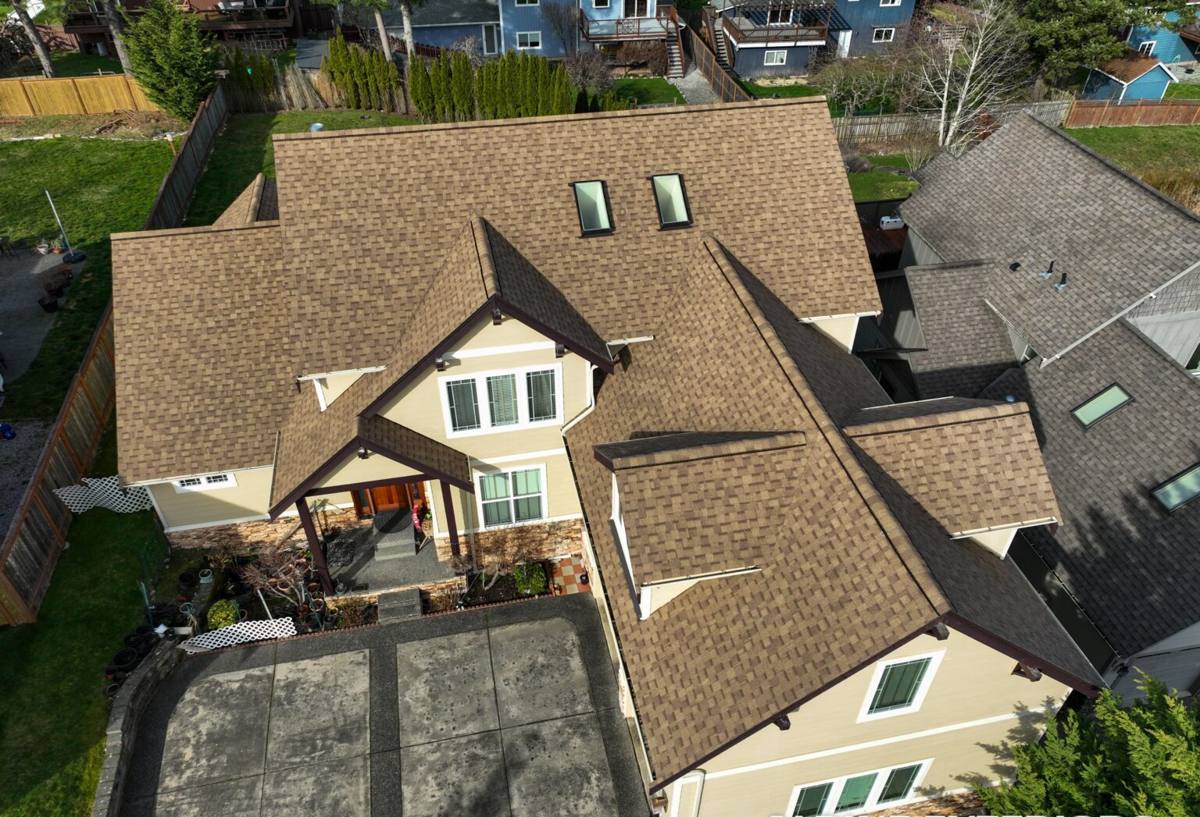
What Salt Air, Rain, and Moss Do to a Roof Over Time
Three separate stressors are at work on an island roof, and they compound each other.
Salt Air and Corrosion
Airborne salt accelerates corrosion on exposed metal — nail heads, flashing, gutter fasteners, and any exposed metal roofing panels. Once a fastener starts to corrode, it loses holding power and can back out or leave a gap that lets water in. This happens faster near the shoreline but affects roofs across the island to some degree.
Driving Rain
Wind-driven rain doesn't just fall straight down — it gets pushed sideways and upward under shingle edges, around vent boots, and into any small gap in flashing. A roof that would shed a light, vertical rain without issue can still take on water when the same amount of rain arrives sideways during a storm system moving through the Strait of Georgia.
Moss and Prolonged Moisture
Whatcom County's long wet season, combined with shaded roof sections on tree-covered island lots, gives moss plenty of time to establish. Moss holds moisture directly against roofing material, which shortens the life of asphalt shingles, degrades underlayment faster, and can lift shingle edges as root-like structures work into the granules and seams. Left unaddressed, a moss-covered section of roof will fail well before the rest of the roof does.
Signs Your Lummi Island Roof Needs Repair
Catching problems early is the difference between a modest repair and a much larger one. Here's what we tell island homeowners to watch for between inspections:
- Moss or dark streaking concentrated on shaded or north-facing roof slopes
- Granules collecting in gutters or at the base of downspouts
- Curling, cupping, or lifted shingle edges, especially near ridges and eaves
- Rust staining below metal flashing, vents, or fasteners
- Soft spots or discoloration on interior ceilings after a hard rain
- Daylight visible through the roof deck from inside an attic
- Flashing that's separated, bent, or missing sealant around chimneys and vent pipes
- Gutters pulling away from the fascia or overflowing during moderate rain
Any one of these on its own may be a minor fix. Several appearing together usually means water has been getting in for a while and the repair needs to address more than the surface symptom.
What a Correct Roof Repair Actually Involves
A repair that only replaces the visibly damaged shingles often misses what's underneath. On a coastal, moss-prone roof, we treat a repair as three steps, not one:
1. Find the Actual Entry Point
Water travels. A stain on a ceiling is rarely directly below the spot where water is entering the roof — it often runs along rafters or sheathing before dripping. A correct repair starts by tracing the leak back to its source, not just patching where the stain shows up.
2. Assess the Deck and Underlayment
If water has been getting past the roofing surface for any length of time, the underlayment and roof deck underneath need to be checked for saturation or rot. Patching new shingles over a compromised deck doesn't solve the problem — it just hides it until the next storm.
3. Rebuild the Water Path Correctly
Roofing works as a system of overlapping layers designed to shed water downhill, with flashing doing the work at every transition — valleys, chimneys, vent pipes, and wall intersections. A repair has to restore that overlap and flashing correctly, not just seal a gap with caulk, which fails fast in this climate and hides the real problem instead of fixing it.
Common Roofing Materials on Island and Coastal Homes
Different roofing materials handle salt air, rain, and moss differently. Here's how the common options compare for repair and long-term performance in this environment:
| Material | Salt Air Resistance | Moss Resistance | Typical Repair Approach |
|---|---|---|---|
| Asphalt Composition Shingle | Good with corrosion-resistant fasteners | Moderate — needs periodic cleaning | Localized shingle and underlayment replacement |
| Metal (standing seam or panel) | Very good with proper coating and fasteners | Very good — sheds moisture quickly | Seam and fastener resealing, panel section replacement |
| Cedar Shake | Fair — needs regular maintenance | Lower — moisture retention promotes growth | Shake replacement, ventilation and treatment check |
| Torch-down / Membrane (low slope) | Good | Good on slope, ponding areas are a risk | Seam and penetration repair, ponding correction |
Every material listed here can be a sound choice when it's installed and maintained correctly. Our job during a repair is to work with what's already on your roof and bring it back to a state where it's doing its job, not to push a different material unless the existing one is genuinely at the end of its service life.
Our Repair Process for Lummi Island Homes
Because getting a crew and materials to the island involves a ferry crossing, we plan island jobs a little differently than a mainland Fairhaven repair.
- Assessment first. We look at the roof from the ground and, where safe and necessary, up close — checking the areas most exposed to wind-driven rain and shade-driven moss growth.
- Honest scope. We tell you plainly whether this is a targeted repair, a larger section replacement, or something that's approaching full roof replacement territory. We don't pad a small job into a big one, and we don't undersell a job that genuinely needs more work.
- One trip, fully equipped. Because of the ferry, we plan materials and crew for island jobs to minimize return trips — we bring what the assessment tells us we'll need.
- Repair the system, not just the symptom. Flashing, underlayment, and deck condition are addressed alongside the visible shingle or panel damage.
- Clean up and walk-through. We clear debris and old material from the site and walk you through exactly what was done and why.
Repair vs. Replacement: How We Help You Decide
Not every damaged roof needs to be replaced, and not every repair is a good long-term investment. These are the factors that actually drive the decision:
| Factor | Favors Repair | Favors Replacement |
|---|---|---|
| Age of roof | Roof is within the first half of its expected service life | Roof is at or past its expected service life |
| Extent of damage | Damage is limited to one section or a few penetrations | Damage is spread across multiple slopes |
| Deck condition | Deck is sound under the damaged area | Deck shows rot or widespread saturation |
| Moss history | First occurrence, addressed early | Repeated, long-standing moss growth with granule loss |
| Prior repairs | This is the first repair in several years | Roof has needed several repairs in a short span |
We'll walk you through where your roof lands on this table before recommending either path — the goal is the option that actually makes sense for your roof's condition, not the more expensive one.
Why Hiring a Crew That Already Works on Lummi Island Matters
A contractor unfamiliar with island logistics can turn a simple repair into a multi-week ordeal — miscounted materials mean another ferry trip and another delay, and a crew that doesn't understand how moss and salt air behave together on shaded coastal roofs can misdiagnose a leak entirely. Working regularly in this specific environment means we know which fastener coatings hold up, which flashing details need extra attention in wind-driven rain, and how to plan a job around a ferry schedule instead of getting caught off guard by it. That familiarity translates directly into fewer surprises and a repair that's scoped correctly the first time.
Keeping a Repair From Becoming a Repeat Job
Once a repair is done, a little regular maintenance goes a long way in this climate, particularly on shaded or tree-covered lots:
- Clear gutters and downspouts at least twice a year, more often under heavy tree cover
- Have moss growth addressed while it's light, rather than after it's established
- Trim back overhanging branches to reduce shade and debris buildup on the roof
- Schedule a visual roof check after any major windstorm off the Strait
- Keep an eye on attic ventilation — trapped moisture indoors accelerates deck and underlayment wear
If you're dealing with a leak, visible moss, or just want a second opinion on a roof's condition before it becomes a bigger problem, we're happy to take a look. Reach out for a free, no-pressure estimate using the form below.