 Fairhaven Siding
 Why Downtown Bellingham Roofs Wear Differently
A roof in Downtown Bellingham does not age the same way a roof does forty miles inland. The combination of Bellingham Bay's salt-laden air, long stretches of driving rain off the Sound, and a moss season that can run eight months or longer puts a different kind of stress on asphalt shingles than most manufacturers account for in their generic warranty language. We install and repair asphalt shingle roofs throughout Fairhaven and Downtown Bellingham, and the pattern is consistent: roofs that were built with standard practices from drier climates fail early here, usually at the granule surface, the flashing details, and the ventilation.
This page is specifically about asphalt shingle roofing for homes in and around Downtown Bellingham — what the climate actually does to a roof here, what a correctly built system looks like, and how we approach the work so it holds up through Whatcom County winters instead of just looking good on install day.
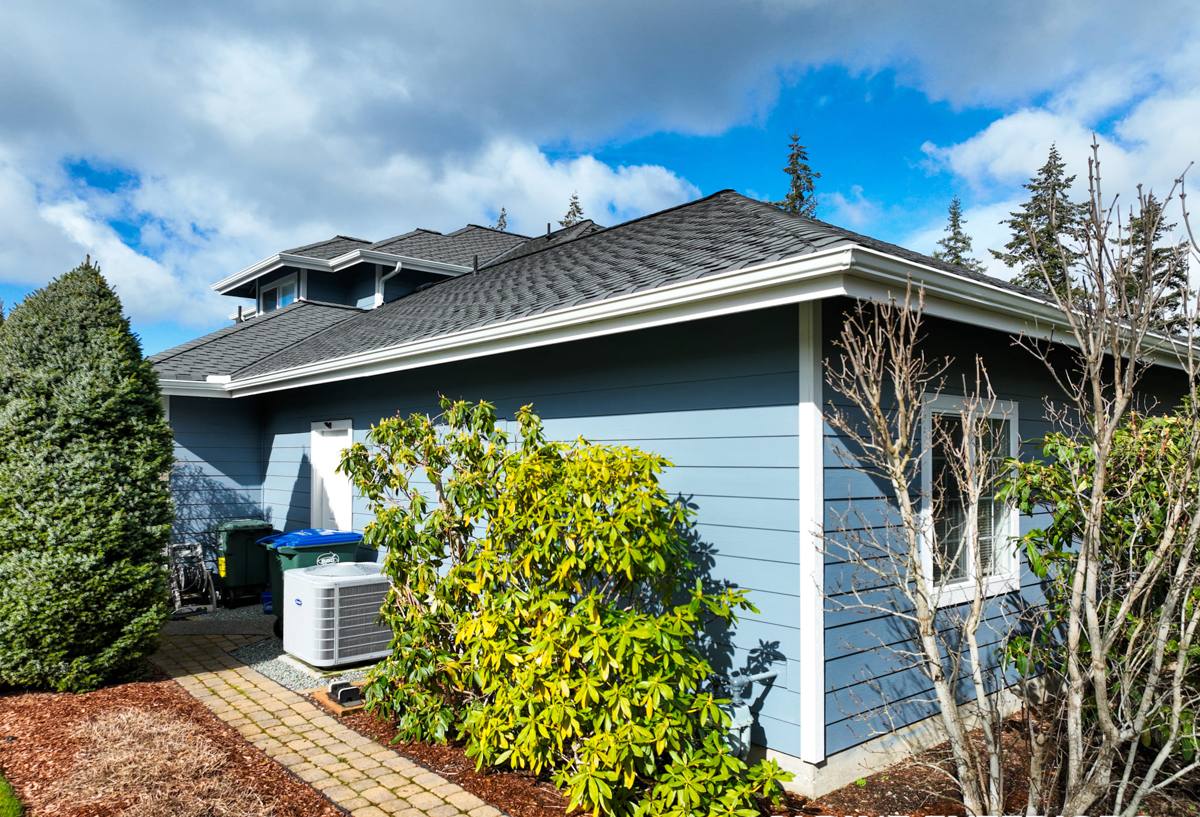
What Salt Air, Rain, and Moss Actually Do to Shingles
Salt Air and Corrosion
Homes closer to the waterfront edge of Downtown Bellingham see airborne salt that accelerates corrosion on exposed metal — nail heads, flashing, drip edge, and vent stacks. Standard electro-galvanized fasteners and thin-gauge flashing can start showing rust streaks and pinholing years before the shingles themselves are due for replacement. Once a fastener corrodes, it loses grip, and a shingle that was sealed down tight can start to lift in wind.
Driving Rain and Wind-Driven Moisture
Rain here rarely falls straight down. Wind off the bay pushes it sideways, which means water gets tested against every lap, seam, and penetration on the roof — not just the open field of shingles. Roofs that would perform fine in a calmer climate with the same materials can leak at Downtown Bellingham because the water is being forced uphill under shingle edges and around chimneys, skylights, and vent boots.
Moss and Organic Growth
Whatcom County's damp, mild winters are close to ideal conditions for moss. Moss holds moisture against the shingle surface far longer than open air would, which softens the asphalt mat over time, lifts shingle edges as it grows under them, and traps organic debris in valleys where it can dam water back under the shingle courses. Roofs shaded by mature trees or facing north, which is common in Downtown Bellingham's older, tree-lined blocks, are especially prone to this.
What a Correct Asphalt Shingle Roof Needs in This Climate
None of the above means asphalt shingles are a bad fit for Downtown Bellingham — they remain one of the most cost-effective, widely available roofing systems, and a well-built asphalt roof can perform for decades here. The issue is that "well-built" means something more specific in this climate than it does elsewhere. Here is what we consider non-negotiable on a Downtown Bellingham roof:
- Stainless or hot-dip galvanized fasteners and flashing in areas closer to the waterfront, not standard electro-galvanized
- A fully sealed, self-adhered ice-and-water membrane at eaves, valleys, and all penetrations — not just felt underlayment
- Balanced intake and exhaust ventilation so moist interior air isn't condensing against the underside of the roof deck
- Wider, properly lapped step flashing and counterflashing at chimneys and walls, sized for wind-driven rain rather than minimum code
- Shingle rated for higher wind exposure given the funneling effect of the bay and surrounding hills
- A moss-resistant strategy built into the install, not just an annual treatment applied after the fact
A roof missing any one of these can still look fine for a year or two. The failures we get called for are almost always traced back to one of these shortcuts.
Shingle Options and How They Hold Up Locally
We install a range of asphalt shingle products, and the right choice depends on the home's exposure, roof pitch, budget, and how much moss and algae resistance the owner wants built in. The table below compares the categories we most commonly recommend for Downtown Bellingham and Fairhaven homes.
| Shingle Type | Typical Lifespan Here | Moss/Algae Resistance | Best Fit |
|---|---|---|---|
| 3-tab (standard) | 12-18 years in this climate | Low unless treated | Budget rehabs, secondary structures |
| Architectural / laminate | 20-30 years | Moderate; better with algae-resistant granules | Most primary homes |
| Algae-resistant architectural (copper/zinc granules) | 25-30 years | High | Shaded lots, north-facing slopes, waterfront-adjacent homes |
| Impact-rated / high-wind architectural | 25-30+ years | Moderate to high, product dependent | Exposed sites, higher elevations, open bay views |
We steer most Downtown Bellingham homeowners toward an algae-resistant architectural shingle. It costs somewhat more up front than standard architectural shingles, but the copper or zinc granule treatment meaningfully slows moss and algae colonization, which is the single biggest driver of premature shingle failure we see in this area. On heavily shaded or north-facing roofs, that upgrade tends to pay for itself in avoided cleaning and early replacement.
Our Process for a Downtown Bellingham Roof
1. Inspection and Diagnosis
We start by getting on the roof, not just looking at it from the ground. We check the deck for soft spots, evaluate existing flashing and ventilation, look at moss patterns to understand which parts of the roof stay wet longest, and identify any fastener corrosion. If the roof is a repair candidate rather than a full replacement, we say so.
2. Tear-Off and Deck Assessment
Full replacements start with a complete tear-off so we can see the actual deck condition, not guess at it. Any water-damaged sheathing gets replaced before anything new goes down — covering a soft deck with new shingles just hides a problem that will resurface as a leak or sag later.
3. Underlayment and Water Management
Given how much of Downtown Bellingham's roof damage traces back to wind-driven rain and standing moisture, we install self-adhered ice-and-water membrane at all eaves, valleys, and penetrations, with synthetic underlayment across the rest of the field. This is the layer that protects the home even if a shingle is ever compromised by wind or debris.
4. Flashing and Ventilation
New step flashing, counterflashing, and drip edge go in at every wall intersection, chimney, and penetration, sized and lapped for this climate rather than the local code minimum. We balance intake vents (soffit) with exhaust vents (ridge or roof-mounted) so moist air actually moves out of the attic instead of condensing on the deck from underneath, which is a slower but just as damaging cause of rot.
5. Shingle Installation
Shingles go down with the fastener pattern and nailing specification the manufacturer requires for the wind zone, using corrosion-resistant fasteners. We pay particular attention to valleys and hips, which is where wind-driven rain and moss debris cause the most trouble on local roofs.
6. Final Walkthrough and Cleanup
We walk the finished roof, check every penetration and flashing detail, and do a full site cleanup including a magnetic sweep for stray fasteners in the yard and driveway.
Repair, Maintenance, or Full Replacement?
Not every roof problem in Downtown Bellingham calls for a full tear-off. We evaluate honestly and tell you which category the roof falls into:
- Maintenance: Moss removal and treatment, gutter and valley debris clearing, minor flashing sealant touch-ups on an otherwise sound roof
- Repair: Localized shingle replacement after storm damage, re-flashing a single chimney or wall intersection, fixing an isolated leak source
- Full replacement: Widespread granule loss, multiple leak points, deck damage, or a roof past 20-25 years with visible curling, cracking, or lifted shingles across the field
A roof that's had regular moss treatment and decent ventilation can often be repaired well past what an untreated, poorly ventilated roof of the same age can support. We'll tell you which situation you're in rather than defaulting to a full replacement recommendation.
Signs Your Downtown Bellingham Roof Needs Attention Now
Because this climate accelerates certain failure points, it's worth knowing what to watch for between inspections:
- Moss growth thicker than a light green film, especially in shaded valleys or north-facing slopes
- Granules collecting in gutters or at the base of downspouts
- Shingle edges curling or lifting, particularly on the side of the roof facing prevailing wind
- Rust streaking below flashing, vent stacks, or exposed fastener heads
- Daylight or water staining visible in the attic near chimneys, skylights, or valleys
- Sagging or soft-feeling sections when walked, which usually indicates deck damage underneath
Why a Crew That Already Works Downtown Bellingham Matters
Roofing crews that mostly work drier, inland climates default to practices that are adequate there but undersized here — standard fasteners, minimum-code ventilation, felt underlayment instead of self-adhered membrane at critical points. A crew that regularly works Fairhaven and Downtown Bellingham already knows which slopes hold moss longest, which wall-roof intersections take the worst of the wind-driven rain, and which fastener and flashing upgrades are worth the extra cost here even when they're not required by code. That local pattern recognition is the difference between a roof that needs attention again in five years and one that goes the full service life of its shingles.
Getting an Honest Estimate
If you're seeing moss buildup, granule loss, or a leak, or you just want a straight answer on whether your roof needs repair or replacement, we're happy to come take a look. We'll walk the roof, explain what we find in plain terms, and give you options rather than a single high-pressure recommendation. Use the form below to request a free, no-pressure estimate for your Downtown Bellingham or Fairhaven home.