 Fairhaven Siding
 Why Sehome Roofs Take a Different Kind of Beating
Sehome sits close enough to the water and the hills around it that roofs here deal with a mix of conditions many inland homes never see. Salt-laden air drifts in off the bay and slowly works on exposed metal — nail heads, flashing, vent caps — long before most homeowners notice anything wrong. Add in Whatcom County's driving rain, which tends to come in sideways during winter storms instead of falling straight down, and you get water finding its way into laps and seams that would stay dry in a calmer climate. Then there's the shade. Sehome's mature trees and closely spaced lots keep parts of many roofs damp for days after a storm, and that dampness is exactly what moss and algae need to take hold.
None of this means asphalt shingle roofing is a poor fit for the neighborhood — it's still one of the most practical, cost-effective roofing systems available, and the majority of Sehome homes wear it well. But it does mean the installation details matter more here than they would in a drier climate. A roof put on with regional shortcuts, or installed by a crew unfamiliar with how Whatcom County weather actually behaves, tends to show problems years before it should.
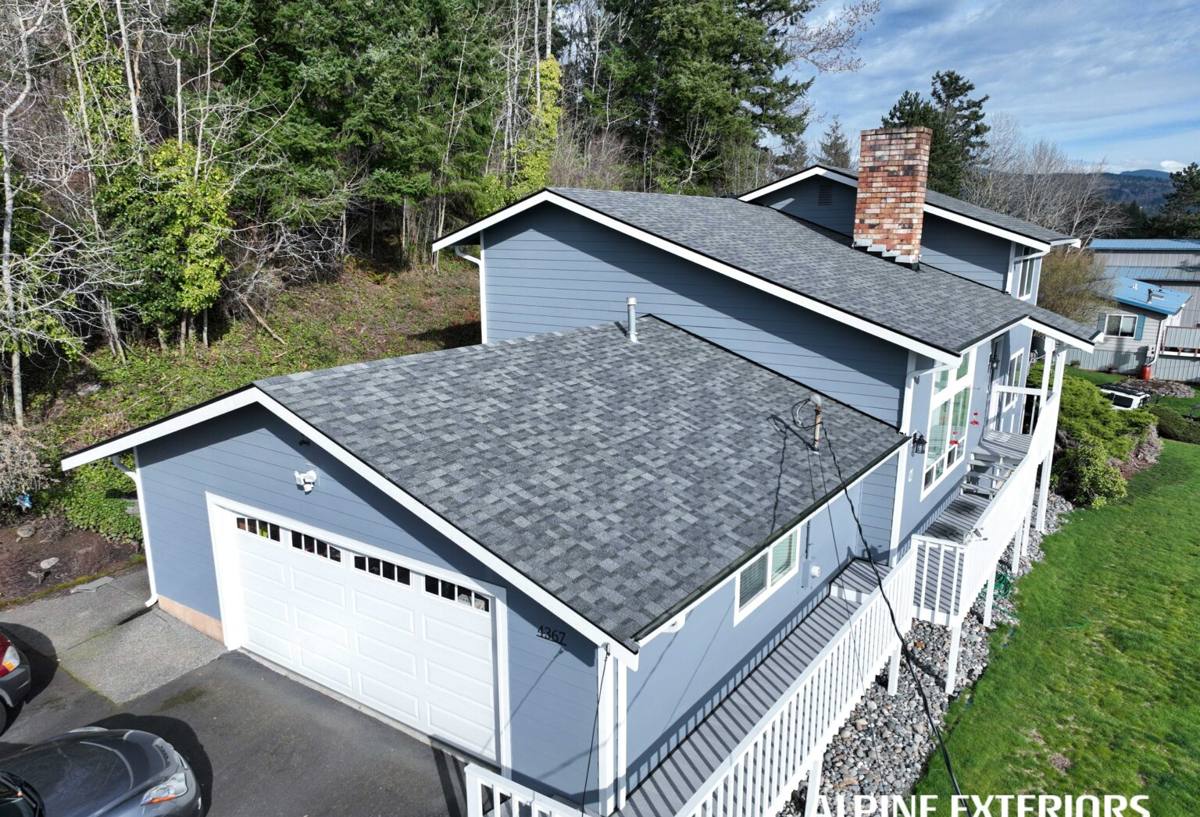
What a Correct Asphalt Shingle Roof Looks Like Here
A shingle roof is really a system, not a single product. The shingles get the attention, but what's underneath and around them decides whether the roof performs for its full expected life or fails early at the edges, valleys, and penetrations.
Underlayment and Water Protection
Given how much wind-driven rain the area sees, we treat underlayment as a real second layer of defense, not a formality. Synthetic underlayment across the full deck, with self-adhered ice-and-water membrane at eaves, valleys, and around every roof penetration, gives the roof a backup when wind pushes rain up under the shingle tabs — which it will, at some point, on almost every roof in this climate.
Ventilation
A shingle roof with poor attic ventilation traps moisture underneath the deck, which shortens shingle life from below while the weather works on it from above. Balanced intake at the eaves and exhaust at the ridge keeps air moving, which also helps prevent the ice-damming and condensation issues that show up during Whatcom County's colder, wetter stretches.
Flashing Details
Most roof leaks don't come from the shingle field — they come from flashing that was reused, undersized, or installed with too much reliance on caulk instead of proper metalwork. Step flashing at walls, counterflashing where a roof meets siding or a chimney, and correctly lapped valley metal are what actually keep water out long-term, especially with the sideways rain this area gets several months a year.
Shingle Options for Sehome Homes
Not every shingle line performs the same way in a marine, moss-prone climate. Here's how the common tiers compare for a Whatcom County home:
| Shingle Type | Typical Lifespan | Best For | Trade-Offs Here |
|---|---|---|---|
| 3-Tab (economy) | 15–20 years | Budget-driven projects, rentals | Lower wind rating; shows algae staining sooner in shaded, damp areas |
| Architectural / Dimensional | 25–30 years | Most Sehome homes | Best balance of cost, durability, and wind resistance for this climate |
| Algae-Resistant (AR) Architectural | 25–30 years | Shaded lots, north-facing slopes | Copper or zinc granules resist the dark streaking common under trees |
| Premium / Designer | 30+ years | Homes prioritizing appearance and longevity | Higher upfront cost; heavier profile can require deck/structure check |
For most Sehome properties, we lean toward algae-resistant architectural shingles. The upcharge over standard architectural shingles is modest, and given how much tree cover and moisture the neighborhood has, it's one of the few upgrades that pays for itself in reduced staining and fewer moss treatments over the roof's life.
Moss, Algae, and the Long Wet Season
Moss doesn't just look bad — it holds moisture directly against the shingle surface and can work its way under tabs at the edges, lifting them over time. In a climate where roofs can stay damp for extended stretches between dry spells, moss isn't a cosmetic issue so much as a maintenance schedule you need to plan for.
Zinc or copper strips installed near the ridge are a simple, low-maintenance way to reduce regrowth on a new roof, since rain carries trace metal ions down the shingle field and discourages moss from establishing. We also make sure valleys and low-slope sections are free of debris traps — small design choices during installation that make a real difference in how much moss a roof develops over its first several years.
Our Process From First Call to Final Walkthrough
We keep the process straightforward, because a roof replacement is disruptive enough without added confusion about what's happening and when.
- On-site assessment — we inspect the existing roof, deck condition, ventilation, and any problem areas (valleys, chimneys, skylights) before quoting anything.
- Written estimate — a clear scope of work and price, with shingle options laid out so you're choosing based on real trade-offs, not guesswork.
- Scheduling around weather — we watch the forecast closely and plan tear-off days to avoid leaving a deck exposed during a rain system, which matters more here than in drier regions.
- Tear-off and deck inspection — old material comes off, and we check the sheathing for soft spots or rot before anything new goes down. Any deck repair is discussed with you before we proceed, not discovered after the fact on the invoice.
- Underlayment, flashing, and shingle installation — installed to the standards above, not just to code minimums.
- Cleanup and walkthrough — magnetic sweep for nails, debris haul-off, and a final walk so you can see the finished work and ask questions before we consider the job done.
What Drives Roofing Cost Here
Every roof is different, but the factors that actually move the price on a Sehome shingle roof tend to be the same handful of variables:
| Factor | Why It Matters |
|---|---|
| Roof size and complexity | Steeper pitches, multiple valleys, and dormers all add labor and material |
| Layers of existing roofing | Full tear-off of old layers takes more time than a single-layer removal |
| Deck condition | Rotted or soft sheathing needs replacement before new shingles go down |
| Shingle tier chosen | Standard architectural vs. algae-resistant vs. premium lines |
| Ventilation upgrades | Adding or correcting ridge/soffit venting where the existing setup is inadequate |
| Access and site conditions | Trees, tight lots, and steep driveways common in Sehome can affect staging and cleanup |
We'd rather walk a roof and give you real numbers than quote a broad range that doesn't reflect your actual home. If you want a ballpark before that, most full shingle replacements on a typical Sehome home land in the moderate-to-upper range for the region — but deck repairs, layer removal, and shingle choice can move that meaningfully in either direction.
Signs Your Sehome Roof Needs Attention
Given the climate, we recommend homeowners keep an eye out for these warning signs rather than waiting for an obvious leak:
- Granules collecting in gutters or at downspout outlets
- Shingle edges curling or lifting, especially on south- and west-facing slopes
- Visible moss or dark algae streaking, particularly on shaded sections
- Soft or spongy spots when walking the roof (best assessed by a professional)
- Daylight visible through the attic roof deck, or damp insulation below it
- Flashing that looks rusted, lifted, or heavily caulked as a past patch job
- Rooms below the roofline that feel unusually humid or develop musty odors
Catching these early usually means a repair instead of a full replacement — but only if someone who knows what they're looking at gets up there before the damage spreads to the deck or interior.
Why Local Experience in Sehome Matters
A roofing crew that regularly works Whatcom County neighborhoods like Sehome knows things that don't show up in a general installation manual: which slopes hold moss longest given the local tree cover, how much wind-driven rain a given roof orientation actually takes in a typical winter, and which flashing details tend to fail first on homes of the age and style common in this area. That local pattern recognition is part of what keeps a roof performing for its full expected lifespan instead of needing early intervention.
It also means faster response when something does go wrong. A storm-damaged roof or a sudden leak doesn't wait for a convenient time, and having a contractor already familiar with the neighborhood — not one driving in from outside the region for the first time — makes a real difference in how quickly a problem gets addressed.
Maintenance That Extends the Life of a New Roof
A properly installed shingle roof in this climate still benefits from basic upkeep. Clearing overhanging branches keeps debris and shade off the shingles, which slows moss growth. Keeping gutters clear prevents water from backing up under the lower courses during heavy rain. A light annual visual check — from the ground or by a professional — catches small issues like a lifted shingle or a cracked pipe boot before they turn into a deck-level repair. None of this is complicated, but skipping it is one of the most common reasons a well-installed roof underperforms its expected lifespan.
If you're weighing a repair, a full replacement, or just want an honest read on where your current roof stands, we're happy to take a look. Reach out for a free, no-pressure estimate using the form below.