 Fairhaven Siding
 Asphalt Shingle Roofing Built for Sudden Valley Conditions
Sudden Valley sits in a part of Whatcom County where the roof over your head works harder than it does almost anywhere else in the state. Between the marine air rolling in off the water, long stretches of driving rain through fall and winter, and a moss season that seems to start earlier every year, an asphalt shingle roof here needs more than a good-looking install day. It needs the right materials, the right ventilation, and the right details at every edge and penetration — done by people who understand what this climate actually does to a roof over ten, fifteen, twenty years.
We install and repair asphalt shingle roofing for homes throughout Sudden Valley and the surrounding Fairhaven area. This page covers what that work actually involves, what separates a roof that holds up from one that doesn't, and what to expect if you're getting ready to replace or repair yours.
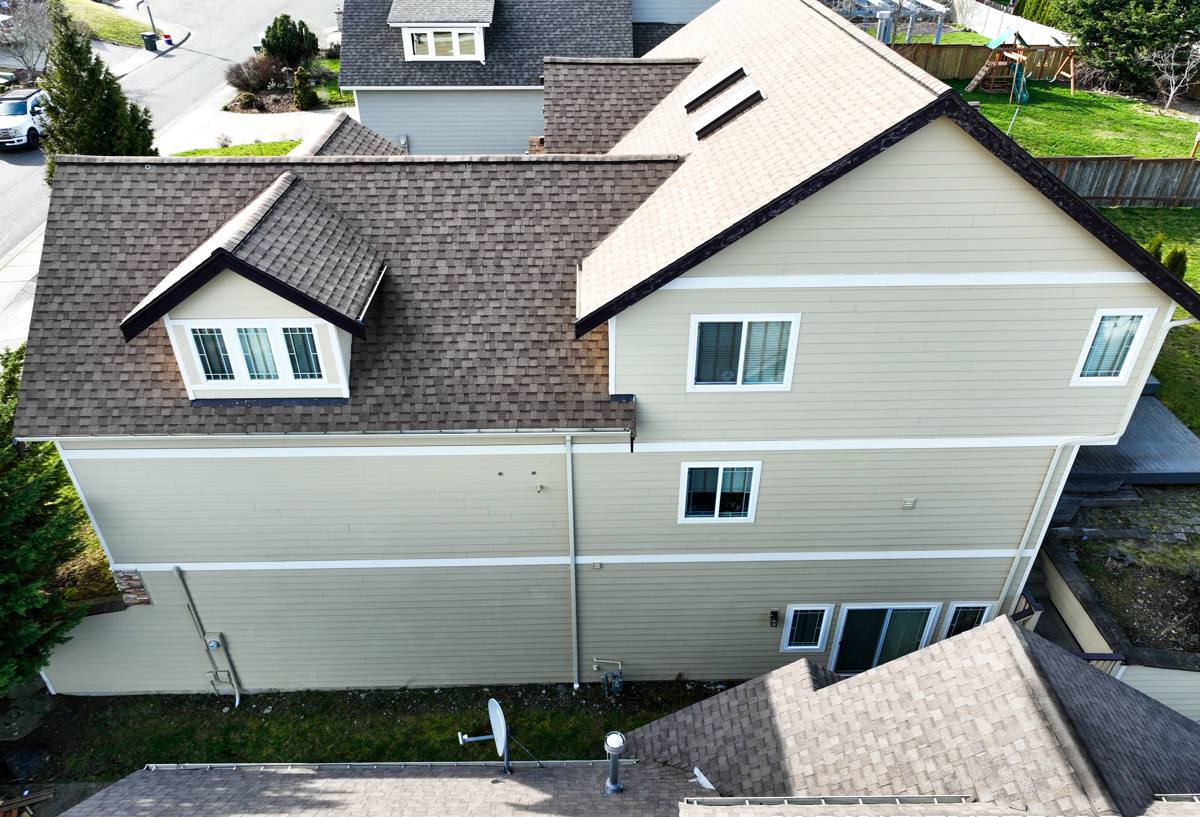
What This Climate Does to a Shingle Roof
Asphalt shingles are a proven, cost-effective roofing product — but they're only as good as the environment they're asked to perform in and the installation quality underneath them. A few things about the local climate matter more than homeowners usually expect:
Salt Air and Moisture
Proximity to the water means airborne salt and near-constant humidity, which accelerates wear on metal flashing, fasteners, and vent components faster than it would inland. Cheap or mismatched metal at valleys, chimneys, and pipe boots corrodes sooner here, and once flashing fails, water finds its way under the shingles regardless of how good the shingles themselves are.
Driving Rain and Wind-Driven Water
Rain in this region doesn't always fall straight down. Wind off the water pushes it sideways and up under shingle edges, especially at eaves, rakes, and low-slope transitions. A roof that would perform fine in a drier, calmer climate can leak here if the underlayment, ice-and-water membrane placement, and shingle nailing pattern weren't done with wind-driven rain specifically in mind.
Moss and Shade
Sudden Valley's tree cover is part of what makes the neighborhood attractive, but shaded, north-facing roof slopes stay damp longer and grow moss faster than sun-exposed ones. Moss isn't just cosmetic — it holds moisture against the shingle surface, lifts shingle edges as it grows, and shortens the roof's usable life if it's left unmanaged.
What a Correct Asphalt Shingle Job Actually Involves
A shingle roof is a system, not a single product. Skipping or shortcutting any layer of that system is where most premature failures start. Here's what we consider non-negotiable on every install:
- Deck inspection and repair — any soft, delaminated, or water-damaged sheathing gets replaced before a single shingle goes down, not covered over
- Ice-and-water shield at eaves, valleys, and around penetrations, sized for how this region's rain actually behaves
- Synthetic underlayment across the full deck as a secondary water barrier, not just a nailing surface
- New flashing at chimneys, walls, valleys, and skylights — reusing old flashing is a common shortcut we don't take
- Balanced attic ventilation (intake at the eaves, exhaust at the ridge) so moisture and heat don't get trapped under the deck
- Manufacturer-spec nailing pattern — correct nail count and placement, not just "enough to hold it down"
- Proper starter strip and drip edge at all eaves and rakes to control the first place wind-driven rain tries to get in
Our Process for Sudden Valley Homes
1. On-Site Inspection
We walk the roof (or inspect from the ground and attic when conditions call for it), check the deck condition, flashing, ventilation, and moss or moisture damage, and take note of anything specific to the site — slope, shade pattern, tree overhang, existing leak history.
2. Straight-Talk Estimate
You get a written scope and price before any work starts — what's being replaced, what materials are going on, and why. No pressure, no inflated "today only" pricing tactics.
3. Tear-Off and Deck Check
Old roofing comes off down to the deck so we can actually see what's underneath. This is the step that catches hidden rot or past leak damage that a re-roof-over-old-shingles approach would just bury.
4. System Install
Underlayment, flashing, ventilation components, and shingles go in as a coordinated system, in the sequence and with the fastening the manufacturer specifies — the details that actually determine whether the warranty means anything.
5. Final Walkthrough
We walk the finished roof and the site with you, confirm cleanup, and answer questions about maintenance going forward.
Choosing Shingles for This Environment
Not every asphalt shingle product is a good fit for a shaded, damp, coastal-influenced site like Sudden Valley. A few factors matter more here than in a drier climate:
| Factor | Why It Matters Locally |
|---|---|
| Algae/moss resistance (copper-infused granules) | Shaded slopes stay damp longer here; resistant shingles slow moss and streaking growth significantly compared to standard granules |
| Wind rating | Coastal exposure means gusts are a real design factor, not an afterthought |
| Sealant strip quality | Consistent moisture cycling means the adhesive strip needs to bond reliably in cool, damp conditions, not just warm dry ones |
| Warranty structure | Look for coverage that includes wind and algae resistance, not just manufacturing defects — the fine print matters more in this climate |
| Color/reflectivity | Lighter colors show less streaking on shaded roofs but can look mismatched against tree cover — a tradeoff worth discussing case by case |
We'll walk through the specific product lines and tiers that make sense for your roof's slope, shade exposure, and budget during the estimate — there's no single "right" shingle for every house, but there are shingles that are clearly a poor match for a shaded, wet site.
Roof Age, Repair, or Replacement?
Not every roof problem means a full replacement. Part of an honest inspection is telling you when a repair is the right call and when it isn't. General signs to watch for:
- A handful of cracked, curling, or missing shingles in one area — often repairable
- Heavy moss coverage across most of the roof, especially on shaded slopes — usually a sign it's time to plan for replacement soon, even if there's no active leak yet
- Granule loss showing bare asphalt in multiple spots — a sign the shingles are past their effective service life
- Soft spots, sagging, or visible daylight in the attic — deck damage that needs immediate attention regardless of shingle age
- Repeated leaks at the same flashing point despite prior patching — usually a flashing detail problem, not a shingle problem, and patching alone won't fix it
Maintenance Checklist Between Major Work
- Keep gutters and downspouts clear, especially after fall leaf drop
- Have moss treated or removed before it spreads across a full slope, not after
- Trim back branches that keep a section of roof in constant shade or drop debris onto it
- Check attic ventilation isn't blocked by insulation at the eaves
- After major windstorms, do a visual check (or have one done) for lifted or missing shingles
Why a Crew That Already Works Sudden Valley Matters
Roofing crews who only occasionally work this part of Whatcom County can miss things that are obvious to a crew that's regularly up on roofs here. Knowing which slopes in this neighborhood tend to hold moisture the longest, which flashing details fail first under sustained wind-driven rain, and how much ventilation a given attic actually needs in this humidity isn't something you get from a general specification sheet — it comes from doing the work here repeatedly and seeing what holds up and what doesn't. That local pattern recognition shows up in fewer callbacks and roofs that perform the way they're supposed to for their full expected life.
What Affects Your Project's Cost
Every roof is different, and we won't quote a number without seeing the site, but these are the main factors that move the price up or down:
| Factor | Effect on Cost |
|---|---|
| Roof size and number of slopes/valleys | More complexity means more flashing, cutting, and labor time |
| Current deck condition | Rotted sheathing found at tear-off adds material and labor |
| Shingle tier chosen | Standard three-tab vs. architectural/dimensional shingles carries a real material cost difference |
| Steepness and access | Steep or hard-to-access roofs take longer and require more safety setup |
| Existing layers to remove | Tearing off multiple old layers costs more than a single-layer tear-off |
| Ventilation upgrades needed | Adding proper intake/exhaust venting where it's currently inadequate |
Get a Straightforward Estimate
If your Sudden Valley roof is showing moss, granule loss, or age, or you just want an honest read on how much life it has left, we're happy to take a look. The estimate is free, there's no pressure, and you'll get a clear explanation of what we find and what it would take to fix it — use the form below to get started.