 Fairhaven Siding
 Board & Batten Siding for South Hill Homes
South Hill sits close enough to Bellingham Bay and the water that its homes take a different kind of weathering than houses further inland. Salt-laden air, wind-driven rain off the water, and long stretches of gray, damp weather each year put real stress on exterior materials — and board & batten siding, with its vertical lines and repeating batten joints, either handles that stress well or shows every weakness within a few seasons. We install board & batten on South Hill homes using James Hardie fiber cement, and this page walks through what the style needs to hold up here, what a correct installation actually involves, and why local experience matters more than most homeowners realize.
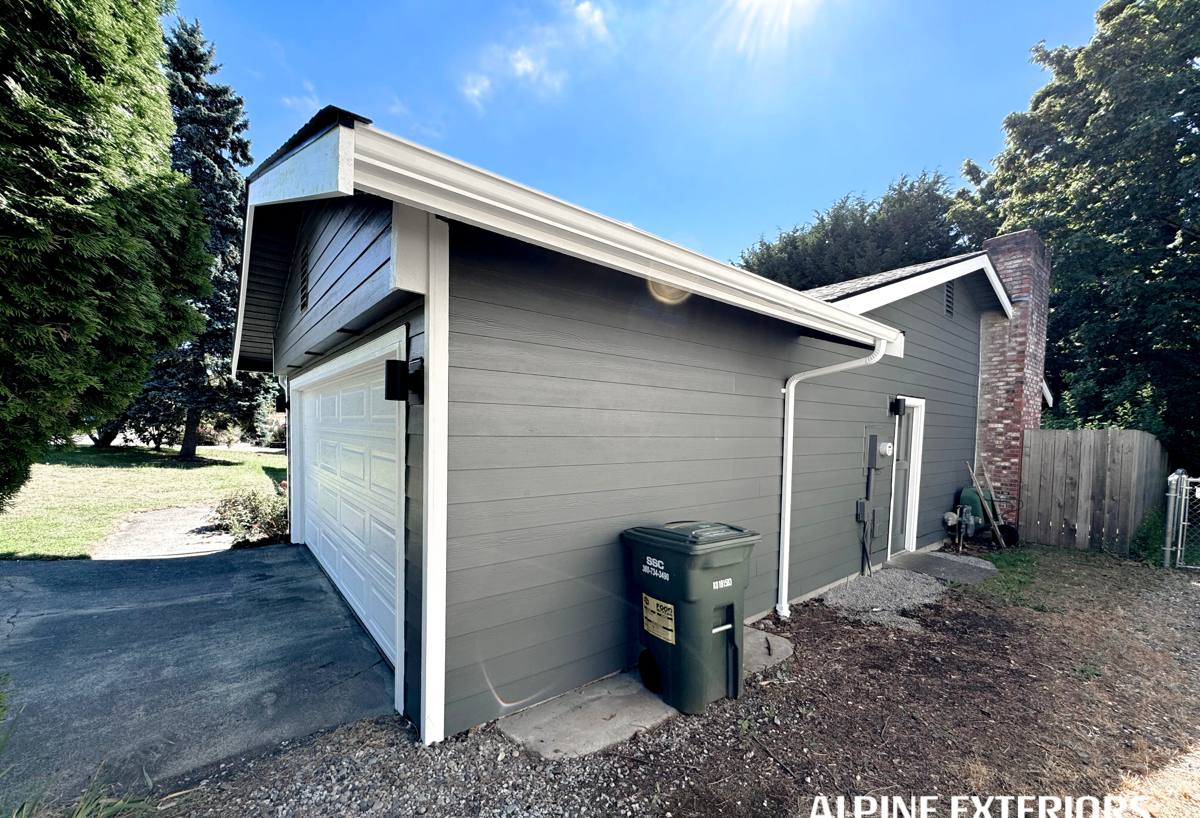
Why Board & Batten Suits South Hill's Older and Newer Homes Alike
Board & batten has deep roots in Pacific Northwest architecture, and it's a natural fit for the mix of craftsman, farmhouse, and modern homes you'll find around South Hill. The vertical board pattern with raised battens covering the seams gives a home strong architectural character — clean shadow lines, a taller visual profile, and a look that reads as both classic and current depending on the trim and color choices around it.
But the same design that makes board & batten attractive also creates more seams, more fastener penetrations, and more edges than a standard lap siding job. Every one of those details is a place where water can find its way in if the installation isn't done right. In a climate like Whatcom County's — where driving rain off the bay hits siding from an angle, not just straight down — those details matter more than they would in a drier region.
What "Correct" Looks Like in This Climate
- Battens fastened with enough clearance to allow the boards beneath to move without cracking the joint
- Proper flashing at every window, door, and roofline intersection — not caulk used as a substitute for flashing
- A drainage plane behind the siding so any moisture that does get past the surface can escape instead of sitting against the sheathing
- Fastener spacing and placement that match the manufacturer's engineering specs for wind and moisture exposure, not just "close enough"
- Factory-applied finish on both boards and battens, so field-cut edges are the only place touch-up is ever needed
What South Hill's Climate Actually Does to Siding
Three things drive most of the siding failures we see on inspections in this part of Whatcom County:
Salt Air
Proximity to the bay means airborne salt settles on exterior surfaces year-round. Salt accelerates corrosion in fasteners and metal flashing, and it can degrade paint film on materials that weren't engineered to resist it. Untreated or improperly primed wood products lose their finish faster in this environment than they would even a few miles inland.
Driving Rain
Storms coming off the water often push rain sideways, not straight down. That means siding here needs to shed water laterally as well as vertically — which is exactly where weak flashing details and gapped joints get exposed. A board & batten system with sloppy batten spacing or missing kick-out flashing will show staining and eventually rot at those failure points within a few wet seasons.
Moss and Sustained Dampness
Whatcom County's moss season isn't a minor cosmetic issue — sustained dampness on a siding surface, especially in shaded or north-facing sections of a home, feeds moss and algae growth that holds moisture against the material longer than open, sun-exposed walls. Siding that can't tolerate that sustained moisture exposure degrades from the surface inward over time.
Board & Batten Materials: How They Hold Up Locally
| Material | Salt Air Resistance | Driving Rain Behavior | Moss/Moisture Season |
|---|---|---|---|
| James Hardie Fiber Cement | Factory ColorPlus finish resists salt-driven fading and chalking | Non-combustible, dimensionally stable core sheds water without warping | Doesn't rot; tolerates sustained damp exposure far better than wood-based products |
| Primed Wood/Spruce Board & Batten | Salt air breaks down field-applied paint faster, especially at end grain | Prone to swelling and cupping at joints if water gets behind the finish | Susceptible to rot and moss-driven decay in shaded, damp wall sections |
| Engineered Wood (LP-type) | Resin-treated core helps, but edge exposure remains a risk point | Performs reasonably if sealed correctly, but installation errors are unforgiving | Manufacturer warranties often carry strict maintenance requirements tied to moisture exposure |
| Vinyl Board & Batten | Doesn't corrode, but can fade and become brittle with UV and salt exposure over years | Can flex and gap at fasteners in high wind-driven rain, allowing water intrusion behind panels | Doesn't rot, but traps moisture behind it if house wrap and drainage details are done poorly |
We install James Hardie exclusively because, across the range of exterior conditions Whatcom County throws at a home, it's the material we're willing to put our name behind. That's a company standard, not a knock on every other product — it's a reflection of what we've seen hold up over years of real Pacific Northwest weather versus what requires more maintenance or more careful installation to get the same result.
What Goes Into a Board & Batten Job Done Right
1. Assessment and Substrate Check
Before any siding comes off, we look at what's underneath — sheathing condition, existing moisture damage, and how the home is currently flashed at windows, doors, and rooflines. South Hill homes with older siding sometimes have hidden moisture issues from years of marginal flashing that need to be addressed before new siding goes up, not covered over.
2. Weather-Resistive Barrier and Drainage Plane
A correctly installed drainage plane behind the siding gives any moisture that gets past the surface a path to escape rather than a place to sit. This step is invisible once the job is done, but it's the difference between siding that lasts decades and siding that fails from the inside out.
3. Flashing at Every Penetration
Windows, doors, hose bibs, light fixtures, roof-to-wall intersections — every one gets proper flashing, not just caulk. Caulk is a maintenance item that degrades; flashing is a permanent water-management detail.
4. Board and Batten Installation to Spec
We follow James Hardie's engineering specifications for fastener type, spacing, and clearance, adjusted for our local wind exposure. Battens are set to allow for material movement without stressing the joint, and every cut edge is sealed per manufacturer instruction.
5. Final Inspection Against Our Own Checklist
Before we call a job finished, we walk it against our own quality checklist — not just to make sure it looks right, but to make sure the water-management details that don't show are actually correct.
Homeowner Checklist: Is Your Current Siding Holding Up?
- Visible staining or streaking below window sills or at batten joints
- Soft or spongy spots when you press on the siding near ground level
- Persistent moss or algae growth that doesn't clear even after cleaning
- Peeling or chalking paint, especially on the side of the house facing prevailing wind and rain
- Gaps or separation between boards and battens
- Visible warping, cupping, or bowing in individual boards
If you're seeing two or more of these on a South Hill home, it's worth having someone take a closer look before small problems become structural ones.
Why Hiring Local Experience Matters for This Job
Board & batten siding is more detail-sensitive than standard lap siding, and Whatcom County's combination of salt air, wind-driven rain, and extended moss season punishes shortcuts faster than a drier inland climate would. A crew that regularly works South Hill and the surrounding Fairhaven area already knows which wall orientations take the worst weather, how local moisture patterns affect flashing decisions, and what tends to fail first on homes in this specific environment. That's not something a general contractor unfamiliar with coastal Whatcom County conditions picks up on the first job.
We also only install one siding system — James Hardie fiber cement — which means every crew member is deeply familiar with its installation requirements rather than switching between products and cutting corners to make unfamiliar materials work.
What to Expect From Our Process
- Free on-site estimate and assessment of your current siding and substrate condition
- A clear, written scope covering material, flashing details, and timeline
- Installation following James Hardie's engineering specs, adjusted for South Hill's exposure conditions
- Final walkthrough and inspection before we consider the job complete
If your South Hill home needs new siding, a refresh, or you're just not sure whether what's on the walls now is holding up the way it should, we're happy to take a look. Reach out for a free, no-pressure estimate using the form below — there's no obligation, and you'll get a straight answer about what your home actually needs.