 Fairhaven Siding
 Building a Deck That Actually Holds Up in Birchwood
A deck in Birchwood has to do more than look good for a summer barbecue season. It sits outside year-round in one of the wetter corners of Whatcom County, catching salt-laden air off the water, long stretches of driving rain, and a moss season that can stretch from October well into spring. A deck built to a generic national spec — the kind of deck that would be fine in a dry inland climate — tends to show its age here fast: soft spots in the decking, black streaking, corroded fasteners bleeding rust into the wood grain, and moss creeping across boards that never fully dry out. A deck built specifically for this climate is a different thing entirely, and the difference isn't cosmetic. It's in the framing, the fasteners, the drainage, and the material choices that most homeowners never see until something fails.
This page is about what a custom deck project in Birchwood actually needs, what a correct build looks like from the footings up, and how we approach the work when we take one on.
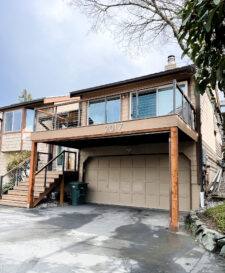
What Fairhaven's Climate Does to an Ordinary Deck
Three things drive almost every deck problem we see in this part of Whatcom County:
Salt Air
Proximity to Bellingham Bay means airborne salt is a constant, low-level presence, even a mile or two inland. Salt air accelerates corrosion on anything metal — fasteners, joist hangers, railing hardware, structural screws — far faster than it would in a dry climate. A deck fastened with standard coated screws can start showing rust bleed within a few seasons. Once a fastener corrodes, it loses holding strength long before it looks obviously bad, which is part of why so many "surprise" deck failures aren't actually sudden at all.
Driving Rain
Rain here doesn't just fall straight down — wind-driven rain gets pushed sideways into ledger connections, under railing posts, and into any gap where flashing was skipped or done poorly. A deck that's watertight on a calm day can still be taking on water at every wind-driven storm, and that water has nowhere to go but into the framing if the details weren't handled correctly the first time.
A Long Moss Season
Mild, wet winters mean moss and algae have months of ideal growing conditions on any deck surface that stays damp — shaded boards, north-facing runs, areas under tree cover, and anywhere water pools instead of draining. Moss isn't just unsightly; it holds moisture against the decking surface, which is exactly the condition that leads to soft, rotting wood underneath a layer of green.
Choosing the Right Decking Material for Birchwood
There's no single "best" decking material for every home — it depends on budget, how much upkeep you're willing to do, and how exposed the deck is. Here's how the common options actually perform in this climate:
| Material | Moisture & Moss Resistance | Maintenance | Typical Lifespan Here |
|---|---|---|---|
| Pressure-treated lumber | Good if properly sealed; end grain and cut edges are vulnerable | Re-seal or stain every 1-2 years | 15-20 years with upkeep |
| Western red cedar | Naturally rot-resistant but still needs sealing against constant moisture | Re-seal every 1-2 years; more sensitive to neglect | 15-25 years with upkeep |
| Composite decking | Excellent — doesn't absorb water or feed rot | Periodic washing to keep moss/algae from clinging to the surface | 25-30+ years, manufacturer-warrantied |
| PVC/capped polymer | Best moisture resistance of the group; fully sealed surface | Lowest — occasional wash-down | 25-30+ years, manufacturer-warrantied |
Composite and PVC decking generally make the most sense for Birchwood homeowners who want to spend their weekends off the ladder, since neither one absorbs the moisture that feeds moss and rot. Wood — especially cedar — still has a strong case for homeowners who want a specific natural look and are willing to keep up with sealing on schedule. We'll walk through the honest trade-offs for your specific site (sun exposure, tree cover, how much shade the deck sits in) rather than pushing one material across the board.
A Note on Underlayment and Substructure Materials
Whatever decking surface you choose, the substructure underneath needs its own moisture strategy — that's often where deck failures actually start, hidden under boards that still look fine on top.
Framing and Fasteners: What's Underneath Matters Most
Most of what determines whether a deck lasts 10 years or 30 in this climate is invisible once the project is finished. A few things we treat as non-negotiable:
- Ledger flashing — the connection where the deck attaches to the house is the single most common source of hidden rot if it isn't flashed correctly. Proper step flashing and a water-resistant barrier behind it keep wind-driven rain from tracking into the house rim joist.
- Joist protection tape — sealing the tops of framing joists before decking goes down keeps rainwater from soaking directly into cut lumber, which is one of the fastest paths to hidden rot under a deck surface that looks fine from above.
- Corrosion-rated fasteners and hardware — given the salt air here, we use stainless steel or heavily coated, marine-rated fasteners and joist hangers rather than standard hardware. It costs more up front and pays for itself by not needing to be replaced.
- Footings sized for local soil and frost conditions — footing depth and sizing need to account for Whatcom County's soil and frost-line requirements, not a generic minimum. Undersized or shallow footings are a common source of deck movement over time.
Drainage, Slope, and Ventilation: Keeping Moss and Rot at Bay
A well-built deck sheds water instead of holding it. A few details make the difference:
Board Spacing and Slight Slope
Decking boards need consistent gapping so water can drain through rather than pooling on the surface, and the overall deck should have a very slight slope away from the house so water doesn't sit against the ledger connection.
Under-Deck Airflow
Framing needs enough clearance and airflow underneath to let the structure dry out between rain events. A deck built low to the ground with poor ventilation underneath stays damp far longer after a storm, which is exactly the condition moss and rot need to take hold.
Managing Shade
Moss grows fastest on boards that stay shaded and damp. We can't move the sun, but material choice, board orientation, and keeping nearby vegetation trimmed back all reduce how much of the deck stays in that damp/shaded zone that moss favors.
Railings and Hardware for Salt Air Exposure
Railing systems take a lot of direct weather exposure and a lot of hand contact, so material choice matters both for durability and for how the deck feels day to day.
- Powder-coated aluminum — strong corrosion resistance in salt air, low maintenance, holds up well without repainting.
- Wood railings — can match a deck's overall look well but need the same sealing discipline as wood decking, and end grain on posts and balusters is especially vulnerable to moisture intrusion.
- Cable and glass rail systems — a clean, modern look, but hardware quality matters — we spec corrosion-resistant fittings given the salt air, since cheaper hardware is one of the first things to show wear here.
Whatever the material, every post-to-frame connection is a place water can get in if it isn't sealed and fastened correctly — this is another spot where the quality of the installation matters more than the brand name on the railing itself.
Our Process for a Birchwood Deck Project
- Site walk and assessment — we look at sun/shade exposure, drainage patterns around the house, existing structure (if replacing a deck), and how the space will actually be used.
- Design and material selection — we go through decking, railing, and framing options honestly, including cost and maintenance trade-offs specific to your site.
- Permitting — deck projects in Whatcom County and the City of Bellingham typically require a permit depending on size, height, and attachment to the structure; we handle that process rather than leaving it on you.
- Construction — footings, framing, flashing, and fastening done to the standards above, not the minimum code allows.
- Final walkthrough — we go over the finished deck with you, including what maintenance it needs and on what schedule, so there are no surprises down the road.
Maintenance Checklist: What to Watch For
Whether it's a deck we built or one already on your Birchwood property, these are the warning signs worth checking a couple times a year:
- Soft or spongy spots when you walk the deck surface, especially near the house connection
- Rust streaking below screw heads or joist hangers
- Green or black growth that keeps returning in the same spots after cleaning
- Water that pools on the surface instead of draining after rain
- Gaps or movement at the ledger board where the deck meets the house
- Loose or wobbly railing posts
- Peeling or worn sealant/stain on wood decking (if it's been more than 1-2 years since the last coat)
Catching any of these early is almost always cheaper than waiting — a soft ledger connection or a corroded joist hanger found early is a repair; found late, it can mean rebuilding a section of the structure.
Why a Crew That Already Works Birchwood Makes a Difference
Deck-building skill on its own isn't enough in this climate — what matters is whether the crew building it actually accounts for what Fairhaven weather does over years, not just what the deck looks like on day one. A crew that regularly works Birchwood and the surrounding Fairhaven area already knows which fastener specs hold up against the salt air here, how much slope and airflow a deck actually needs to shed moss, and what Whatcom County's permitting process requires before a shovel goes in the ground. That's the difference between a deck that needs real attention again in five years and one that's still solid in twenty.
If you're planning a new deck or need an honest look at whether an existing one needs repair or replacement, we're happy to come take a look. Fill out the form below for a free, no-pressure estimate.