 Fairhaven Siding
 Siding Built for Birchwood's Position Between the Bay and the Rain
Birchwood sits close enough to Bellingham Bay to catch salt-laden air off the water, and far enough into Whatcom County's marine weather pattern to see long stretches of low clouds, drizzle, and shaded, damp conditions for much of the year. That combination is harder on exterior siding than most homeowners realize until they're dealing with it: paint that fails early, moss creeping up north-facing walls, and trim that stays soft to the touch well after a rain has passed. A siding installation done right in this neighborhood isn't just about appearance — it's about choosing a material and a install method that actually holds up to what Fairhaven's climate does to a house year after year.
This page focuses specifically on what siding installation looks like for Birchwood homes — not siding in general, but the decisions, materials, and installation details that matter for this particular stretch of Whatcom County.
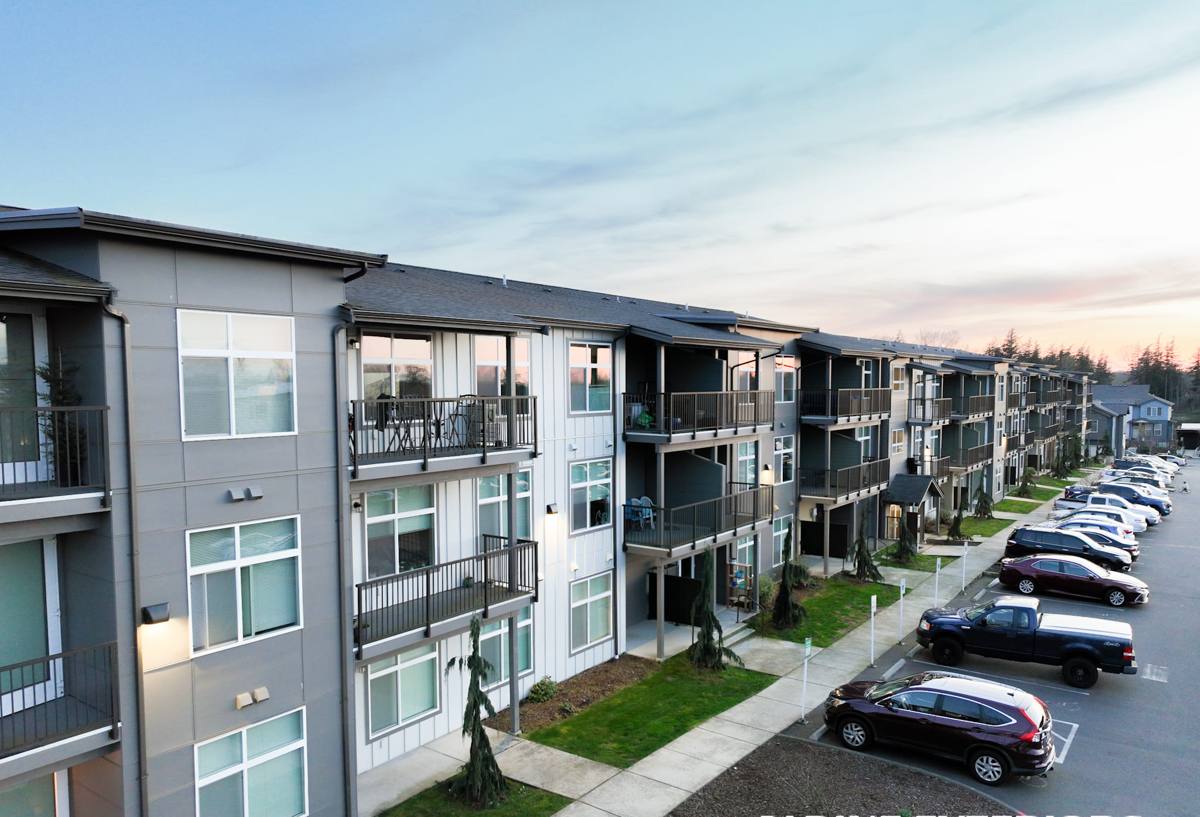
What Salt Air, Driving Rain, and Moss Season Do to a House
Salt Air
Homes within a few miles of Bellingham Bay are exposed to airborne salt that settles on siding, trim, and fasteners. Over time it accelerates corrosion in low-quality fasteners and can break down paint films faster than the same product would fail further inland. It's a slow, cumulative effect — not dramatic, but it shows up as chalky, faded finishes and rust streaking on hardware that wasn't rated for coastal exposure.
Driving Rain
Wind-driven rain off the water doesn't just fall straight down — it gets pushed sideways into wall assemblies, seams, and anywhere the siding isn't properly lapped, flashed, or caulked. A siding system with even small gaps at butt joints, window trim, or penetrations will eventually let water behind the cladding, where it can sit against sheathing and framing far longer than surface moisture would suggest.
Moss Season
Shaded, north- and east-facing walls in Birchwood — especially those tucked under trees or close to a neighboring structure — stay damp for extended periods during the fall-through-spring stretch. That's exactly the environment moss and mildew need to establish on porous or textured siding surfaces. Once established, moss holds moisture against the wall even longer, compounding the problem.
Why We Install Only James Hardie Fiber Cement
We standardized on James Hardie fiber cement siding for every project we take on, including here in Birchwood, because it's engineered specifically to resist the conditions described above. It's non-combustible, dimensionally stable in wet-dry cycling, and available in Hardie's HZ5 formulation, which is built for climates with significant moisture exposure rather than a one-size-fits-all product.
The factory-applied ColorPlus finish matters more here than in a drier climate. Because it's baked on in a controlled environment rather than field-applied, it resists the fading, chalking, and peeling that site-applied paint is prone to under repeated salt and moisture exposure — and it comes backed by a real finish warranty, not just a material warranty. We don't install vinyl, LP SmartSide, primed wood, or other fiber cement brands, because we've made fiber cement from this specific manufacturer our standard for durability, moisture performance, and long-term warranty backing — and we'd rather do one product exceptionally well than offer several options at varying levels of confidence.
What a Correct Installation Involves
Fiber cement siding is only as good as the installation behind it. Most siding failures we're called to inspect aren't a product problem — they're a detail that got skipped. On a Birchwood job, the details we treat as non-negotiable include:
- Weather-resistant barrier installed and lapped correctly behind the siding, not just stapled up as an afterthought
- Rainscreen or proper drainage gap where conditions call for it, so any moisture that does get behind the cladding can drain and dry
- Correct fastener type and spacing — stainless or coated fasteners rated for coastal-adjacent exposure, driven per manufacturer specification, not overdriven or underdriven
- Proper flashing at every window, door, roofline, and penetration, with materials and laps that shed water downward and outward
- Manufacturer-specified clearances from grade, roof lines, and decks so siding isn't sitting in a moisture trap
- Caulking only where Hardie's install guide calls for it — over-caulking seams that are designed to be left open can trap water instead of releasing it
- Proper panel and plank spacing to allow for expansion without buckling
Skipping any one of these doesn't usually show up as a problem in year one. It shows up in year five or seven, as staining, soft trim, or paint failure concentrated exactly where the shortcut was taken.
How the Project Actually Runs
1. On-Site Assessment
We look at the whole envelope, not just the siding — existing moisture damage, trim condition, flashing at windows and rooflines, and how the house is oriented relative to prevailing wind and shade. That orientation matters a lot in Birchwood, where one side of a house can be in significantly better shape than another simply because of sun and wind exposure.
2. Scope and Product Selection
We walk through the Hardie product line — lap siding, panel siding, shingle-style, and trim options — and the ColorPlus palette, and land on what fits the home and the budget. This is also when we flag any sheathing or framing repair that needs to happen before new siding goes on, since covering up existing damage is how small problems become expensive ones.
3. Tear-Off and Substrate Repair
Old siding comes off, and we address anything underneath before a single new piece goes up — rot, compromised sheathing, or a water-resistant barrier that's failed. New siding over a bad substrate just delays the problem.
4. Installation to Manufacturer Spec
Weather barrier, flashing, fastening, and spacing are all done to James Hardie's published installation requirements — the same requirements that keep the product warranty intact.
5. Final Walkthrough
We go through the finished job with the homeowner, covering what basic upkeep looks like and what the warranty actually covers.
Signs a Birchwood Home May Be Due for New Siding
- Paint that's peeling, bubbling, or chalking within a few years of being applied
- Moss or dark streaking that keeps returning to the same wall sections no matter how often it's cleaned
- Soft or spongy siding or trim when pressed, especially near the bottom courses or around windows
- Visible warping, buckling, or gaps opening up between panels or planks
- Rising energy bills with no other clear cause, which can point to a compromised weather barrier
- Siding that's simply reached the end of its practical service life and is costing more in repairs than it's worth
What Drives the Cost of a Siding Installation
| Factor | Why It Matters |
|---|---|
| Home size and wall complexity | More corners, dormers, and trim details mean more cutting, flashing, and labor time |
| Substrate condition | Rot or sheathing repair discovered during tear-off adds material and labor before new siding can go on |
| Product line and profile | Lap width, shingle-style accents, and trim packages vary in material and installation time |
| Existing moisture barrier | Whether the weather-resistant barrier can stay or needs full replacement affects both cost and schedule |
| Access and site conditions | Tight lots, mature landscaping, or multi-story sections can add time and equipment needs |
| Color and finish choice | Factory ColorPlus finishes vary in price by color and sheen compared to standard options |
We give straightforward, itemized estimates rather than a single lump number, so homeowners can see exactly what's driving the price before committing to anything.
Why It Matters That We Already Work in This Neighborhood
A crew that's installed siding on other homes in and around Birchwood already understands the practical realities that don't show up in a spec sheet — how far salt air exposure actually reaches inland from the bay, which wall orientations tend to hold moisture the longest, and how local permitting and inspection expectations work in Fairhaven and Whatcom County. That local experience shows up in small decisions throughout a project: where to add extra flashing attention, which sides of the house need a closer look at ventilation, and how to sequence work around this area's weather patterns instead of fighting them.
It also means a homeowner isn't the first test case for how a product or detail performs in this specific climate. We've seen how James Hardie siding holds up on homes with the same salt exposure, rain patterns, and moss pressure as yours, and we install accordingly.
Get a Straightforward, No-Pressure Estimate
If your Birchwood home's siding is showing its age — or you just want an honest read on its condition — we're happy to take a look. Use the form below to request a free estimate, and we'll walk the property, explain what we see, and lay out your options in plain terms, no pressure either way.