 Fairhaven Siding
 Why Siding in Birchwood Takes a Different Kind of Beating
Birchwood sits close enough to Bellingham Bay that salt-laden air is a fact of daily life, not an occasional nuisance. Add Whatcom County's long, wet winters and the driving rain that comes sideways off the water during a southwesterly blow, and you've got a climate that goes after siding from every angle at once. Salt air accelerates corrosion on fasteners and trim metal. Driving rain finds gaps that would never leak in a drier climate. And the region's long moss season — often eight or nine months of the year when conditions stay cool and damp — means anything that traps moisture against a wall will eventually grow something green on it.
None of that is unique to any one house. But it does mean that siding repair in this neighborhood isn't just about matching a color or patching a hole. It's about understanding what's actually happening behind the siding, because in a marine climate like this, the damage you can see is rarely the whole story.
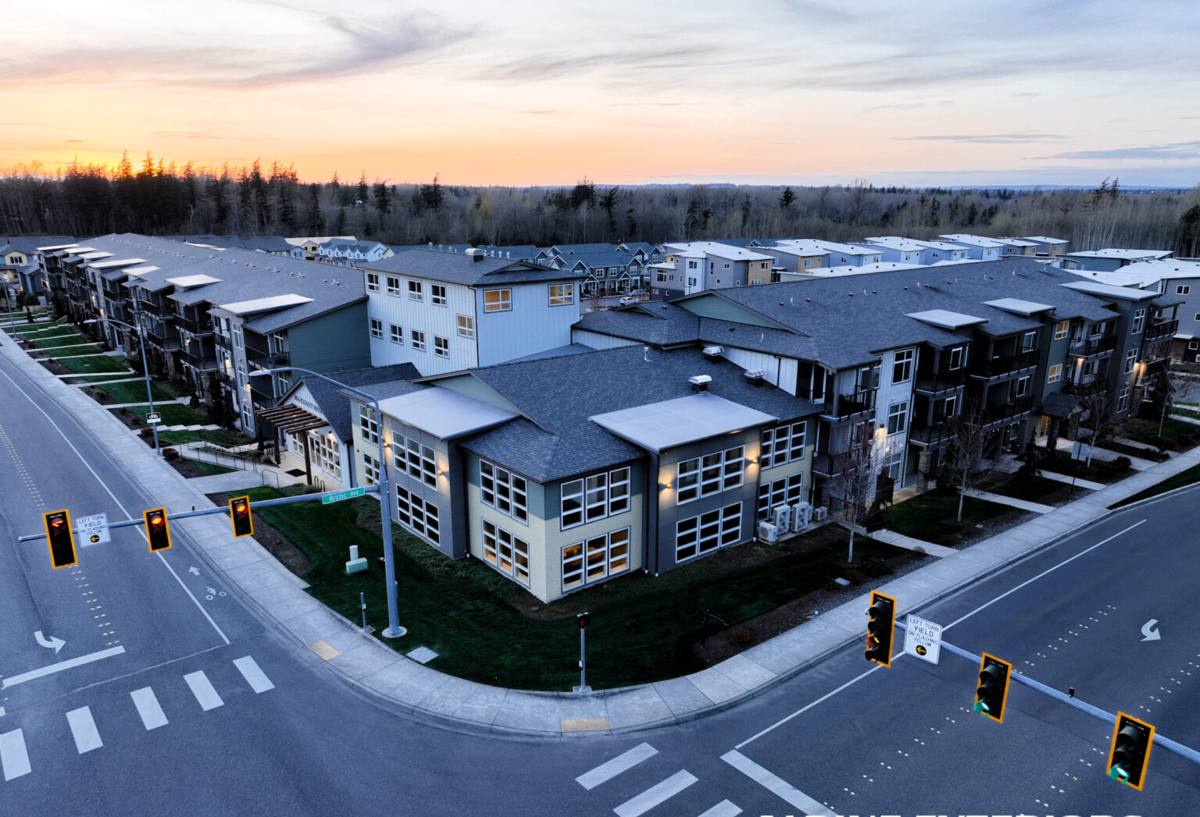
Signs Your Birchwood Home Needs Siding Repair, Not Just a Patch
Some damage is obvious. Some isn't. A homeowner walking their property line should know what to look for before calling anyone out — it helps you have a more useful conversation with whoever shows up.
- Soft or spongy spots when you press on the siding near the bottom courses or under windows
- Visible cracking, buckling, or warping, especially on south- and west-facing walls that catch the worst of the wind-driven rain
- Persistent moss or algae streaking that comes back within weeks of cleaning
- Peeling or bubbling paint, which almost always points to moisture trapped underneath rather than a simple paint failure
- Gaps or separation at seams, corners, and around penetrations like hose bibs, vents, and light fixtures
- Rust staining below nail heads or trim fasteners
- A musty smell in an interior room that shares a wall with visibly damaged exterior siding
Any one of these can be a localized, inexpensive fix. Two or three together — especially if they're clustered on the same wall — usually mean water has been getting behind the siding for a while, and the repair needs to start with finding out how far it's spread.
What a Correct Siding Repair Actually Involves
Checking for Hidden Moisture First
The single biggest mistake in siding repair is treating it as a cosmetic fix — pulling a damaged board, dropping in a new one, and calling it done. In a climate that stays damp for most of the year, that approach almost guarantees a repeat visit. Before we replace anything, we check the sheathing and framing behind the damaged section. If water has been sitting there, that needs to dry out and, in some cases, be repaired before new siding goes back on. Covering up wet wood with new siding just hides the problem for another season.
Matching the Material, Not Just the Look
Repairs age visibly if the replacement material doesn't match the original in thickness, texture, and finish. This is one of the reasons we standardized on James Hardie fiber cement across every job we do — it's a consistent, factory-controlled product, so a repair panel installed today matches the color and texture of a wall installed years ago far more reliably than trying to source a match for wood, vinyl, or other fiber cement brands with different profiles.
Flashing and Drainage Come First
Most siding failures in this climate aren't failures of the siding material itself — they're failures of the flashing, house wrap, or drainage plane behind it. A proper repair re-establishes a working water management path: correct overlaps, functioning weep paths, and flashing at every horizontal joint, window head, and penetration. Siding that looks fine but sits over broken flashing will fail again, usually in the same spot.
Why We Only Repair and Rebuild With James Hardie Fiber Cement
We install and repair exclusively with James Hardie fiber cement siding. We don't work in vinyl, LP SmartSide, other fiber cement brands, or wood siding — not because those products can't be installed correctly by someone, but because we've made a professional decision about what holds up best in this specific climate and what we're willing to stand behind with our own labor.
| Factor | James Hardie Fiber Cement | Vinyl | Wood / Engineered Wood |
|---|---|---|---|
| Moisture behavior | Non-combustible, dimensionally stable, engineered for wet climates (HZ product lines) | Can warp or buckle with heat/cold cycling; seams are a common water entry point | Absorbs moisture; prone to rot and swelling without diligent maintenance |
| Moss/algae resistance | Factory ColorPlus finish resists staining and holds up to repeated cleaning | Surface can stain and is harder to refinish without full replacement | Porous surface is highly susceptible to moss and mildew |
| Salt air / coastal exposure | Fiber cement composition doesn't corrode; finish is factory-baked for UV and weather | Can become brittle over time; color fade in coastal sun is common | Requires frequent re-sealing or repainting to hold up near salt air |
| Repair matching | Consistent factory color and texture across production runs | Older panels are often discontinued, making seamless matches difficult | Weathering makes new boards visibly mismatched until they age in |
| Warranty | Strong transferable manufacturer warranty when installed to spec | Varies widely by product line | Typically limited or none on the material itself |
None of this means other products are junk — it means that for the conditions Birchwood homes actually face, we think fiber cement engineered for this climate is the more honest long-term answer, and we'd rather turn down work than install something we don't believe will hold up.
Our Siding Repair Process for Birchwood Homes
- On-site assessment. We walk the affected areas, check for soft spots and hidden moisture, and identify whether the issue is isolated or points to a broader flashing or drainage problem.
- Honest scope and options. We tell you plainly whether this is a spot repair, a wall-section repair, or something that's approaching the point where full replacement makes more financial sense.
- Removal and inspection behind the siding. Damaged panels come off, sheathing and framing get checked, and anything compromised gets addressed before new material goes up.
- Flashing and water management repair. Any failed flashing, house wrap, or drainage components are corrected — this is the step that determines whether the repair actually lasts.
- Matched Hardie panel installation. New fiber cement siding is installed to manufacturer spec, with correct fastening, clearances, and sealant placement for our climate.
- Final walk-through. We show you what was found, what was fixed, and what to watch for going forward.
Repair vs. Replace: Making the Right Call
Not every damaged wall needs full replacement, and not every repair is worth doing if the underlying siding is near the end of its life. Here's how we think through it with homeowners.
| Situation | Repair usually makes sense | Replacement usually makes sense |
|---|---|---|
| Extent of damage | Isolated to one wall or a few panels | Recurring across multiple walls or elevations |
| Age of existing siding | Siding is well within its expected service life | Siding is original to an older home and showing widespread wear |
| Underlying material | Sheathing and framing are sound | Rot or water damage extends into structural framing |
| Root cause | A single, fixable source (one bad flashing detail, one damaged panel) | Systemic drainage or water management issues across the house |
If we walk your Birchwood property and the honest answer is "repair this one section and you're fine for years," that's what we'll tell you. We don't upsell replacement on jobs that don't need it.
Why a Crew That Already Works in Birchwood Matters
Fairhaven's older residential streets, the neighborhood's proximity to the water, and Whatcom County's building department requirements all shape how a repair should be scoped and executed. A crew that regularly works this specific area already knows which wall orientations tend to take the worst weathering, how local moisture patterns behave against different home styles, and what permitting or inspection expectations apply for exterior work in the county. That familiarity shows up in faster, more accurate assessments and fewer surprises once a wall is opened up — not in shortcuts, but in knowing what to check first.
Keeping Repaired Siding Looking Right Through Moss Season
A correct repair should reduce your maintenance burden, not just fix today's problem. A few habits make a real difference in this climate:
- Keep gutters and downspouts clear so runoff isn't sheeting down siding walls
- Trim back vegetation that keeps a wall shaded and damp longer than it needs to be
- Rinse visible moss or algae buildup before it has a chance to establish, rather than waiting for a deep clean
- Check caulking at trim and penetrations annually — sealant is the first thing to fail, well before the siding itself
- Watch for early staining under fasteners, which can signal a developing moisture issue before it becomes visible damage
If you're seeing early signs of trouble on your Birchwood home, or you're just not sure whether what you're looking at is a quick fix or something bigger, we're happy to take a look. We offer free, no-pressure estimates — fill out the form below and we'll walk the property with you and give you a straight answer.