 Fairhaven Siding
 Why Birchwood Homes Need Siding Built for This Climate
Birchwood sits close enough to the water and the tree cover of Fairhaven that its houses take a different kind of beating than a home twenty miles inland. Salt-laden air moves in off the bay, driving rain comes sideways during winter storms, and the shaded, moisture-heavy lots around Birchwood keep siding damp longer than it should ever stay. Add in a moss season that can run from fall through spring in Whatcom County, and you have a combination that finds every weak point in a siding system faster than almost anywhere else in the state.
That's not a reason to panic about your siding. It's a reason to be specific about what you replace it with and how it goes on. A siding replacement in Birchwood isn't the same project as a siding replacement in a dry, sun-exposed neighborhood — the material, the installation details, and the maintenance expectations all need to account for what this particular stretch of Fairhaven actually deals with year after year.
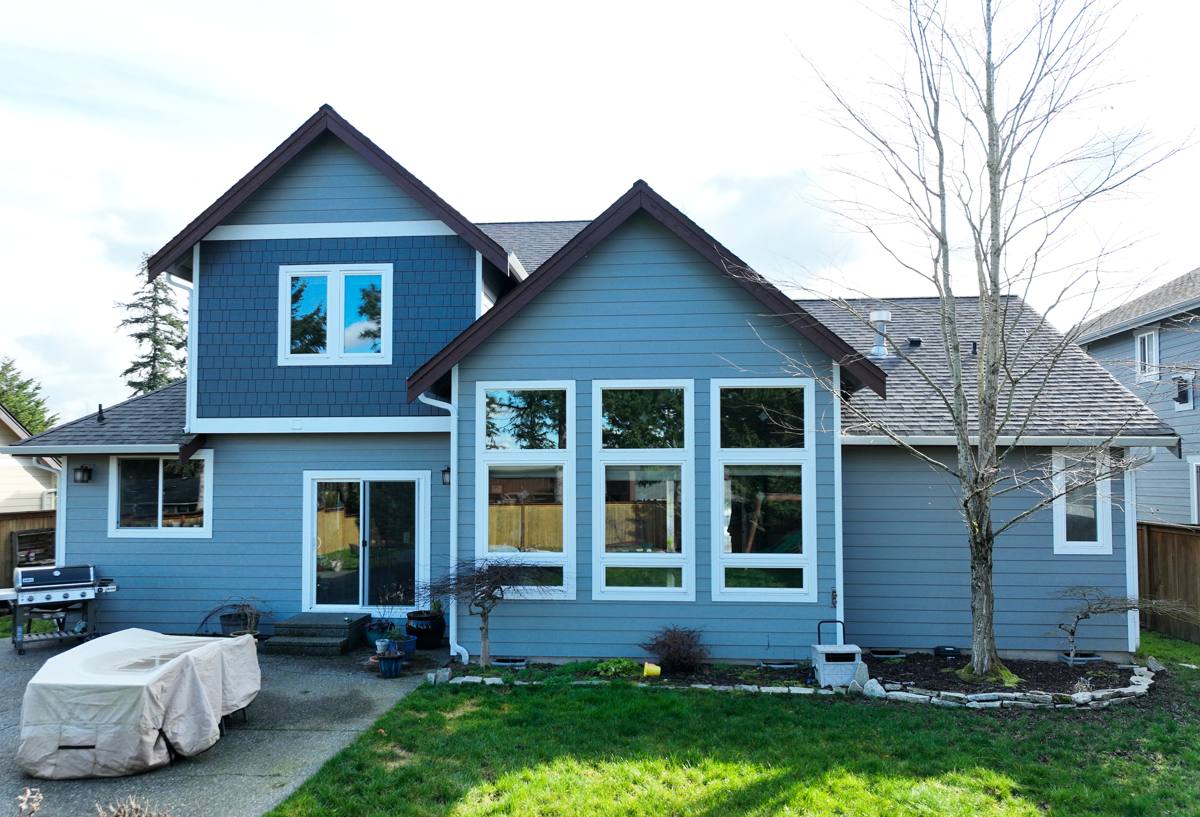
What Salt Air, Driving Rain, and Moss Actually Do to Siding
Each of these three factors attacks siding in a different way, and most failing siding jobs we see in this area are failing from more than one of them at once.
- Salt air corrodes exposed metal fasteners, trim flashing, and hardware faster than it would inland. Once fasteners start to rust and back out, the siding panels they hold lose their grip and start to move, opening gaps that let water in behind the cladding.
- Driving rain in Whatcom County doesn't just fall on siding, it gets pushed into it — through seams, around window trim, and up under laps if the overlap and flashing weren't done correctly the first time. Once water gets behind the siding, it's trapped against the sheathing where it can't dry out.
- Moss and algae thrive on the north and west sides of homes with tree cover, which describes a lot of Birchwood lots. They hold moisture against the siding surface long after a storm has passed, and on materials that aren't engineered to handle sustained dampness, that constant moisture accelerates rot, delamination, or paint failure.
Individually, any one of these is manageable. Together, over ten or fifteen years, they're why so many homes in this part of Fairhaven end up needing a full siding replacement well before the material's rated lifespan — usually because the original product or the original installation wasn't built for this specific mix of conditions.
Signs a Birchwood Home's Siding Has Reached the End of Its Life
Siding failure is usually gradual, and homeowners often don't realize how far along it is until they start looking closely. Before assuming your siding just needs a fresh coat of paint, check for these:
- Soft or spongy spots when you press on the siding, especially near the bottom courses and around window and door trim
- Visible cracking, buckling, or panels that have separated at the seams
- Paint that's peeling or bubbling repeatedly in the same spots, even after repainting
- Persistent moss or dark streaking on shaded walls that comes back within a season of cleaning
- Rust streaks below fasteners or trim, a sign the hardware is corroding
- Rising energy bills or noticeably drafty rooms on exterior walls, which can point to moisture-compromised sheathing behind the siding
- A musty smell in an adjoining interior wall or a visible stain on interior drywall near an exterior corner
Any one of these on its own might be a repair. Several at once, especially on a home over fifteen to twenty years old, usually means the underlying material or installation has reached the point where patching isn't a real fix — it's a way of delaying the same problem.
Why We Only Install James Hardie Fiber Cement Here
We install James Hardie fiber cement siding exclusively — not vinyl, not LP SmartSide, not primed wood products. That's not a brand preference, it's a standard we hold because of exactly the conditions described above. Fiber cement doesn't absorb water the way engineered wood products can, it won't warp or delaminate from repeated wet-dry cycling, and it's non-combustible, which matters given the wildfire smoke and ember exposure that has become a more regular part of Pacific Northwest summers.
James Hardie also builds region-specific product lines through its HZ5 engineering, which is formulated for climates with sustained moisture exposure like ours, rather than a single generic formula sold everywhere in the country. The factory-applied ColorPlus finish holds up to UV and salt air far longer than field-applied paint, and it comes with a real manufacturer warranty that follows the home, including transferability if you sell. When we replace siding on a Birchwood home, we want the homeowner to get thirty-plus years out of the decision, not a repeat of the same failure in a decade.
What a Correct Installation Looks Like in a Climate Like This
The material only performs as well as the installation behind it. In an area that gets driving rain and prolonged damp shade, a handful of details matter more here than they would in a drier climate.
Drainage and a Proper Rain-Screen Gap
Siding needs a way to shed the water that inevitably gets past the outer surface. That means a correctly installed weather-resistant barrier, and in most cases a drainage gap or rain-screen furring behind the cladding so any moisture that does get in has somewhere to go instead of sitting against the sheathing. Skipping or shortcutting this step is one of the most common reasons siding fails early in wet climates.
Flashing, Fasteners, and Seams
Every window, door, and horizontal trim piece is a place water can find its way in if flashing isn't installed and lapped correctly, top over bottom, every time. Fasteners need to be the corrosion-resistant type and driven at the manufacturer's specified depth and spacing — not just close enough. Butt joints and seams need to be treated so they shed water rather than wick it in, which matters even more given the salt air's effect on unprotected hardware.
Ventilation and Clearance
Siding installed too close to grade, decks, or roof lines traps moisture and invites moss and rot regardless of the material. Proper clearance and attention to how water moves off the roof and away from the wall assembly is part of doing the job right, not an afterthought.
Our Siding Replacement Process for Birchwood Homes
We approach every replacement the same methodical way, adjusted for what we find once the old siding comes off.
- On-site assessment. We look at the current siding, trim, and any visible signs of moisture damage, and talk through what you're seeing from the inside — drafts, stains, soft spots.
- Tear-off and sheathing inspection. Once the old siding is off, we can see the sheathing and framing directly. This is the point where hidden rot or past water damage shows up, and we'll walk you through anything we find before covering it back up.
- Repair and prep. Any compromised sheathing or framing gets repaired before anything new goes on. Installing new siding over damaged wall structure just hides the problem.
- Weather barrier and drainage plane. We install the water-resistive barrier and drainage system appropriate for the wall assembly and exposure on that side of the house.
- James Hardie installation. Panels or planks go on to manufacturer spec — fastener type, spacing, clearances, and flashing details, all built around what this climate demands.
- Trim, caulking, and cleanup. Final trim work, sealant at the joints that need it, and a full site cleanup before we call the job done.
What Affects the Cost of a Siding Replacement
Every home is different, but the same handful of factors drive most of the variation in price from one Birchwood project to the next.
| Factor | Why It Matters |
|---|---|
| Home size and wall complexity | More square footage and more corners, gables, and trim details mean more material and labor |
| Condition of the sheathing underneath | Hidden rot or water damage found during tear-off adds repair scope before new siding can go on |
| Siding profile chosen | Lap, panel, and shingle-style James Hardie products vary in material and installation time |
| Trim and accessory work | Window and door trim, corner boards, and fascia detail add labor beyond the flat wall area |
| Access and site conditions | Slopes, tree cover, and tight lot lines common in Birchwood can affect staging and time on site |
| Tear-off and disposal | Removing and hauling away old siding is part of the scope on a full replacement |
We won't quote a job without seeing the home, because sheathing condition especially can't be estimated from the outside. What we can tell you upfront is that the cost of doing it correctly — proper drainage plane, correct fastening, real flashing details — is not optional if you want the replacement to actually outlast the problems that made the old siding fail.
Why Hiring a Crew That Already Works Birchwood Matters
A contractor who works this part of Fairhaven regularly already knows which walls take the worst of the driving rain, which lots hold shade and moisture longest, and how the salt air changes what fastener and flashing choices actually hold up over time. That's not something you can fully substitute with a generic install, even a competent one from a crew based somewhere drier. Local code requirements, typical lot conditions, and the specific failure patterns we see repeatedly in this area all shape how we approach a job here.
It also means we're not guessing about what "built for this climate" means in practice — we're applying what we've seen work and fail on homes with the same exposure as yours, in the same corner of Whatcom County.
If your Birchwood home's siding is showing its age, or you just want a straight answer about whether it's a repair or a replacement, we're happy to take a look. Reach out for a free, no-pressure estimate using the form below.