 Fairhaven Siding
 Roof Repair for Bow Homes, Built Around Whatcom County Weather
Bow sits close enough to the water that homes here take a different kind of beating than roofs twenty miles inland. Salt-laden air off the bay works into fasteners and flashing. Driving rain off winter storms finds every gap in an aging roof system. And the long, damp moss season that runs from fall through spring keeps organic growth active on north-facing slopes and shaded valleys for most of the year. A roof repair that doesn't account for all three of those factors tends to fail again within a season or two — which is why we approach roof repair in Bow as a Whatcom County-specific job, not a generic patch-and-go.
This page covers what roof repair actually means for homes in this area, what a correct repair involves, how our process works from first call to final walkthrough, and why hiring a crew that already works this part of Skagit and Whatcom County matters more here than it would somewhere with a milder, drier climate.
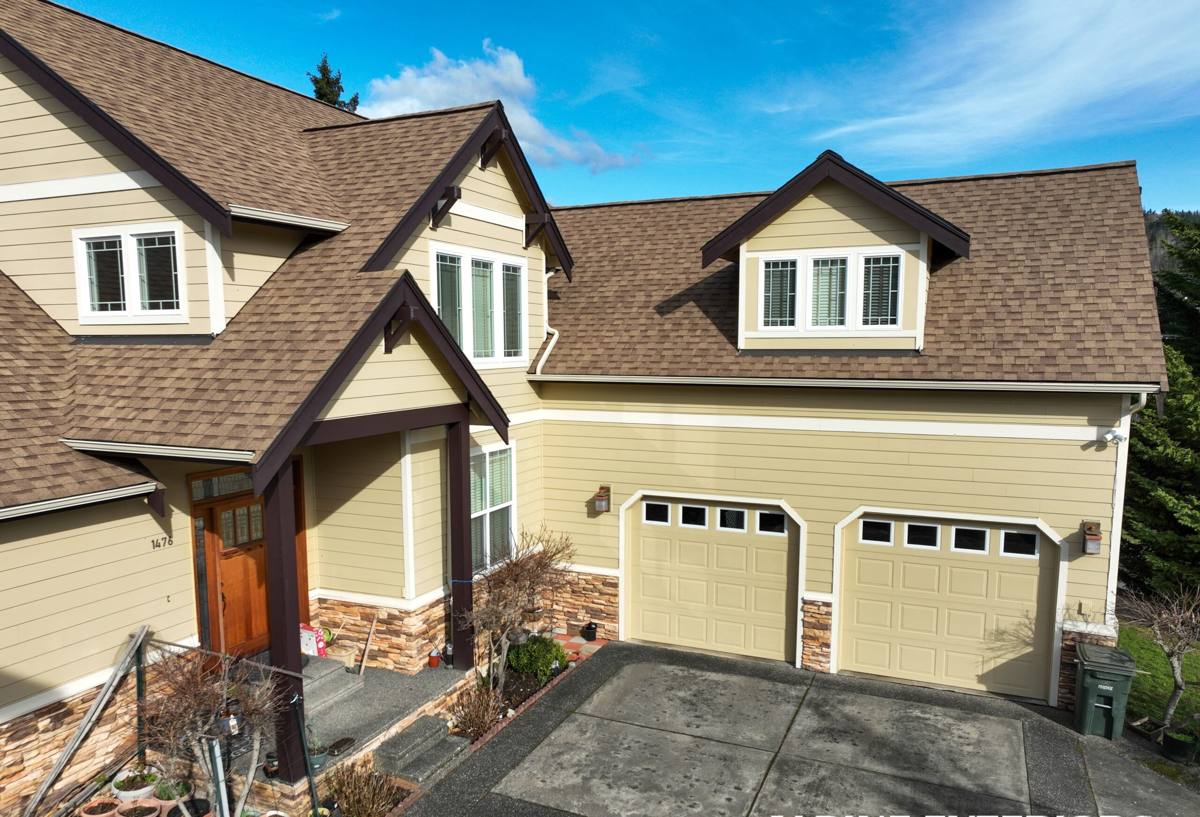
What Bow's Climate Actually Does to a Roof
Salt Air and Metal Fatigue
Properties near the coast see accelerated corrosion on exposed metal — nail heads, flashing edges, valley metal, and gutter hardware all corrode faster here than they would inland. Once a fastener starts to rust, it loses grip on the roof deck and the seal around it degrades, giving wind-driven rain a path underneath the shingle or panel. On an older roof, this shows up as a cluster of small leaks that seem to appear all at once, usually right around a heavy storm.
Driving Rain and Wind-Driven Water
Rain in this part of Washington rarely falls straight down. Wind off the water pushes it sideways, which means water gets forced up under shingle laps, around vent boots, and into flashing joints that would stay dry in calmer weather. Repairs that only address the visible gap — without checking how water moves across that section of roof during a windstorm — tend to leak again the next time conditions repeat.
Moss and Sustained Moisture
Whatcom County's moss season isn't a short nuisance — it's active for the better part of the year on shaded or north-facing roof sections. Moss holds moisture directly against the roofing material long after the rest of the roof has dried out. Over time it lifts shingle edges, traps grit that erodes the granule coating, and creates a spongy layer that keeps the deck below damp. Moss-related damage is one of the most common reasons we get called out to Bow properties for repair work that started as "just a stain on the ceiling."
Signs a Bow Roof Needs Repair, Not Just Watching
- Interior water stains that appear or darken after a windy rainstorm specifically (not just any rain)
- Visible moss mats on north-facing slopes, valleys, or anywhere shaded by trees
- Granules collecting in gutters or at downspout outlets in noticeably larger amounts than in past years
- Lifted, curled, or missing shingles, especially along ridges and edges exposed to prevailing wind
- Rusted or loose flashing around chimneys, skylights, and roof-to-wall transitions
- Soft or spongy spots underfoot near valleys or low-slope sections
- Daylight visible through the roof deck from inside an attic or crawlspace
Any one of these on its own might be minor. Two or more together usually means water has already been getting into the roof assembly for a while, even if there's no obvious interior leak yet.
What a Correct Roof Repair Actually Involves
A roof repair that holds up in this climate is more than swapping out damaged shingles. It's a sequence, and skipping steps is exactly how a "fixed" roof leaks again the following winter.
1. Diagnose the Actual Water Path
Water rarely shows up on the ceiling directly below where it entered the roof. It travels along the underlayment, rafters, or sheathing before dripping somewhere lower. We trace the leak back to its true entry point before touching anything, because repairing the visible drip location without finding the source just moves the problem.
2. Check the Deck, Not Just the Surface
Sustained moisture from moss or long-term leaks can soften the roof sheathing underneath. Replacing shingles over a compromised deck doesn't fix anything — it just hides rot for another season. Any competent repair includes checking the deck condition in the affected area and replacing sections that have gone soft or delaminated.
3. Address Flashing and Fastener Corrosion, Not Just Shingles
Given how salt air affects metal here, we treat flashing and fasteners as part of the repair scope by default rather than an afterthought. A new shingle installed over corroded, failing flashing is a short-term fix at best.
4. Remove Moss Properly — Don't Just Kill It
Moss treatment that only kills the growth in place leaves a dead, moisture-holding mat on the roof. A proper repair in a moss-affected area includes physically clearing the growth (using methods that don't tear up the roofing surface), then addressing what's letting moss establish there in the first place — usually shade, debris buildup, or slow drainage.
5. Reseal and Weatherproof for Wind-Driven Rain
Because this area's rain comes in sideways as often as straight down, we pay particular attention to lap direction, sealant placement, and flashing overlap in any repaired section — not just whether the patch is watertight in calm conditions.
Roof Repair vs. Roof Replacement: How We Help You Decide
Not every roof issue in Bow calls for a full replacement, and not every roof is a good candidate for another round of patching. The honest answer depends on the roof's age, how much of the deck is still sound, and how many separate problem areas exist.
| Factor | Repair usually makes sense | Replacement is worth discussing |
|---|---|---|
| Roof age | Under roughly 15-18 years, materials still have life left | Nearing or past the manufacturer's expected lifespan |
| Damage location | Isolated to one slope, valley, or penetration | Spread across multiple slopes or recurring in new spots each year |
| Deck condition | Sheathing is solid where exposed | Soft, delaminated, or rotted decking found during inspection |
| Moss history | First or occasional moss issue | Chronic moss returning yearly despite treatment |
| Granule loss | Light, even wear consistent with age | Heavy, patchy loss exposing the underlying mat |
We'll always tell you plainly which category your roof falls into. If a repair genuinely solves the problem, that's what we recommend — a repair that's honestly scoped will outlast a replacement that was pushed when it wasn't needed.
Our Roof Repair Process for Bow Properties
Step 1: On-Site Inspection
We walk the roof (or use appropriate access methods for steep or fragile sections) and inspect from the interior where possible — attic, crawlspace, or ceiling access — to see how far water has actually traveled.
Step 2: Clear, Written Scope
Before any work starts, you get a plain-English explanation of what's actually wrong, what needs to happen to fix it correctly, and what it will cost. No pressure to upsell into a full roof replacement if a repair will genuinely hold.
Step 3: The Repair Itself
Deck repair where needed, flashing and fastener replacement where corrosion is present, moss clearing and treatment where relevant, and shingle or roofing material replacement matched as closely as possible to the existing roof.
Step 4: Cleanup and Debris Removal
Old material, moss debris, and fasteners are cleared from the roof and gutters — leftover moss debris in gutters is a common cause of repeat moss growth the following season.
Step 5: Walkthrough
We show you what was found and what was done, including any deck damage that was uncovered, so there are no surprises about scope.
Roof Repair Cost Factors in This Area
Every roof repair is different, but the price is generally driven by a consistent set of factors rather than a flat per-square-foot rate:
| Cost factor | Why it matters here |
|---|---|
| Deck condition | Sheathing replacement adds material and labor beyond a surface patch |
| Flashing scope | Salt-air corrosion often means more flashing needs replacing than the original leak suggested |
| Moss severity | Heavy, established moss takes longer to clear safely than light surface growth |
| Roof pitch and access | Steeper roofs and difficult access add labor and safety equipment time |
| Material match | Matching existing shingle color and profile can affect material sourcing |
We give a firm, written estimate after inspection — not a guess over the phone — because guessing on a roof repair in this climate almost always misses something once the flashing or deck is actually exposed.
Why Hire a Crew That Already Works Bow and Fairhaven
A crew that works this specific stretch of Whatcom County has already seen how salt air, wind direction, and moss growth behave on roofs in this exact area — which flashing details tend to corrode first, which slopes hold moss longest, and which storm patterns cause the wind-driven leaks that generic repair advice misses. That local pattern recognition is the difference between a repair that addresses the real cause and one that just patches the symptom. It also means faster response when a storm causes sudden damage, since we're not traveling in from far outside the area to reach you.
Maintenance That Extends the Life of a Repair
- Clear moss and debris from roof valleys and gutters at least once a year, more often under overhanging trees
- Trim back branches that keep a roof section shaded and slow to dry
- Check flashing around chimneys and vents annually for early rust or lifting
- Have gutters and downspouts checked for clogs before the heavy rain season sets in
- Address small leaks immediately rather than waiting — sustained moisture is what turns a minor repair into a deck replacement
None of this replaces a professional inspection, but it meaningfully extends how long a proper repair lasts in a climate that doesn't let up on a roof the way drier regions do.
Get a Straight Answer on Your Roof
If you're seeing moss buildup, a stain that shows up after windy storms, or shingles that look worn beyond their age, it's worth having someone look before the next round of Whatcom County weather makes the problem bigger. We offer free, no-pressure estimates for Bow and the surrounding Fairhaven area — just fill out the form below and we'll take a look.