 Fairhaven Siding
 Siding Built for Chuckanut's Edge-of-the-Bay Conditions
Chuckanut sits in one of the more exposed pockets of the Fairhaven area, tucked against the hillside with views out over Bellingham Bay and Samish Bay. That location is part of what makes it a beautiful place to live, but it also means homes here take a harder hit from the weather than a house set back a mile inland. Salt-laden air off the water, wind-driven rain that comes in sideways off the bluff, and a long, damp moss season all work on exterior siding year after year. Whatcom County's marine climate doesn't produce the dramatic freeze-thaw cycles you'd see further inland or at higher elevation, but it makes up for that with persistence — months of sustained moisture exposure that punishes any siding material with a weak point.
When we talk to Chuckanut homeowners about siding, the conversation almost always comes back to the same three stressors: salt air accelerating corrosion and finish breakdown, wind-driven rain finding its way behind poorly flashed siding, and moss and algae taking hold on north-facing and shaded walls where things stay damp longest. A siding installation done right in this neighborhood has to account for all three from the start — not as an afterthought, but as the design basis for the whole job.
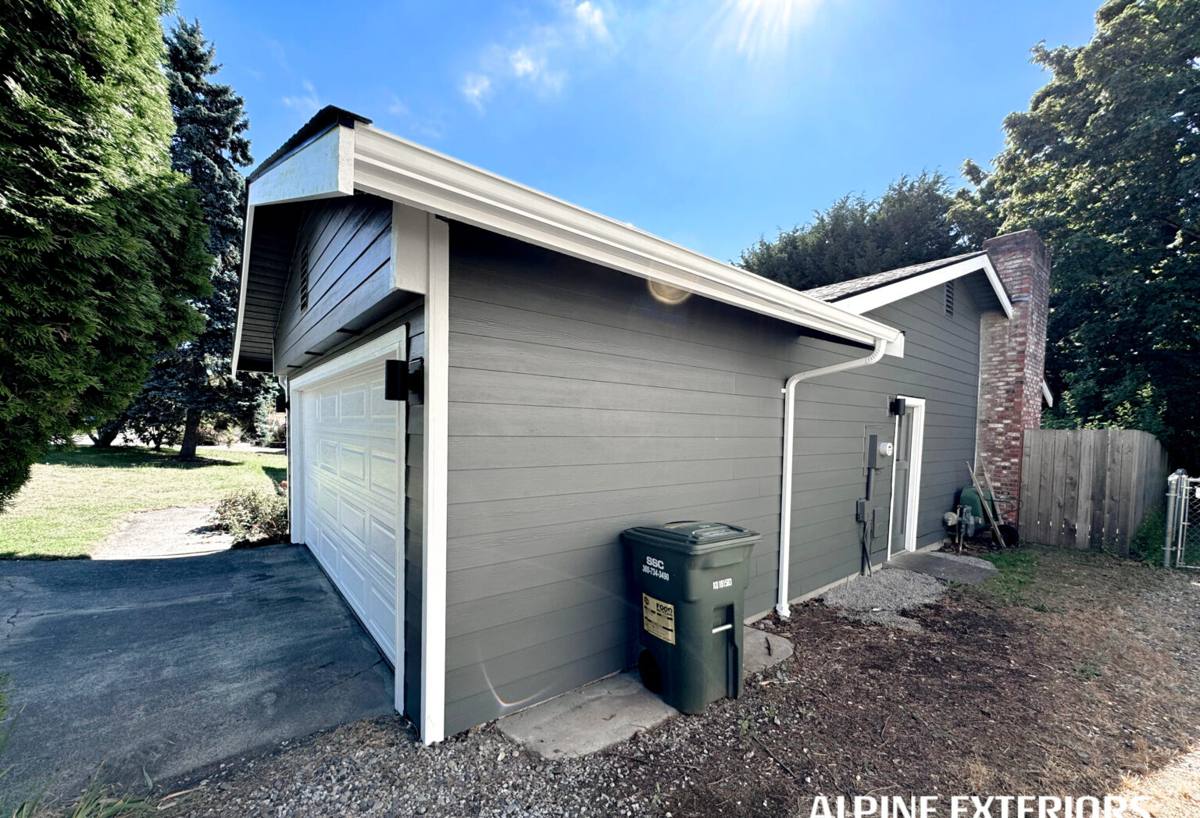
Why Chuckanut's Microclimate Matters More Than People Expect
Fairhaven's overall climate is temperate and wet, but Chuckanut's position — closer to open water, more exposed to prevailing wind, often shaded by the surrounding forest on the hillside — creates a microclimate that's a step harsher than a typical Bellingham neighborhood. A few specific factors show up again and again:
- Salt aerosol exposure: Homes closer to the water pick up airborne salt that settles on siding, trim, and fasteners. Over time this accelerates corrosion of unprotected metal and can degrade weaker paint films faster than inland exposure would.
- Wind-driven rain: Storms off the water don't just fall — they push. Rain gets forced sideways into laps, seams, and joints that would stay dry in a calmer setting, which raises the bar for flashing and water-management detail.
- Shade and moisture retention: Tree cover and hillside shading keep some wall sections from drying out fully between rain events, which is exactly the condition moss, algae, and mildew need to establish.
- Seasonal humidity swings: Long wet stretches followed by drier summer weeks put cyclical stress on any material that expands, contracts, or absorbs moisture unevenly.
None of this makes Chuckanut a hard place to live — it's a normal, well-understood coastal Pacific Northwest condition. But it does mean a siding installation here benefits from a crew that has actually worked this specific stretch of coastline and knows which details matter.
What a Correct Siding Installation Involves Here
Water Management Starts Behind the Siding, Not At It
The single biggest factor in how long a siding job lasts in a place like Chuckanut isn't the siding material itself — it's what's happening behind it. A correct installation starts with a properly lapped weather-resistive barrier, careful integration of that barrier with window and door flashing, and a drainage plane that lets any moisture that does get past the siding find its way back out instead of sitting against the sheathing. Skipping or rushing this step is the single most common reason siding jobs fail early, regardless of what brand of material sits on the outside.
Flashing at Every Transition
Wind-driven rain finds every gap. That means deliberate flashing at roof-to-wall intersections, deck ledgers, window and door heads, and any penetration for vents, lights, or hose bibs. On a home exposed to bay winds, these transitions are where water intrudes first if they're not detailed correctly.
Fastening and Fastener Selection
In a salt-air environment, fastener choice matters more than most homeowners realize. Corrosion-resistant fasteners, correctly spaced and set to the manufacturer's specification, keep the siding secured and prevent the kind of streaking and staining that comes from fasteners corroding behind the finish.
Proper Clearances
Siding installed too close to grade, roofing, decks, or hardscape traps moisture against the bottom edge of the material — one of the fastest ways to create a chronic damp spot that invites rot and moss growth. Correct clearance at grade and at horizontal surfaces is a basic but frequently overlooked detail.
Why We Install Only James Hardie Fiber Cement
We standardized on James Hardie fiber cement siding for every home we work on, including Chuckanut, and we don't install vinyl, LP SmartSide, or engineered wood products. That's not a marketing position — it's a decision based on how those materials actually perform in a marine climate over the long run versus how Hardie performs.
Fiber cement is dimensionally stable and doesn't absorb water the way wood-based products can, which matters directly in a location with Chuckanut's humidity profile. It's non-combustible, which is a meaningful consideration anywhere near wildland vegetation on the hillside. And James Hardie's ColorPlus factory-applied finish is baked on under controlled conditions, giving it better resistance to fading and wear than field-applied paint — a real advantage in an environment where salt air and UV exposure both work against a painted finish over time.
James Hardie also builds region-specific product lines engineered for different climate zones (their HZ5 line, for example, is formulated for colder, wetter regions like the Pacific Northwest), and backs the product with a strong transferable limited warranty. That combination — a stable, non-combustible material, a factory finish built to hold up outdoors, and a warranty structure that protects the investment — is why it's the only product we put on homes.
Comparing Siding Materials for a Coastal Bay Setting
| Factor | James Hardie Fiber Cement | Vinyl | Engineered Wood (e.g. LP SmartSide) |
|---|---|---|---|
| Moisture/humidity resistance | Dimensionally stable, doesn't swell or rot | Doesn't rot, but can warp with heat and stress joints over time | Wood-based core is more moisture-sensitive; relies on edge sealing staying intact |
| Salt air / coastal exposure | Factory finish holds up well; non-corrosive core | Can chalk and fade faster near salt exposure | Finish and edge treatments face added stress from salt and humidity |
| Fire resistance | Non-combustible | Combustible, can melt/deform near heat | Combustible |
| Finish longevity | Factory-baked ColorPlus finish, long fade resistance | Color is integral but can chalk/fade over decades | Field or factory paint, typically needs earlier repainting |
| Moss/algae resistance | Hard, non-porous surface resists organic growth | Generally resists growth but can trap moisture at seams | Wood-based surface can be more hospitable to organic growth if finish degrades |
Our Process for a Chuckanut Installation
- On-site assessment: We walk the home, checking existing siding condition, sheathing and framing where accessible, drainage patterns around the foundation, and how the specific site — shade, wind exposure, proximity to water — should shape the installation plan.
- Scope and product selection: We talk through Hardie board profiles, exposure, and color options, and confirm the right HZ product line and accessory details (trim, soffit, flashing) for the home.
- Tear-off and substrate prep: Old siding comes off, and we inspect and repair any damaged sheathing or framing before anything new goes on — installing new siding over a compromised substrate just locks the problem in.
- Weather-resistive barrier and flashing installation: This is the step that determines long-term performance. We install and integrate the water-resistive barrier, window and door flashing, and any penetration flashing before a single piece of siding goes up.
- Siding installation to manufacturer spec: Fastening pattern, spacing, clearances, and joint treatment all follow James Hardie's published installation requirements — which is also what keeps the manufacturer's warranty intact.
- Final detail and walkthrough: Trim, caulking at appropriate joints, and a final walkthrough so the homeowner understands what was done and what maintenance, if any, to expect.
What Chuckanut Homeowners Should Ask Before Hiring Any Siding Contractor
Siding installation is one of those projects where the visible result can look fine for a year or two even if the underlying work was rushed — the problems show up later, when they're expensive to fix. Before hiring anyone for a siding project in Chuckanut, it's worth asking:
- Will you show me the weather-resistive barrier and flashing details before siding goes over them, or take photos during that stage?
- What fastener type and spacing will you use, and is it rated for coastal/salt-air exposure?
- How will you handle clearance at grade, roofing, and decks?
- Are you a certified installer for the product you're proposing, and does that affect the manufacturer's warranty coverage?
- Have you worked in this specific area before, and do you understand the exposure conditions here versus a more sheltered inland lot?
A contractor who's worked Chuckanut and the surrounding Fairhaven waterfront before will have answers to all of these without hesitation, because they've already run into the site conditions that make this stretch of coastline different from a standard inland installation.
Maintenance Expectations After Installation
One advantage of a correctly installed fiber cement system in this climate is that ongoing maintenance is modest compared to painted wood siding. That said, no siding material is maintenance-free in a marine environment. Homeowners should expect to periodically rinse salt residue and organic buildup off the siding surface (particularly on shaded, north-facing walls where moss is most likely to establish), keep gutters and downspouts clear so water isn't sheeting down the wall face, and do a visual check after major storms for any caulking or trim that needs attention. None of this is heavy work, but staying ahead of it is what keeps a well-installed system performing for decades instead of just looking good for the first few years.
Get an Estimate for Your Chuckanut Home
If you're planning a siding project in Chuckanut or elsewhere near Fairhaven, we're happy to walk the property, look at what the current siding and substrate are telling us, and put together a straightforward, no-pressure estimate for a James Hardie installation built for the conditions your home actually faces. Use the form below to get started.