 Fairhaven Siding
 Building Decks in Columbia Means Building for Puget Sound Weather
Columbia sits close enough to the water that every deck built here has to answer to the same conditions: salt-laden air rolling off Bellingham Bay, long stretches of driving rain through the fall and winter, and a moss season that can run eight months out of the year in shaded, north-facing yards. A deck design that works fine in a dry inland climate can start showing problems within a couple of seasons out here — soft spots at the ledger, corroded fasteners, slick green film on the walking surface. None of that is inevitable. It's the result of decisions made (or skipped) during the build.
We work on homes throughout Fairhaven and the surrounding Whatcom County area, and Columbia's mix of older homes and infill construction gives us a good cross-section of what holds up and what doesn't. This page walks through what a deck actually needs to survive here, what a correct build involves, and how we approach the work from first estimate to final walkthrough.
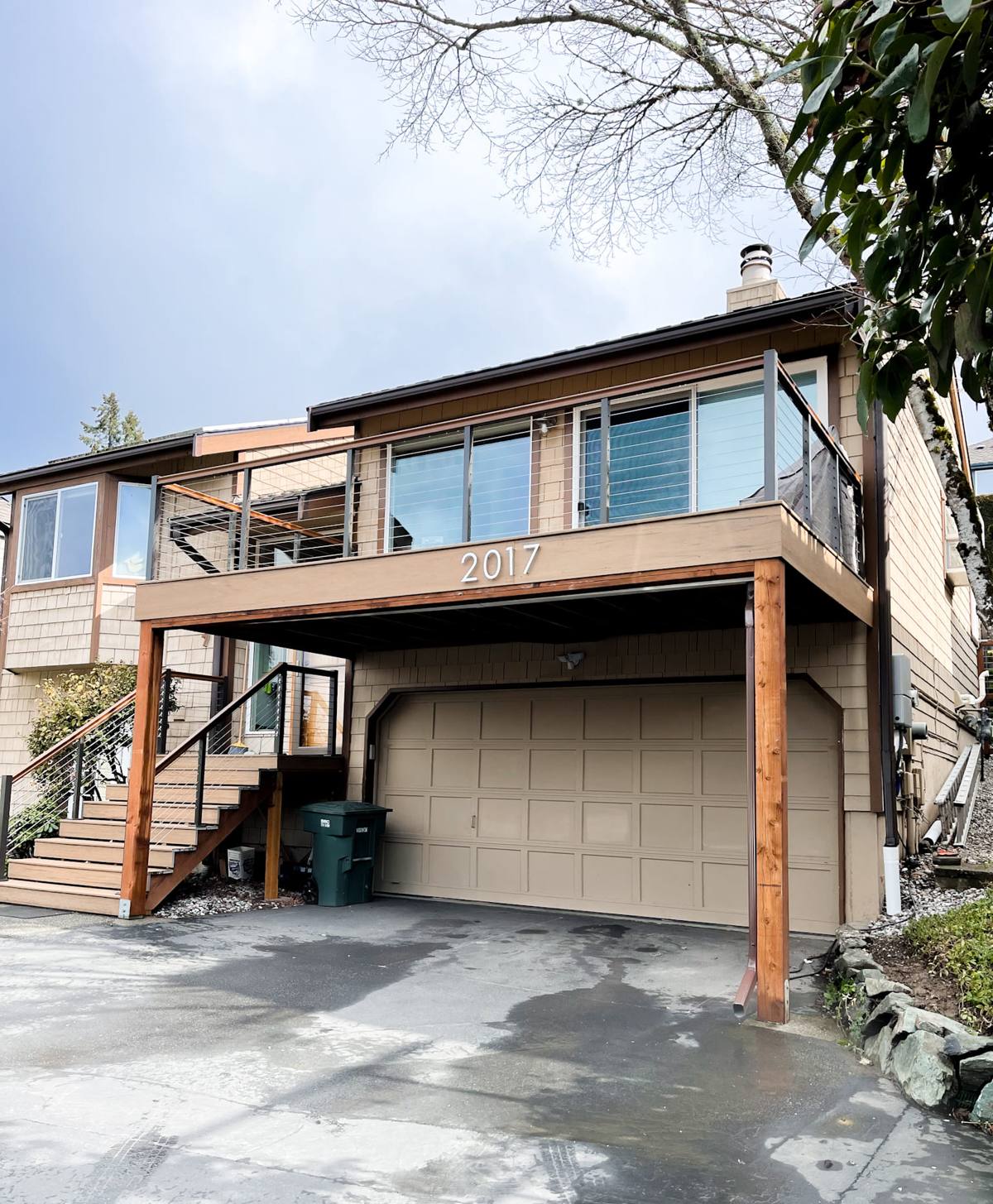
What Salt Air, Rain, and Moss Actually Do to a Deck
Each of these three factors attacks a deck differently, and a good build accounts for all three at once rather than treating them as one generic "weather" problem.
Salt Air
Airborne salt accelerates corrosion on anything metal — fasteners, joist hangers, structural screws, railing hardware. Standard galvanized coatings can start breaking down faster near the water than a manufacturer's rating sheet suggests, especially where the coating gets nicked during installation. Corroded fasteners aren't just a cosmetic issue; they're a structural one, since a deck's strength depends on connections staying intact for the life of the structure.
Driving Rain
Wind-driven rain doesn't fall straight down — it gets pushed sideways into ledger connections, under flashing laps, and into end grain on framing lumber. Water that gets behind a ledger board and can't drain back out is one of the most common causes of hidden rot we find on older decks in this area.
Moss and Mildew
Shaded yards, tree cover, and consistent moisture create ideal conditions for moss and mildew to establish on decking surfaces, especially wood and some older composite products. Beyond looking bad, a mossy deck surface gets genuinely slick and dangerous underfoot, and moss holds moisture against the board longer than a clean surface would.
What a Correct Deck Build Involves
A deck that's going to hold up in Columbia's climate isn't built differently in some exotic way — it's built to the same fundamentals every good deck should follow, just with less room for shortcuts.
- Ledger board properly flashed and separated from the house sheathing with a code-compliant water-resistive barrier detail, not just caulked and bolted
- Structural fasteners and connectors rated for exterior and, where budget allows, coastal exposure — stainless steel in high-exposure spots
- Joists and beams sized correctly for the actual span and load, not just "what's always been done"
- Footings set to proper depth and bearing for our soil and frost conditions
- Decking gapped correctly for drainage and material expansion/contraction
- Railing posts through-bolted into structural framing, not just toe-screwed into decking
- A drainage path underneath the deck so water doesn't pool against footings or framing
Skipping any one of these doesn't usually cause an immediate, visible problem. It shows up two, five, or ten years later as soft framing, a wobbly railing, or a ledger connection that's quietly failing behind the siding.
Choosing a Decking Material for This Climate
There's no single "best" decking material — every option involves trade-offs in upfront cost, maintenance, and how it handles moisture and moss over time. Here's how the common choices compare for a Columbia-area build:
| Material | Upfront Cost | Moisture/Moss Behavior | Maintenance |
|---|---|---|---|
| Pressure-treated wood | Lowest | Absorbs moisture; needs sealing to resist moss and rot | Annual cleaning, periodic sealing/staining |
| Cedar | Moderate | Naturally more rot-resistant, but still absorbs water without maintenance | Regular cleaning and refinishing to keep its look |
| Composite decking | Moderate to high | Doesn't absorb water like wood, but surface texture affects how easily moss and algae grip it | Periodic washing; no staining or sealing |
| PVC/capped polymer | Highest | Fully non-absorbent surface; sheds moisture well | Occasional washing only |
For a shaded, moisture-prone lot near the water, we generally steer clients away from bare pressure-treated wood as a long-term-low-maintenance choice — not because it can't work, but because it demands consistent upkeep to resist moss and graying that a lot of homeowners underestimate at the time of the build. Composite and capped polymer products cost more up front but remove moisture absorption from the equation entirely, which matters more here than in a drier climate.
Substructure and Moisture Management: The Part You Don't See
Most of what determines whether a deck lasts happens below the walking surface. Framing lumber should be rated for ground contact where it's close to grade, joist hangers should be sized to the actual joist rather than "close enough," and every ledger connection needs a flashing detail that sheds water away from the house rather than trapping it. On a re-deck or repair job in Columbia, the framing underneath an old deck tells us more about how it was originally built than the decking on top ever does — that's usually where we find the corrosion, soft spots, or improvised fixes from a previous owner.
Post bases matter too. A post sitting directly on a footing with no separation invites standing water and long-term rot at the base. Proper post bases keep wood off concrete and let water drain away instead of wicking up into the post.
Living With a Deck Here: Realistic Maintenance
No deck material is maintenance-free in this climate, but the amount of upkeep varies a lot by material and by how much shade and moisture the site gets. A realistic maintenance rhythm looks something like this:
- Clear leaves and debris from between boards and off the surface each fall, before the rainy season sets in
- Rinse or lightly scrub moss and algae buildup once or twice a year, more often on shaded north-facing decks
- Check railing and stair connections annually for looseness — hardware is often the first thing to show wear
- Inspect the ledger flashing area periodically for staining or gaps, since that's the highest-consequence failure point
- For wood decking, plan on resealing or staining on the schedule the finish manufacturer recommends, not "whenever it looks bad"
Building the deck correctly the first time doesn't eliminate maintenance, but it does mean the maintenance you're doing is cosmetic upkeep rather than damage control.
Our Process, Start to Finish
We keep the process straightforward because deck projects go sideways when it isn't:
1. On-Site Estimate
We walk the site, look at grade, drainage, sun/shade exposure, and how the deck will attach to the house. This tells us what the substructure needs to handle, not just what the finished surface will look like.
2. Design and Material Selection
We go over material options honestly, including cost, maintenance expectations, and how each performs in a shaded or exposed Columbia lot, so the decision fits the budget and the site rather than a generic recommendation.
3. Permitting
Deck projects in Whatcom County commonly require a permit depending on size, height, and attachment to the structure. We handle the permit process as part of the job so it isn't left to the homeowner to sort out.
4. Construction
Framing, flashing, and fastening are done to code and to the standards outlined above — not the minimum that passes inspection, but what actually holds up in this climate.
5. Final Walkthrough
We go over the finished deck together, including what maintenance to expect and when, so there are no surprises the first time it rains sideways.
Why a Crew That Already Works Columbia Matters
A contractor who mostly builds decks in drier, inland parts of Washington isn't necessarily going to under-build for this area — but they may not default to the flashing details, fastener choices, and material trade-offs that matter most here unless they're specifically thinking about salt exposure and moss-prone shade. Working regularly in Fairhaven and Columbia means we're not guessing at what the local conditions demand; it's just how we build by default. That familiarity also means fewer surprises during permitting and a better sense, from the first site visit, of where a given lot's drainage and sun exposure are going to create long-term maintenance issues if they're not addressed at the design stage.
Get a Straight Answer Before You Commit
If you're planning a new deck or replacing one that's showing its age in Columbia, we're happy to come take a look and give you an honest read on what the site needs, what materials make sense for your budget and exposure, and roughly what it'll cost. There's no pressure and no obligation — just a straightforward estimate from a crew that already knows this stretch of Fairhaven. Use the form below to get started.