 Fairhaven Siding
 Decks Built for Marietta's Waterside Conditions
Marietta sits close to Bellingham Bay, low and level in a lot of spots, with the kind of maritime exposure that treats an outdoor structure very differently than it would fifty miles inland. A deck built to a generic spec sheet — the kind you'd find in a big-box how-to guide — will often look fine for a season or two and then start showing problems: soft spots near the house, black streaks on the boards, hardware bleeding rust through the finish. In Whatcom County's marine climate, a deck isn't just a platform bolted to the house. It's a structure that has to manage water, salt, and shade year-round, and the details that keep it solid are mostly things you can't see once the project is finished.
This page is about building and replacing decks specifically for Marietta homes — what the local conditions demand, what a correctly built deck actually involves, and how we approach the work when we're on-site.
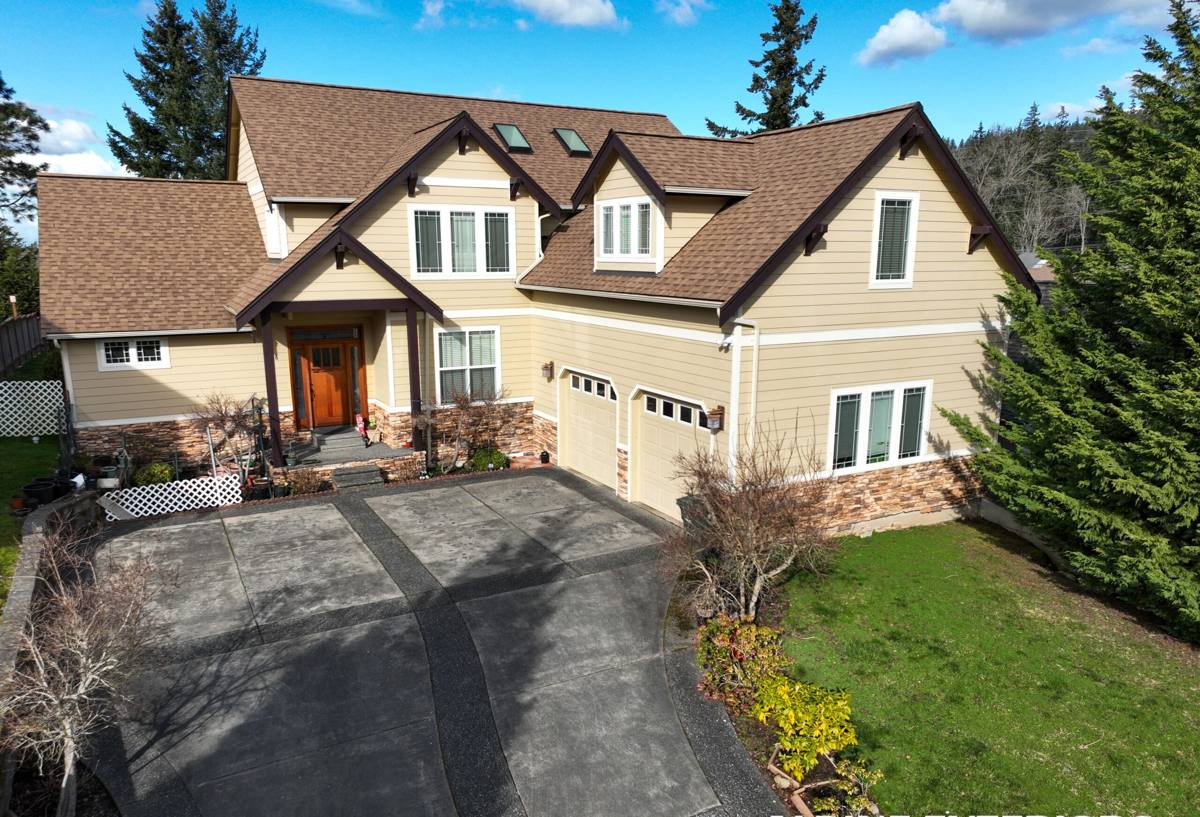
What Salt Air, Driving Rain, and Moss Season Actually Do
Each of these isn't just a weather note — each one attacks a deck in a specific, predictable way:
Salt Air
Airborne salt from the bay accelerates corrosion on anything metal — screws, joist hangers, post bases, railing brackets. Standard galvanized fasteners can start losing their coating faster near the water than they would even a short distance inland. Once corrosion starts on a structural fastener, it's not cosmetic; it's a slow loss of holding strength.
Driving Rain
Storms coming off the water push rain sideways, not straight down. That matters for ledger boards, rim joists, and any point where the deck meets the house siding — water gets driven into gaps that a calmer climate would never test. Flashing details that are "good enough" in a dry region are often the first thing to fail here.
Moss Season
Long stretches of damp, low-light weather — especially under tree cover, which is common on many Marietta lots — keep deck surfaces wet for days at a time. That's exactly what moss and algae need to take hold. Beyond looking bad, a mossy deck surface gets slick and holds moisture against the wood or composite cap, which shortens the life of the boards underneath.
Choosing Decking Material for This Climate
There's no single "best" decking material — there's a best material for your budget, your sun/shade mix, and how much upkeep you actually want to do. Here's how the common options compare for a Marietta lot:
| Material | Moisture & Moss Behavior | Maintenance | Typical Lifespan Here | Relative Cost |
|---|---|---|---|---|
| Pressure-treated pine | Absorbs water, needs a sealed surface or it stays damp; moss-prone in shade | Annual cleaning, re-sealing every 1-2 years | 10-15 years with upkeep | Lowest |
| Cedar | Naturally rot-resistant but still needs sealing against driving rain; ages to gray without finish | Cleaning plus re-staining every 2-3 years | 15-20 years with upkeep | Mid |
| Capped composite | Won't rot or absorb water; textured caps still need washing to keep moss from clinging | Periodic washing, no sealing or staining | 25-30+ years | Mid-high |
| PVC decking | Fully moisture-proof, most resistant to staining and mold | Occasional washing | 30+ years | Highest |
For shaded, low-lying sections of Marietta where moss is the main headache, we lean toward capped composite or PVC for the field of the deck — the maintenance savings add up fast when the alternative is scrubbing and re-sealing wood every year. For sunnier spots, cedar still has a place, especially when the homeowner wants a natural look and is comfortable with the upkeep.
Structural Details That Matter on Low, Damp Ground
A lot of Marietta lots sit close to grade and hold moisture in the soil longer than higher ground does. That changes a few structural decisions:
Footings
Post footings need to go below frost depth and bear on soil that hasn't been softened by standing water. On lots with poor drainage, we'll often go with larger footings or helical piers rather than assuming a standard concrete pier will hold long-term.
Ledger Attachment
Where the deck attaches to the house is the single most common failure point on any deck, anywhere — but driving rain off the bay makes it worse here. Correct ledger flashing (a proper cap flashing integrated with the house's water-resistive barrier, not just caulk) is non-negotiable.
Joist Spacing and Airflow
Tighter joist spacing under composite decking prevents sagging, but the underside of the deck also needs airflow so moisture doesn't just sit in the framing bay after every rain. We don't wrap framing in a way that traps water against the wood.
Fasteners and Hardware: The Parts You Don't See
This is where salt air does the most damage, and it's also where corners get cut on lower-bid jobs because nobody checks it after the decking is down. Correct hardware for a Marietta deck means:
- Stainless steel or high-grade coated (not standard galvanized) structural screws and bolts
- Joist hangers and post bases rated for coastal/marine exposure, not the standard interior-grade parts
- Fastener finish matched to the decking manufacturer's warranty requirements — mismatched hardware can void a composite warranty even if the board itself is fine
- Flashing tape and metal flashing at every point water can reach framing, not just the ledger
None of this is visible once the deck is finished, which is exactly why it's worth asking a contractor directly what hardware grade they're using before the work starts.
Permits and Code in Whatcom County
Most new decks and many deck replacements in this area require a building permit, and inspections check things like footing depth, ledger attachment, guardrail height, and stair geometry. Skipping the permit step might save a little time up front, but it creates real problems later — unpermitted structures can complicate a home sale, and if something's built wrong, there's no inspection catching it before it becomes a safety issue. We handle the permitting and inspection scheduling as part of the project so it isn't left for the homeowner to sort out.
Our Custom Deck Process
Every deck we build in Marietta follows the same sequence, whether it's a full replacement or new construction:
- On-site assessment — we look at drainage, sun/shade exposure, tree cover, and how the deck will tie into the house
- Design and material selection — sized to your space and budget, with an honest conversation about maintenance trade-offs between materials
- Permitting — we prepare and submit the paperwork and schedule inspections
- Demolition (if replacing) — including a check of the ledger and rim joist behind the old deck for hidden rot
- Framing and flashing — footings, ledger, joists, and every flashing detail built to hold up to driving rain, not just pass a quick look
- Decking, railing, and finish work — installed to the manufacturer's fastening spec so warranties stay intact
- Final walkthrough — we go over care and cleaning specific to whatever material you chose
A correctly built deck should include, at minimum:
- Footings sized and set below frost depth for the actual soil conditions on your lot
- Properly flashed ledger attachment, not just caulked
- Corrosion-resistant fasteners and connectors throughout
- Joist spacing matched to the decking manufacturer's specification
- Guardrails and stairs built to current code height and spacing
- A permit and passed inspection on file
Living With Moss Season
Even the right material and the best-built deck will collect some moss and algae during Whatcom County's wetter months, especially under tree cover. The difference is how much it matters: a capped composite or PVC deck can be rinsed and lightly brushed off without damaging the surface, while a wood deck that gets neglected during moss season can develop soft, slippery spots that are more than cosmetic. We can talk through a simple seasonal cleaning routine suited to whatever material ends up on your deck.
Why a Crew That Already Works Marietta Matters
A contractor who builds decks across a wide, dry inland area and only occasionally works near the water doesn't necessarily think about ledger flashing or fastener grade the same way a crew that works Fairhaven and Marietta regularly does. Knowing which lots drain poorly, which sections get the worst wind-driven rain off the bay, and how fast moss actually takes hold in a shaded Marietta yard changes real decisions on the job — not just the sales pitch. It also means faster response if something needs attention after the first hard winter, since we're already working in the area rather than driving in from across the county.
If you're planning a new deck or replacing one that's showing its age, we're happy to take a look and put together a straightforward estimate — no pressure, no hard sell, just an honest read on what your project actually needs. Use the form below to get started.