 Fairhaven Siding
 Building Decks in Puget the Way the Climate Demands
Puget sits close enough to the water that every deck built here is fighting a low-grade battle from the day it's finished: salt-laden air working on fasteners and finishes, driving rain finding its way into every joint that isn't detailed correctly, and a moss season that can stretch from October well into spring. A deck built to a generic spec sheet - the kind you'd use inland, away from Bellingham Bay - will show its age here in three to five years instead of fifteen. A deck built for this specific stretch of Whatcom County holds up because every material choice and every framing detail accounts for what the marine climate actually does to wood, metal, and fasteners over time.
This page is about custom deck building specifically for homes in and around Puget. Not a general overview of decks - the actual decisions that matter for a project in this neighborhood, and what separates a deck that ages well from one that doesn't.
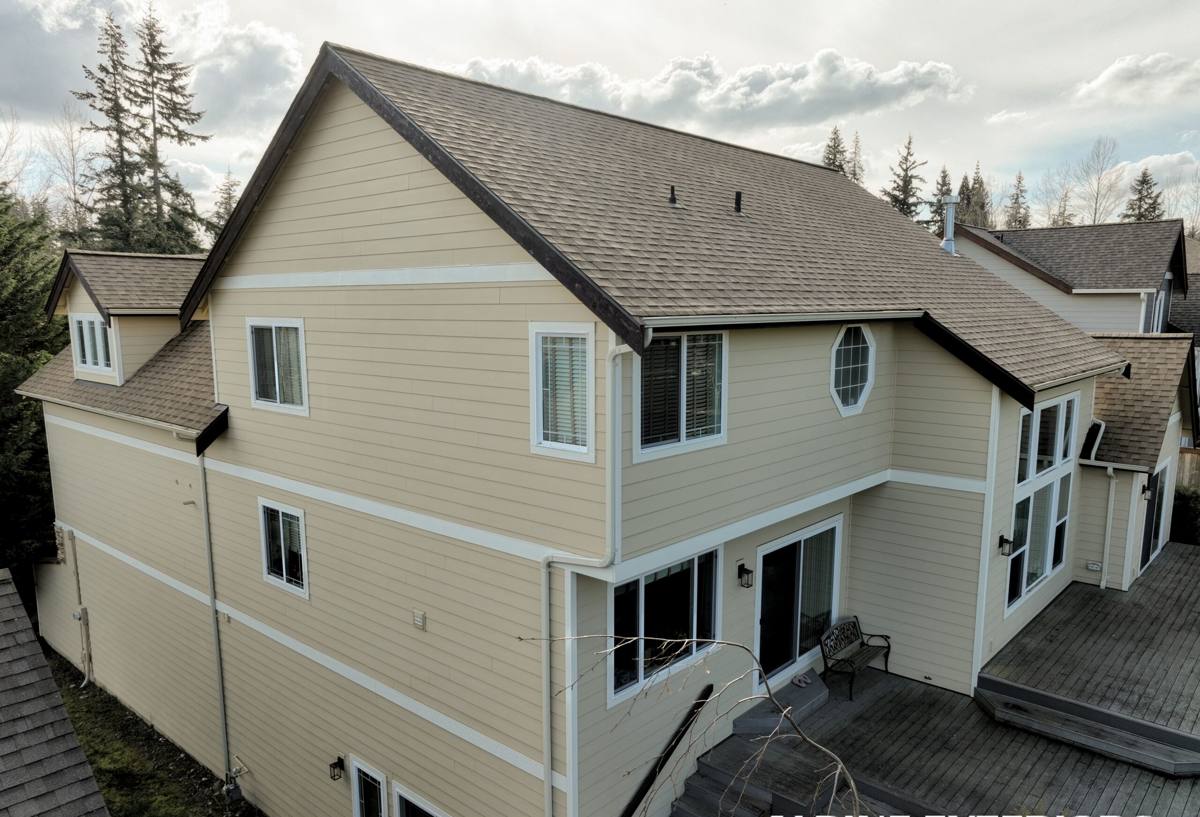
What Puget's Climate Actually Does to a Deck
Three things drive nearly every deck failure or premature repair we see in this area, and they compound each other.
Salt Air
Proximity to salt water accelerates corrosion on anything metal - screws, joist hangers, bolts, railing hardware. Standard electro-galvanized fasteners can start showing rust bleed and pitting within a couple of years this close to the water. Once a fastener starts to corrode, it loses holding strength long before it looks obviously bad, which is why hardware grade matters more here than in most parts of the state.
Driving Rain
Rain in this area rarely falls straight down - wind off the water pushes it sideways, which means it gets driven up under rail caps, into ledger board connections, and along any horizontal surface where water can sit rather than shed. Decks built with flat, unsloped ledger flashing or standard butt-jointed decking boards trap water at exactly the joints that are hardest to inspect and hardest to repair once rot sets in.
Moss and Sustained Dampness
A long, wet season means surfaces that don't get direct sun or good airflow stay damp for weeks at a time. That's exactly what moss needs, and moss holds moisture against the decking surface even longer, which is what actually causes rot - the moss itself is a symptom, not the root cause. Decks with poor airflow underneath, tight board spacing, or shaded northern exposures are the ones that develop moss problems first.
Choosing the Right Decking Material for This Neighborhood
There's no single "best" decking material - there's a best material for a given budget, sun exposure, and how much upkeep a homeowner actually wants to do. Here's how the common options perform specifically under Puget's conditions.
| Material | How It Handles Salt Air & Rain | Moss Resistance | Realistic Upkeep |
|---|---|---|---|
| Pressure-treated wood | Holds up structurally if properly sealed and re-sealed; end grain is the weak point | Low - needs regular cleaning and treatment to resist growth | Annual cleaning, re-stain/seal every 2-3 years |
| Cedar | Naturally resists rot better than most softwoods, but still needs finish maintenance in salt air | Moderate - natural oils help, but surface still collects moss without cleaning | Re-oil or re-stain every 2-3 years, more in shaded spots |
| Composite decking | Excellent - doesn't absorb moisture the way wood does, fasteners are the main vulnerability | Moderate to good depending on the board's surface texture | Periodic cleaning, no staining or sealing |
| PVC/capped polymer | Best moisture performance of the group - fully sealed surface | Good, though still benefits from occasional cleaning in shaded areas | Lowest - occasional rinse, no finish required |
For a deck that gets real sun exposure and good airflow, cedar or a quality pressure-treated frame with cedar or composite decking on top is a reasonable, cost-conscious choice. For a shaded, north-facing, or water-exposed deck - which describes a fair number of lots in this area - composite or PVC decking earns its higher upfront cost back in avoided maintenance and a longer service life before boards need replacing.
Framing and Structure: What's Underneath Matters Most
The decking boards are what you see, but the framing underneath is what actually determines whether a deck lasts. This is where we see the most corners cut on older or budget builds in this area.
- Ledger board flashing: Where the deck attaches to the house needs proper flashing that sheds water away from the ledger, not just caulk - caulk fails, flashing doesn't.
- Joist tape or cap protection: Covering the tops of joists prevents standing water from soaking into end grain, which is the number one cause of joist rot we find on tear-outs.
- Post base connections: Posts should sit on standoff bases that keep the wood off the concrete or ground, not buried or set directly on a wet surface.
- Airflow underneath: Adequate clearance and, where possible, venting under low decks keeps the underside from staying damp long enough to grow moss and mildew.
- Fastener grade: Stainless steel or high-quality coated fasteners rated for ground contact and coastal exposure, not standard interior-grade hardware.
Our Custom Deck Process for Puget Homes
- On-site assessment: We look at sun exposure, drainage, existing structure (if it's a rebuild), and how the site handles wind-driven rain before recommending anything.
- Design and material selection: We walk through decking, railing, and fastener options with the actual trade-offs for your specific spot - not a one-size-fits-all recommendation.
- Permitting: We handle the permit application and inspections through Whatcom County or the applicable local jurisdiction, so you're not chasing paperwork.
- Demolition (if replacing an existing deck): Old decking and framing are removed and inspected - this is often when hidden rot at the ledger or posts gets found.
- Framing: Structure is built with corrosion-resistant hardware, proper flashing, and joist protection from the start.
- Decking and railing installation: Boards and rail systems installed with correct spacing for drainage and airflow.
- Final walkthrough: We go over maintenance expectations specific to your material choice and site conditions before calling the job done.
Railings, Fasteners, and Hardware for Salt-Air Durability
Railings take a lot of abuse in this climate - they're the part of the deck most exposed to driving rain and salt spray, and they're also what people lean on and grab, so failure here is a safety issue, not just a cosmetic one. We favor stainless steel or marine-grade coated fasteners for anything structural on a railing system, and we pay close attention to how post connections are made - through-bolted with proper blocking, not just toe-screwed into the rim joist. Wood rail caps need the same attention to end-grain sealing as the decking itself, since horizontal cap surfaces are prime spots for water to sit.
A Quick Note on Warranty Structure
Composite and PVC decking manufacturers generally offer longer material warranties than wood, but those warranties are usually contingent on correct installation - proper gapping, fastener type, and ventilation. That's part of why installation quality matters as much as the material choice itself; a good product installed wrong can void its own warranty.
Maintenance Checklist for Puget Homeowners
Whatever material you choose, a little seasonal attention goes a long way in this climate. Here's what we recommend keeping on top of:
- Sweep debris and standing leaves off the deck surface regularly, especially in shaded corners where moss takes hold first
- Rinse salt residue off railings and hardware a few times a year, particularly after storms with onshore wind
- Check ledger board flashing and caulk lines annually for gaps or cracking
- Re-seal or re-stain wood decking on the schedule appropriate to the product - don't wait until it looks obviously worn
- Keep gutters and downspouts near the deck clear so runoff isn't dumping extra water onto the structure
- Look underneath the deck once a year for signs of moisture buildup, moss, or fastener corrosion
Permits and Local Considerations
Most new decks and significant deck rebuilds in this area require a building permit, and setback or height rules can vary depending on your specific lot and whether you're inside city limits or unincorporated Whatcom County. We handle that process as part of the job rather than leaving it to the homeowner to sort out, and we build to the load and attachment requirements that pass inspection the first time - which matters more here than it might elsewhere, since re-inspections take longer to schedule during the wetter months when outdoor work backs up.
Why Hire a Crew That Already Works in Puget
A deck built by a crew unfamiliar with this specific stretch of coastline will often default to standard hardware, standard flashing details, and standard maintenance advice - because that's what works most places. It's not that the work is dishonest, it's that it's calibrated for a different climate. A crew that already works in and around Fairhaven and Puget knows which corners of a lot stay damp longest, which fastener grades actually hold up here, and how to detail a ledger connection so it doesn't become the first thing that fails. That local calibration is the difference between a deck that needs real repair work in year five and one that's still solid at year fifteen.
If you're planning a new deck or thinking about replacing one that's showing its age, we're happy to come take a look and talk through what makes sense for your specific site - no pressure, no obligation. Reach out through the form below for a free estimate.