 Fairhaven Siding
 Building Decks for Sehome's Marine Climate
Sehome sits on the hillside above Bellingham Bay, close enough to Fairhaven and the water that the weather here behaves differently than it does further inland. Salt-laden air moves in off the Salish Sea, driving rain comes in sideways more often than straight down, and between the fall and spring months a lot of exterior wood surfaces spend weeks at a time damp enough to grow moss and algae. A deck built to a generic, one-size-fits-all spec will show its age fast in this environment — fasteners rust, framing that can't breathe traps moisture, and decking surfaces that don't shed water become slick and green within a season or two.
A deck built for Sehome has to account for all of that from the design stage, not patch it in afterward. That means the right hardware, the right ventilation under the deck, the right slope for drainage, and material choices that hold up to years of wet-dry cycling rather than just looking good on installation day.
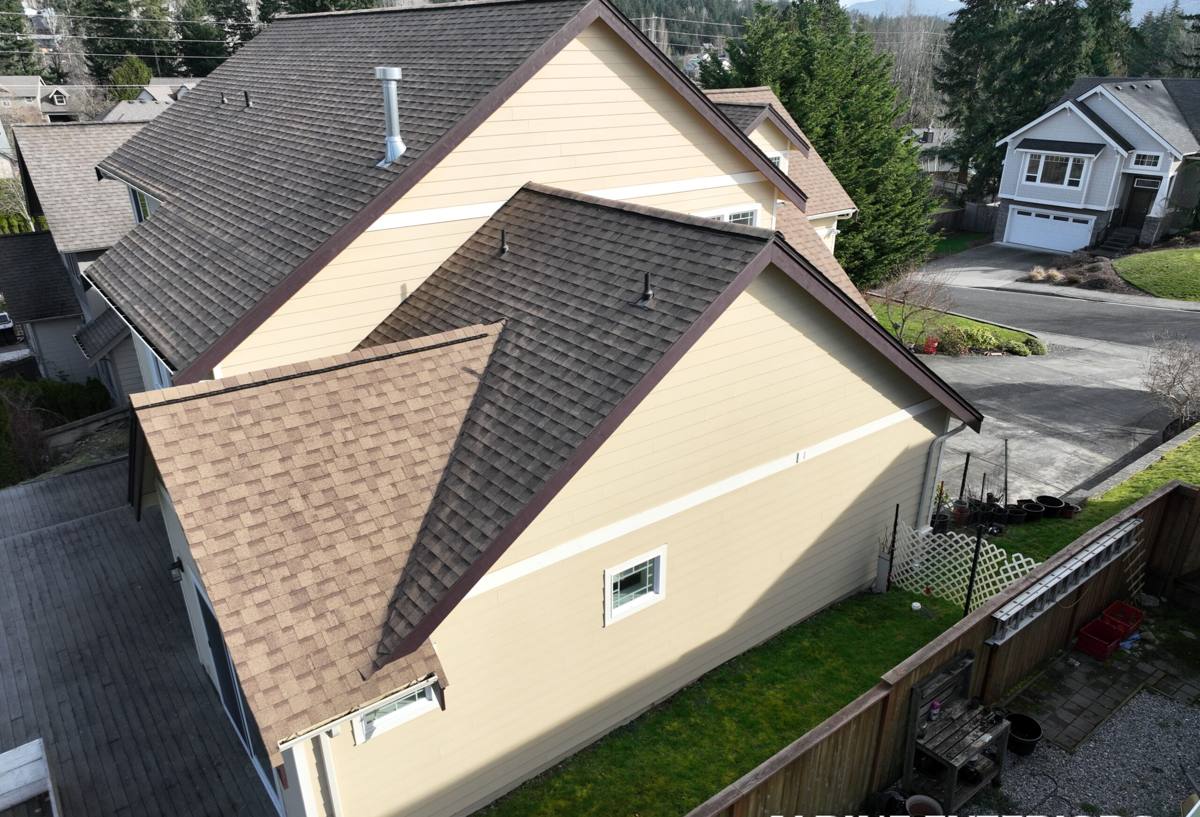
What Sehome's Terrain Demands From a Deck
Hillside and Sloped Lots
Sehome is a hillside neighborhood, and a lot of the homes here sit on lots with real grade change from the house to the yard. That affects everything about how a deck gets built: footing depth has to reach soil that won't shift or settle, support posts are often taller than a flat-lot deck would need, and elevated decks trigger guardrail and stair requirements that a ground-level patio deck never has to deal with. We assess the slope and soil before we design anything, because a deck that looks fine on paper can end up under-supported once you account for the actual grade.
Mature Tree Canopy
Many Sehome properties have mature evergreen and deciduous trees close to the house, which means shade, needle and leaf litter, and airflow that gets blocked in places a more open lot wouldn't have. Shaded, debris-prone areas are exactly where moss and algae take hold first. Board spacing, joist layout, and even where we position the deck relative to the tree line all factor into how much maintenance you'll be doing five years from now.
Choosing the Right Decking Material
There's no single "best" decking material — there's the right material for how a homeowner wants to use the deck and how much upkeep they're willing to do. Here's how the common options actually perform in this climate:
| Material | Upfront Cost | Maintenance | Moisture & Moss Resistance |
|---|---|---|---|
| Pressure-treated fir/pine | Lowest | Needs re-sealing every 1-2 years | Fair — prone to moss in shaded, damp spots if not maintained |
| Western red cedar | Mid-range | Regular sealing/staining to hold color and resist moisture | Good natural rot resistance, but still needs upkeep near the coast |
| Composite decking | Higher | Occasional washing, no staining or sealing | Very good — sheds moisture well, resists moss buildup |
We'll walk through the real trade-offs for your project honestly — composite costs more up front but saves on maintenance over the life of the deck, while cedar gives you a natural look that some homeowners simply prefer, as long as you're willing to keep up with sealing on the schedule this climate demands.
Fasteners and Hardware
Whatever decking material you choose, the hardware holding it together matters just as much. Standard galvanized fasteners can start showing corrosion faster near the bay than they would further inland. We use stainless or coated fasteners and connectors rated for coastal exposure, because a deck is only as strong as the hardware it's built on, and replacing corroded fasteners later means tearing into finished decking.
The Ledger Board and Flashing: Where Deck Failures Start
If you talk to anyone who's dealt with deck problems, the ledger board — the piece that attaches the deck framing directly to the house — is where most serious failures begin. Water gets behind an improperly flashed ledger, has nowhere to go, and slowly rots the rim joist and sheathing behind it. This isn't a hypothetical; it's the single most common structural issue we see on older decks in wet climates like ours.
Because we work on siding and exterior weatherproofing as much as we work on decks, we treat the ledger connection as part of the home's overall moisture management system, not an isolated carpentry task. That means proper flashing that integrates with the existing wall covering, correct fastening spacing into solid framing, and a small gap or drainage path so water that does get behind the board has somewhere to go instead of sitting there.
Permits, Footings, and Local Code
Decks in Bellingham, including Sehome, generally require a building permit once they're attached to the house or built above a certain height — the exact thresholds depend on your specific project, and we handle that determination and the filing as part of our process. Footings need to be sized and set to reach stable bearing soil, which on hillside lots with clay-heavy or mixed soils can mean going deeper or wider than a standard flat-lot footing chart would suggest. Skipping or shortcutting this step is how you end up with a deck that heaves, settles unevenly, or pulls away from the house over time.
- Attached decks typically require a building permit and inspection
- Footings must reach soil capable of bearing the structure's load year-round, not just in dry months
- Guardrails are required once a deck surface is a certain height above grade
- Stair and railing details are checked against current code during inspection
Our Custom Deck Process
- Site walk and consultation — we look at the grade, soil, sun/shade exposure, and how you actually plan to use the space.
- Design — layout, material selection, and railing style matched to your home and the site conditions, not a generic template.
- Permitting — we prepare and file what's needed with the city so the project is inspected and approved, not a liability down the road.
- Footings and framing — footings set to proper depth and bearing, framing built with corrosion-resistant hardware and adequate ventilation underneath.
- Decking, railings, and stairs — installed to code, with attention to drainage and board spacing for this climate.
- Final walkthrough — we go over the finished deck with you, including what maintenance it will and won't need.
Railings, Stairs, and Safety Details
On a hillside lot, an elevated deck often means a real drop to the ground below, which makes railing and stair details more than a code checkbox. Guardrails need to be built to the required height and baluster spacing so there's no gap a child could slip through, and stair stringers need to be sized for the actual rise and run of your site, not an assumed flat-ground layout. We build these details to hold up structurally and to look like they were designed as part of the deck, not bolted on to pass inspection.
Maintenance Checklist for Moss Season
Whatcom County's wet season is long, and a little seasonal upkeep goes a long way toward protecting the investment in a new deck. Here's what we recommend checking each fall before the rain sets in and again in spring:
- Clear leaves and needle litter out of board gaps and off the surface — trapped debris holds moisture against the wood
- Look for early moss or algae growth in shaded corners and along the house line, and clean it off before it spreads
- Check fasteners and hardware for early signs of corrosion, especially on decks closer to the water
- Reseal or restain wood decking on the schedule appropriate to the product — don't wait until it's visibly gray and weathered
- Trim back any overhanging branches that are keeping the deck surface shaded and damp
- Inspect the ledger board flashing line once a year for any gaps or separation from the siding
Why a Crew That Already Works Sehome Matters
A deck contractor who's worked on Sehome's hillside lots has already dealt with the soil conditions, the grade changes, and the permit process specific to Bellingham. That's not a small thing — it's the difference between a design that gets approved and built the first time and one that needs revisions after a footing depth gets flagged during inspection. It also means we're not guessing at how this climate treats decking materials over time; we've seen what holds up here and what doesn't, and we build accordingly from the start.
If you're planning a new custom deck in Sehome or already have one that's showing its age, we're happy to take a look and talk through honest options for your specific lot. Reach out for a free, no-pressure estimate using the form below.